Sustainability
Sustainability in Metals Manufacturing
The most underrated sustainability lever in metals manufacturing isn’t your energy tariff. It’s scrap.
Every tonne of bar or structural section that ends up as offcut waste represents raw material, energy, and transport that’s already been paid for. Then thrown away. AI-optimised cutting plans have reduced long product scrap by up to 50% in real-world trials. That’s 20+ tonnes of steel saved at a single site in a single trial. Less scrap means less re-melting, less haulage to the merchant, and a carbon footprint you can actually defend when a customer or an auditor asks.
There’s more. Accurate inventory management stops over-ordering. That means less steel sitting idle in the yard, fewer emergency deliveries, and less material that gets obsoleted before it’s used. Better mill certificate traceability means you use the right material first time, rather than defaulting to fresh stock when a perfectly serviceable remnant is sitting in the back of the rack.
Posts here cover scrap reduction, material efficiency, circular economy practice in metals, and how AI tools help manufacturers cut waste without cutting throughput. We look at the real numbers: tonnes saved, CO₂ avoided, cost recovered. Not aspirational targets.
Less waste. Better margins. A lower carbon number with evidence behind it.
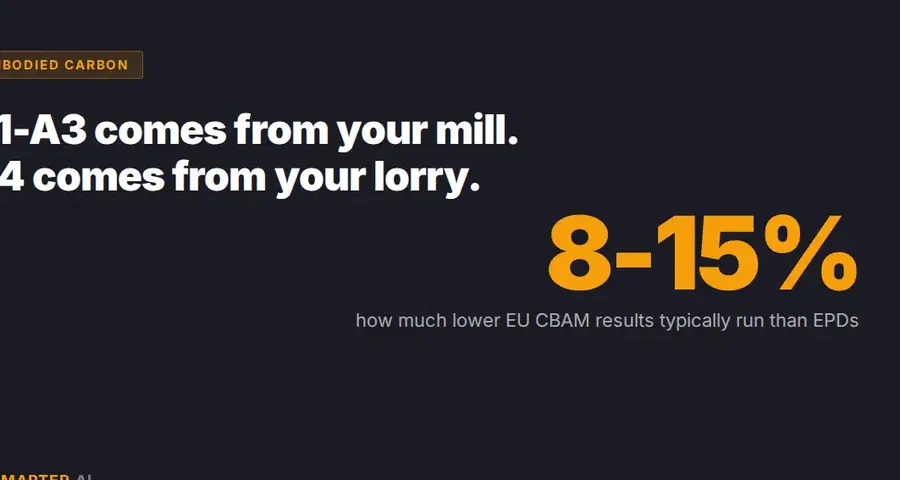
Embodied Carbon A1-A4: A Guide for UK Metal Fabricators
Customers now ask fabricators for embodied carbon per order. A1-A3 comes mostly from your mill’s EPD plus your own yield losses. A4 is your delivery. The rest belongs to the customer. This guide shows how to measure each figure from tonnes used, supplier GWP and delivery records. It covers how to manage the number, and which UK demands are mandatory, client-driven or still proposals as of October 2026.
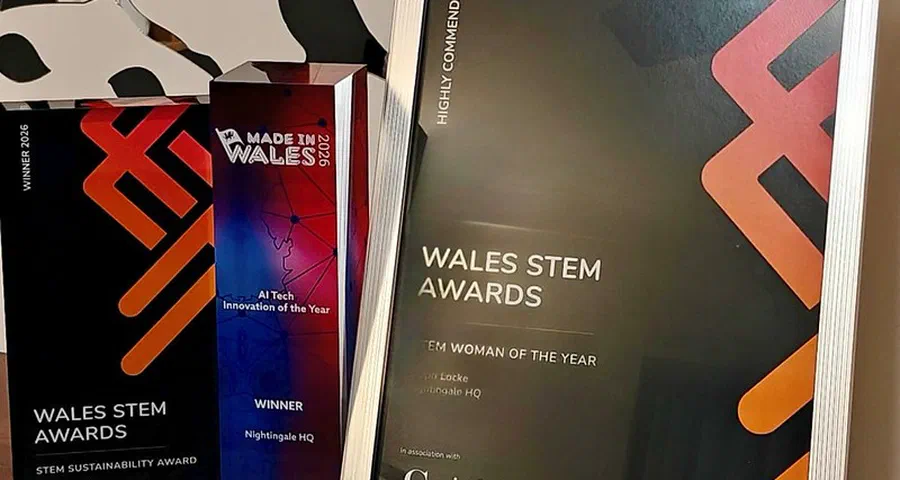
Nightingale HQ Wins at the Wales STEM Awards and Made in Wales Awards 2026
- Ruth Kearney
- News
- Oct 2, 2026
Nightingale HQ won the Sustainability Award at the Wales STEM Awards 2026 and AI Tech Innovation of the Year at Insider’s Made in Wales Awards 2026. Steph Locke was Highly Commended for STEM Woman of the Year.
Sustainability KPIs for Metals Supply Chains
- Steph Locke
- Blog
- Sep 23, 2026
- Updated
Carbon, scrap and recycled-content KPIs only survive an audit if they trace back to a heat number and mill certificate. This guide sets out which sustainability KPIs to track, how to split Scope 1, 2 and 3, and how to test each KPI against live production records. It also explains the GWP A1-A3 figure from supplier EPDs that UK customers ask for, and which demands are mandatory.

€1.5 billion available across Horizon Europe Cluster 4 programme
- Ruth Kearney
- News
- Sep 2, 2026
- Updated
Nightingale HQ CEO Ruth Kearney is attending Innovate UK Business Connect’s Horizon Europe Cluster 4 and 5 brokerage event, looking for research and industry partners for upcoming clean steel and advanced materials calls.
Nightingale HQ and Steph Locke Shortlisted for Two Wales STEM Awards 2026
- Ruth Kearney
- News
- Aug 24, 2026
- Updated
Nightingale HQ has been shortlisted for the Sustainability Award at the Wales STEM Awards 2026, and co-founder Steph Locke is a finalist for STEM Woman of the Year.
New Free Tool: The CBAM Import Cost Estimator
- Steph Locke
- Blog , Free tools
- Aug 20, 2026
- Updated
Guessing your CBAM certificate cost before an EU import? Estimate it in seconds with official EC emissions factors and live certificate prices.
Galetech Group
- Ruth Kearney
- Case studies
- May 22, 2024
- Updated
Galetech Group is a leading player in the renewable energy sector, offering a comprehensive set of solutions throughout the renewable energy lifecycle.
Freight Logistics Green Mile Case Study
- Ruth Kearney
- Case studies
- Jul 12, 2022
- Updated
A technology and data driven approach reduces transport emissions. This tool is a practical approach to support FLS’ sustainability goals, reduce costs and help change commercial behaviours by using data and analytics to help customers understand their environmental footprint.
Data sharing platforms for Influenza and RSV
- Ruth Kearney
- Case studies
- Mar 23, 2022
- Updated
As part of the ongoing work on the causes and spread of respiratory disease, the Helmholtz Centre for Infection Research in Germany sought to build on the success of the open research platform collaborating on the seroprevalence of SARS-CoV-2 (serohub.net). We rapidly scaled two additional open research platforms supporting greater collaboration on the seroprevalence of Influenza and Respiratory Syncytial Virus (RSV).
German research centre shares COVID-19 data globally
- Ruth Kearney
- Case studies
- May 5, 2021
- Updated
To support data sharing and knowledge dissemination, the Helmholtz Centre for Infection Research partnered with NHQ to create a global COVID-19 study platform.
Categories
Tags
- Artificial Intelligence
- Automation
- Cloud Technology
- Compliance
- Continuous Improvement
- Cutting Optimisation
- Data Strategy
- Digital Transformation
- Energy Management
- Glossary
- Inventory Management
- Inventory Management for Metals
- Ireland
- Manufacturing
- Metals
- Nightingale HQ and GoSmarter
- Procurement
- Production Planning
- Quality
- Research & Innovation
- Shape Code Technology
- Small & Medium Enterprises
- Steel Industry
- Supply Chain
- Sustainability
- Steel Tariffs
- Traceability
- Trade & International Steel
- Wales