🏆 Test your reinforced steel (rebar) knowledge! Take our ShapeCode Quiz and enter to win a Shape Code Champ t-shirt

Manufacturing

Manufacturing Innovation and AI

Discover how artificial intelligence and digital technologies are transforming the manufacturing sector. From optimising production processes to reducing waste and improving sustainability, modern manufacturing is being revolutionised by smart solutions.

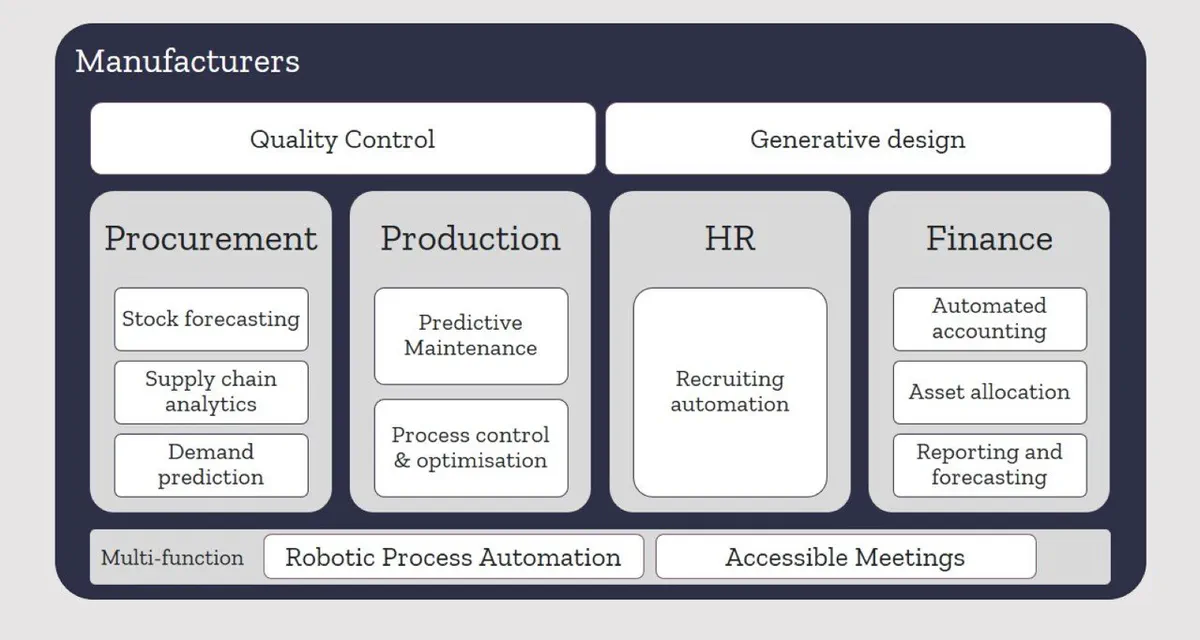
Our content covers practical applications of AI in manufacturing, including supply chain optimisation, quality control, predictive maintenance, and sustainable production methods. Whether you’re looking to improve operational efficiency, reduce costs, or minimise your environmental impact, you’ll find valuable insights here.

Learn about real-world case studies, industry best practices, and emerging trends that are shaping the future of manufacturing. We focus on actionable strategies that help manufacturers leverage technology to stay competitive in an evolving landscape.


What is AI integration into applications?

What is AI integration into applications?

AI systems such as natural language processing and machine learning algorithms can be integrated into existing applications to add functionality and improve their performance over time. Examples of AI features that can be integrated into applications are facial recognition image processing, speech processing and personalised content.

Read More: What is AI integration into applications?
What is Azure Batch?

What is Azure Batch?

Azure Batch is a service that manages the workload of applications. It is designed to take the workload that is greater than the capability of your application, and divide it between a number of nodes - virtual machines (VMs) - that can each run your application and perform different parts of the workload in parallel.

Read More: What is Azure Batch?
What is Azure Data Factory?

What is Azure Data Factory?

Azure Data Factory is a cloud-based data integration service. It does not store data itself, but allows you to create and monitor automated workflows that collect, integrate, and (to some extent) transform large volumes of data from disparate sources, and pass them on to other services that can store, transform, analyse and use the data.

Read More: What is Azure Data Factory?
What is data collection?

What is data collection?

Data collection is the process of gathering and measuring information on targeted variables in an established system. Data collection helps businesses evaluate and improve internal operations, evaluate performance, solve business problems, better understand customers and how to serve them, and make better decisions.

Read More: What is data collection?
What is data modeling?

What is data modeling?

Data modeling is the process of structuring and organising data as a map that clearly visualises data sources, transfers and relationships. Data modeling helps businesses build products that use data efficiently and meet business goals, empower teams to make data-driven decisions efficiently and manage large volumes of data.

Read More: What is data modeling?
Announcement: AIFightsBack webinar series

Announcement: AIFightsBack webinar series

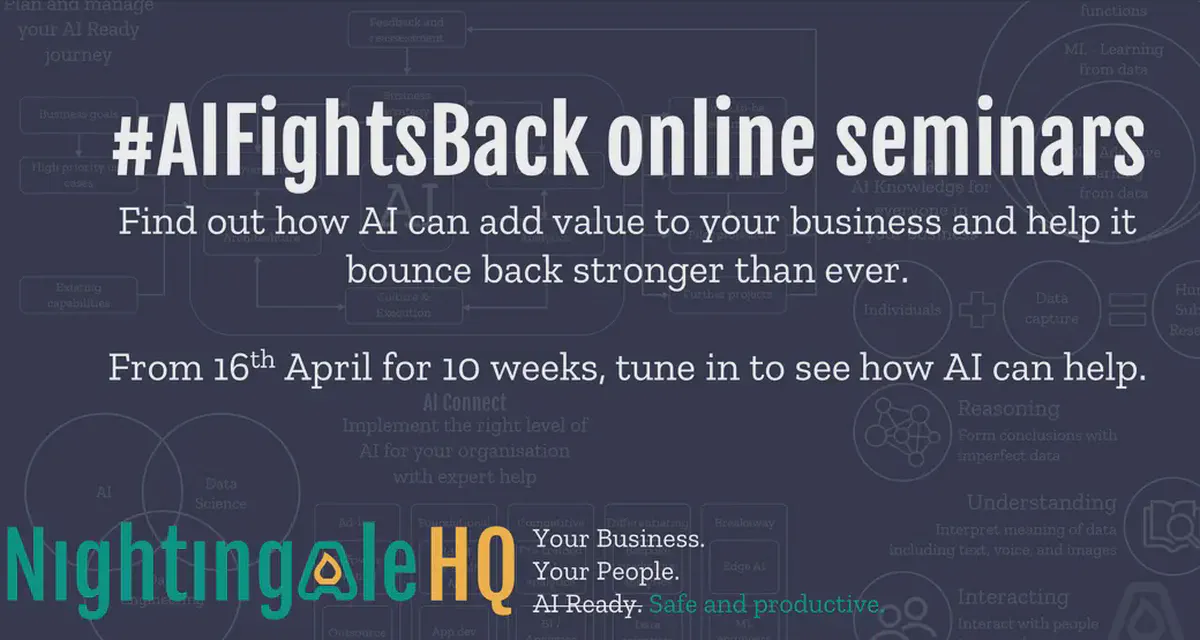
It's been a very tough few weeks, and the world as we know it has changed forever. Our families, our communities, businesses and the global economy are all feeling the pressure of the COVID-19 virus. As with many other startups, we feel the impact of these volatile times and we plough on as much as we can. We remain hopeful that many great innovations came out of times of crisis; that is why we have created the AIFightsBack webinar series.

Read More: Announcement: AIFightsBack webinar series

Low ROI from AI is a people problem, not a tech problem

The top blockers to effective AI use in businesses aren't technical issues. They're people problems.

Read More: Low ROI from AI is a people problem, not a tech problem
Mastering AI in manufacturing: the three levels of competency

Mastering AI in manufacturing: the three levels of competency

Manufacturers have been facing continual pressure to improve their technology base, reduce costs, and improve quality since the Industrial Revolution. Manufacturers are used to change but not every manufacturer can or will embrace it at the same rate. Also, no manufacturer jumps straight to being an expert at the new thing they're needing to adopt. The same goes for Artificial Intelligence (AI) as an emerging change in manufacturing.

Read More: Mastering AI in manufacturing: the three levels of competency
Industry IoT, smart factories and AI in manufacturing

Industry IoT, smart factories and AI in manufacturing

The world of manufacturing is on the brink of another revolution due to the Internet of Things (IoT) and Artificial Intelligence (AI) applications. Aside from clear use cases like robotics and automation, big data applications are coming into play, thanks to industrial time series data collected by data historians. Thriving on all this data, AI systems can be built to send early warnings, optimise processes, predict maintenance and enforce quality control. By collecting the right data, manufacturers can get really creative with their AI solutions, and it can set them apart from the competition.

Read More: Industry IoT, smart factories and AI in manufacturing
A partnership of Machine Learning and AI with healthcare professionals

A partnership of Machine Learning and AI with healthcare professionals

Healthcare has always been a data-rich area, but with new technologies for processing and structuring, and new ways of collecting data, such as using sensors, like many other industries, the available data is growing exponentially. Artificial Intelligence (AI) makes it possible to analyse all this data in real-time by combing Machine Learning (ML) and Natural Language Processing (NLP), in order to gain valuable insights.

Read More: A partnership of Machine Learning and AI with healthcare professionals