🏆 Test your reinforced steel (rebar) knowledge! Take our ShapeCode Quiz and enter to win a Shape Code Champ t-shirt

Digital Transformation

Digital Transformation Guidance

Navigate the complexities of digital transformation with our comprehensive resources covering Industry 4.0, Internet of Things (IoT), and digitalisation strategies. We help organisations understand and implement transformative technologies that drive efficiency and innovation.

Our digital transformation content explores how businesses can modernise their operations, adopt new technologies, and create digital-first cultures. From IoT sensor networks to connected factories and smart manufacturing systems, we cover the technologies reshaping industries.

Learn about successful transformation journeys, change management strategies, and how to overcome common challenges in digitalisation initiatives. Whether you’re beginning your digital transformation or accelerating existing efforts, our resources provide practical guidance for leveraging Industry 4.0 technologies to remain competitive.


What are long-range, low-power sensor networks?

What are long-range, low-power sensor networks?

Long-range, low-power sensor networks are a type of wireless technology. They are systems of connected sensors that work over a large area using little power. This means that they have the benefits of wide-area mobile networks at a lower cost.

Read More: What are long-range, low-power sensor networks?
What is AI integration into applications?

What is AI integration into applications?

AI systems such as natural language processing and machine learning algorithms can be integrated into existing applications to add functionality and improve their performance over time. Examples of AI features that can be integrated into applications are facial recognition image processing, speech processing and personalised content.

Read More: What is AI integration into applications?
What is Azure Batch?

What is Azure Batch?

Azure Batch is a service that manages the workload of applications. It is designed to take the workload that is greater than the capability of your application, and divide it between a number of nodes - virtual machines (VMs) - that can each run your application and perform different parts of the workload in parallel.

Read More: What is Azure Batch?
Announcement: AIFightsBack webinar series

Announcement: AIFightsBack webinar series

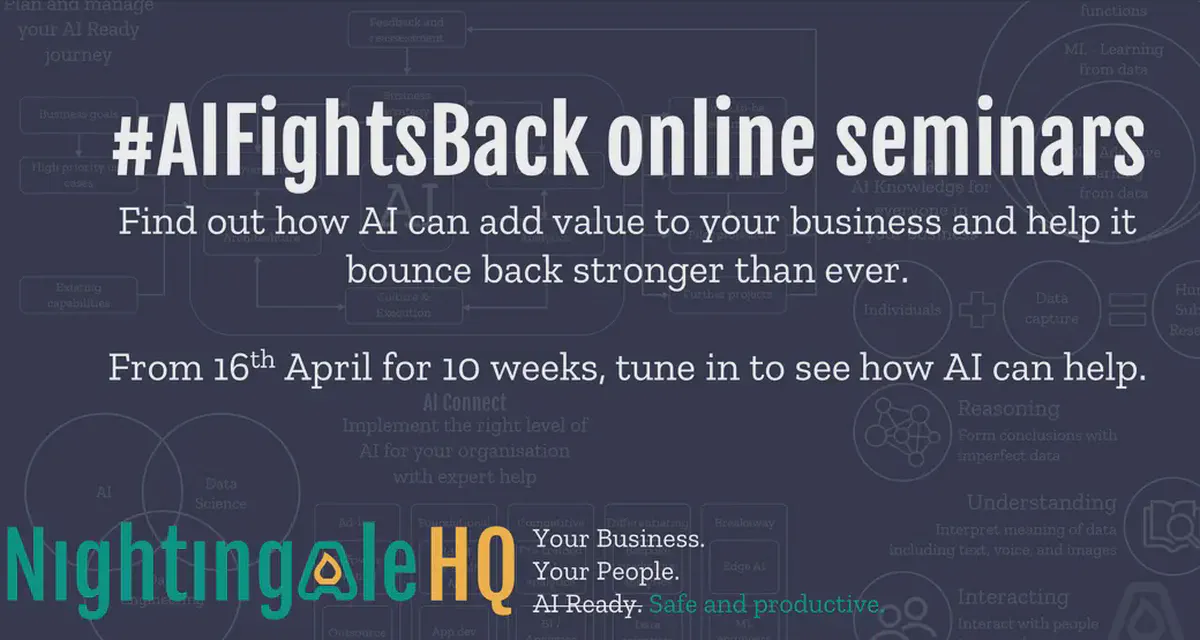
It's been a very tough few weeks, and the world as we know it has changed forever. Our families, our communities, businesses and the global economy are all feeling the pressure of the COVID-19 virus. As with many other startups, we feel the impact of these volatile times and we plough on as much as we can. We remain hopeful that many great innovations came out of times of crisis; that is why we have created the AIFightsBack webinar series.

Read More: Announcement: AIFightsBack webinar series
AI Winters and hype

AI Winters and hype

This is not the first time AI has been all the rage in the business world. In particular, AI was big in the eighties with solutions called expert systems. Will AI be a passing fad now?

Read More: AI Winters and hype
How IoT technology can be used to improve UK public transport

How IoT technology can be used to improve UK public transport

There is no shortage of possible applications when it comes to Artificial Intelligence (AI) in the public sector, but while the UK government is investing heavily in AI in the private sector, what are they actually doing to implement it themselves? Some fear that governments using AI will result in a dystopian future of constant surveillance, but in reality, public sector applications of AI are far more pragmatic.

Read More: How IoT technology can be used to improve UK public transport
Sealing the gap in education poverty with AI & EdTech

Sealing the gap in education poverty with AI & EdTech

Could education be the industry that has seen the least change over the years? While we’ve seen big changes in the accessibility of education, there is still a long way to go, and as pointed out by The World Bank, being in school is not the same as learning. Often pupils are unengaged, teachers are failing to hold everyone’s attention in class, and drop out rates and grades are proving that the one-size-fits-all approach to learning is outdated.

Read More: Sealing the gap in education poverty with AI & EdTech
Mastering AI in manufacturing: the three levels of competency

Mastering AI in manufacturing: the three levels of competency

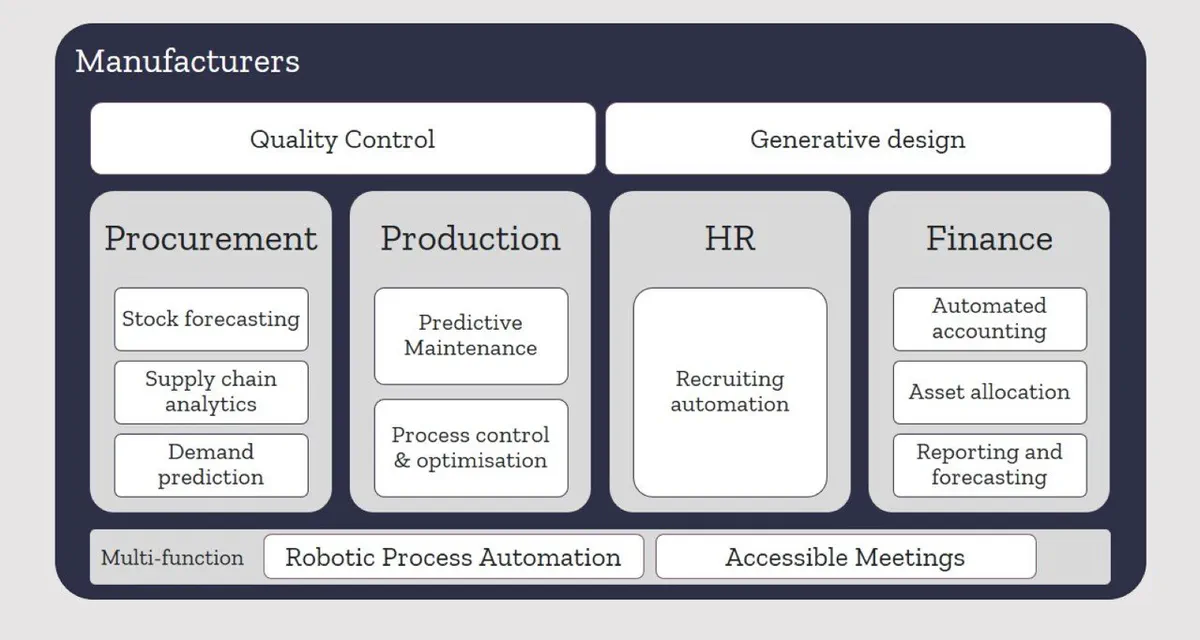
Manufacturers have been facing continual pressure to improve their technology base, reduce costs, and improve quality since the Industrial Revolution. Manufacturers are used to change but not every manufacturer can or will embrace it at the same rate. Also, no manufacturer jumps straight to being an expert at the new thing they're needing to adopt. The same goes for Artificial Intelligence (AI) as an emerging change in manufacturing.

Read More: Mastering AI in manufacturing: the three levels of competency
Industry IoT, smart factories and AI in manufacturing

Industry IoT, smart factories and AI in manufacturing

The world of manufacturing is on the brink of another revolution due to the Internet of Things (IoT) and Artificial Intelligence (AI) applications. Aside from clear use cases like robotics and automation, big data applications are coming into play, thanks to industrial time series data collected by data historians. Thriving on all this data, AI systems can be built to send early warnings, optimise processes, predict maintenance and enforce quality control. By collecting the right data, manufacturers can get really creative with their AI solutions, and it can set them apart from the competition.

Read More: Industry IoT, smart factories and AI in manufacturing
A partnership of Machine Learning and AI with healthcare professionals

A partnership of Machine Learning and AI with healthcare professionals

Healthcare has always been a data-rich area, but with new technologies for processing and structuring, and new ways of collecting data, such as using sensors, like many other industries, the available data is growing exponentially. Artificial Intelligence (AI) makes it possible to analyse all this data in real-time by combing Machine Learning (ML) and Natural Language Processing (NLP), in order to gain valuable insights.

Read More: A partnership of Machine Learning and AI with healthcare professionals