Data Strategy
Data Strategy for Metals Manufacturers
Your factory produces data constantly. Shift reports, inspection results, order histories, material certifications, supplier records. Most of it is scattered across spreadsheets, email inboxes, and filing cabinets.
A data strategy is the plan for changing that. It covers what data you collect, where you store it, who can access it, and how you use it to make better decisions.
For metals manufacturers, the priorities are clear:
- Data governance: who owns each data type, and who is allowed to change it
- Data quality: are your material records accurate, complete, and traceable?
- Data security and privacy: protecting customer order data and supplier certifications
- Business intelligence: turning production records into dashboards that help you manage
- DataOps: keeping your data pipelines working when systems change
You do not need a data science team to start. You need a clear picture of what data you already have and what decisions you wish you could make faster. Start there.
For metals manufacturers considering new software: your data stays yours. GoSmarter is EU-hosted and compliant with the General Data Protection Regulation (GDPR), your records are exportable as CSV at any time, and there are no exit fees. The data-strategy questions worth asking before any new system: where does my data live, what happens to it when I leave, and does the vendor make it easy to find out? Those should have clear, written answers before you sign anything.
Posts in this section cover governance frameworks, data platform choices, and the practical steps that turn scattered records into a working system.

Nightingale HQ joins forces with King’s College London
- Ruth Kearney
- News
- Sep 30, 2025
- Updated
Nightingale HQ joins forces with AI faculty at King’s College London.

Best GreenTech Finalist at Wales Technology Award
- Ruth Kearney
- News
- Sep 22, 2025
- Updated
We’re proud to be finalists in this year’s Wales Technology Awards in the Best GreenTech category, and to be part of a community of innovators from across Wales.
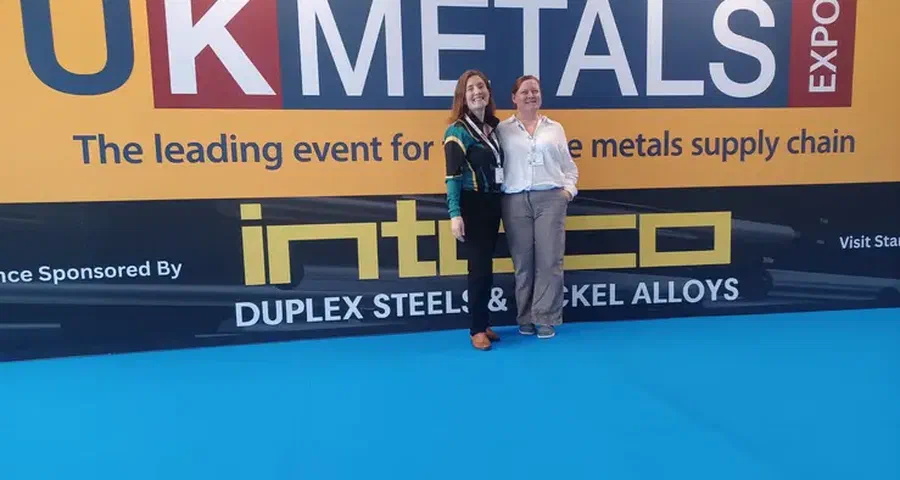
Highlights from UK Metals Expo 2025
- Ruth Kearney
- News
- Sep 22, 2025
- Updated
Nightingale HQ team join the metals community at UK Metals Expo 2025. CEO Ruth Kearney shares her highlights.

CBAM Explained: The Financial Case for Cutting Scrap
- Ruth Kearney
- Learning , Blog
- Aug 21, 2025
- Updated
The steel industry faces increasing pressure to decarbonise, with the EU’s Carbon Border Adjustment Mechanism (CBAM) set to become a decisive factor by 2026. Scrap is no longer just a production inefficiency it directly increases reported emissions and carbon costs. For Finance and Sustainability Managers, reducing scrap is now central to meeting carbon targets and protecting margins.
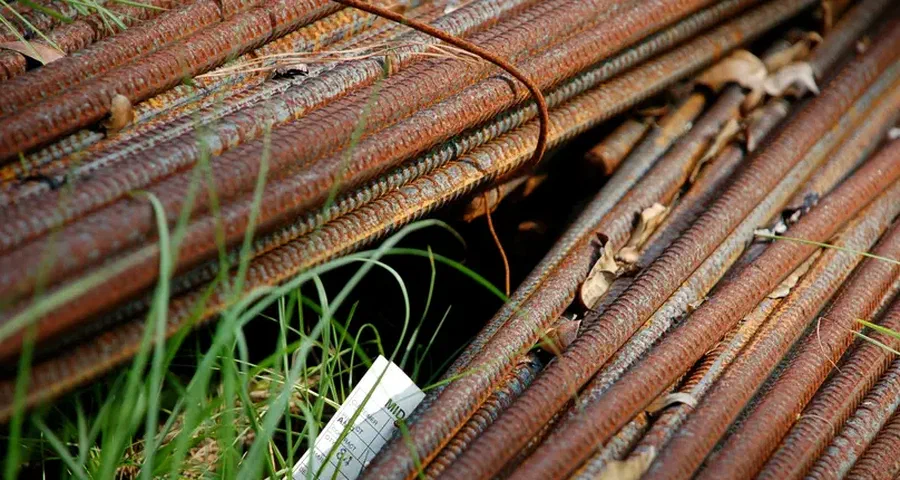
Smart Cuts, Less Scrap: A 1D Cutting Stock Problem
- Ruth Kearney
- Blog , Case studies
- Aug 21, 2025
- Updated
In rebar manufacturing, scrap directly impacts profitability and sustainability, making efficient production essential. Mathematical optimisation, particularly the 1D Cutting Stock Problem, helps minimise waste by determining the most efficient way to cut raw steel bars into required lengths while reducing leftover material.
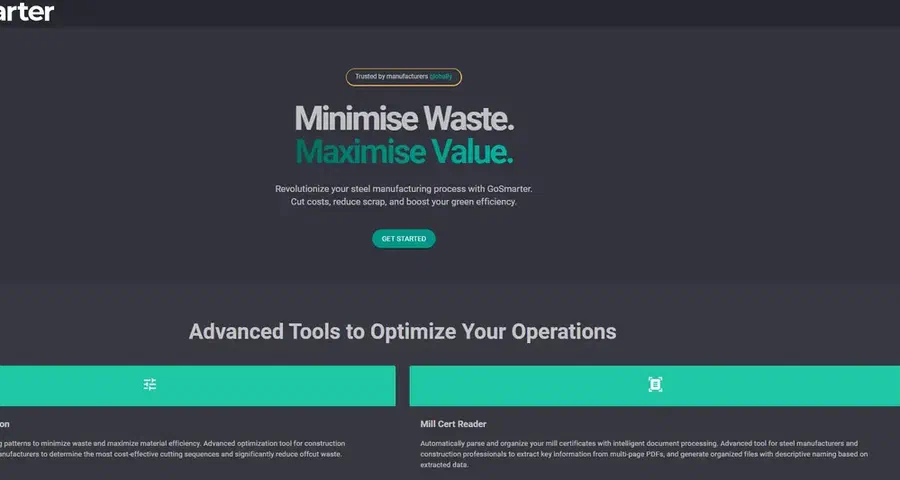
Welsh AI firm launches platform to cut waste and boost UK steel industry
- Ruth Kearney
- News
- Aug 6, 2025
- Updated
Cardiff-based Nightingale HQ (NHQ), has launched GoSmarter.ai, an AI-powered platform designed to help steel manufacturers to reduce waste, lower carbon emissions, and improve production efficiency.
GoSmarter's Rebar Cutting Optimiser Slashes Steel Waste and Carbon Emissions
- Ruth Kearney
- News
- Jul 19, 2025
- Updated
GoSmarter AI’s Rebar Cutting Optimiser uses genetic algorithms to eliminate rebar waste. Less scrap. Lower costs. Greener steel.
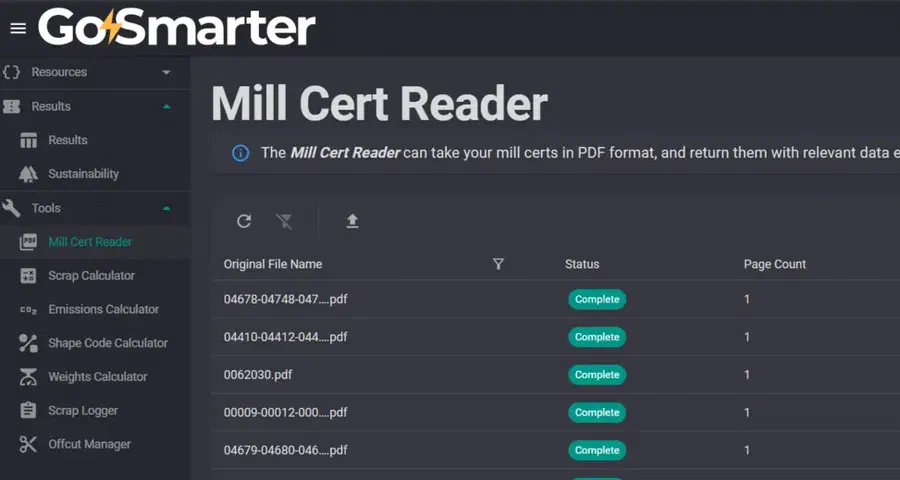
MillCert Reader Saves 10 Hours Monthly for Production Teams
- Ruth Kearney
- News
- Jul 19, 2025
- Updated
MillCert Reader is helping steel production teams save hours by automatically extracting key data from mill certificates and renaming documents in seconds
GoSmarter.ai offers free tools to minimise waste for the steel sector
- Ruth Kearney
- News
- Jul 19, 2025
- Updated
Cardiff-based Nightingale HQ has launched a free suite of digital tools to help steel manufacturers boost efficiency, cut waste, and lower carbon emissions - GoSmarter.ai
Steel MillCert Reader launched
- Ruth Kearney
- News
- Jun 19, 2025
- Updated
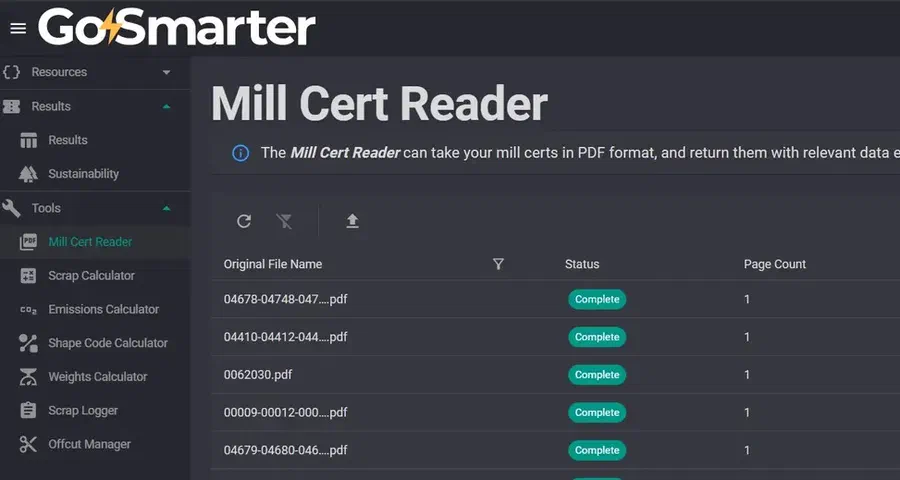
We’re excited to share that MillCert Reader is now live on GoSmarter.ai and it’s already making life easier for production teams.
Categories
Tags
- Artificial Intelligence
- Automation
- Cloud Technology
- Compliance
- Continuous Improvement
- Cutting Optimisation
- Data Strategy
- Digital Transformation
- Energy Management
- Glossary
- Inventory Management
- Inventory Management for Metals
- Ireland
- Manufacturing
- Metals
- Nightingale HQ and GoSmarter
- Procurement
- Production Planning
- Quality
- Research & Innovation
- Shape Code Technology
- Small & Medium Enterprises
- Steel Industry
- Supply Chain
- Sustainability
- Steel Tariffs
- Traceability
- Trade & International Steel
- Wales