Data Strategy
Data Strategy for Metals Manufacturers
Your factory produces data constantly. Shift reports, inspection results, order histories, material certifications, supplier records. Most of it is scattered across spreadsheets, email inboxes, and filing cabinets.
A data strategy is the plan for changing that. It covers what data you collect, where you store it, who can access it, and how you use it to make better decisions.
For metals manufacturers, the priorities are clear:
- Data governance: who owns each data type, and who is allowed to change it
- Data quality: are your material records accurate, complete, and traceable?
- Data security and privacy: protecting customer order data and supplier certifications
- Business intelligence: turning production records into dashboards that help you manage
- DataOps: keeping your data pipelines working when systems change
You do not need a data science team to start. You need a clear picture of what data you already have and what decisions you wish you could make faster. Start there.
For metals manufacturers considering new software: your data stays yours. GoSmarter is EU-hosted and compliant with the General Data Protection Regulation (GDPR), your records are exportable as CSV at any time, and there are no exit fees. The data-strategy questions worth asking before any new system: where does my data live, what happens to it when I leave, and does the vendor make it easy to find out? Those should have clear, written answers before you sign anything.
Posts in this section cover governance frameworks, data platform choices, and the practical steps that turn scattered records into a working system.
Real-Time Data vs. Manual Tracking in Manufacturing
- Ruth Kearney
- Blog
- Apr 18, 2026
- Updated
UK manufacturers waste £200,000 a year on manual production tracking. Real-time data cuts errors, slashes downtime, and makes compliance effortless.
GoSmarter vs Jonas Metals for Metals Distribution Management
Jonas Metals is purpose-built for the metals distribution industry and has been for decades. GoSmarter approaches the same problems with modern AI. Here is the honest comparison between two tools that both know steel.
GoSmarter vs Epicor for Metals Operations Management
Epicor is a mature, capable ERP built for manufacturers. It is also complex, expensive, and not built specifically for steel. GoSmarter fills the metals-specific gaps. The two can work together.
Mill Certificate Automation Software: Which Tool Is Right for Your Business?
A vendor-neutral buyer’s guide to mill certificate automation software for metals manufacturers — covering five categories of tool, an honest eight-tool comparison table, real failure modes on multi-heat and foreign-language certs, deployment patterns, and a scenario map for every buyer profile.
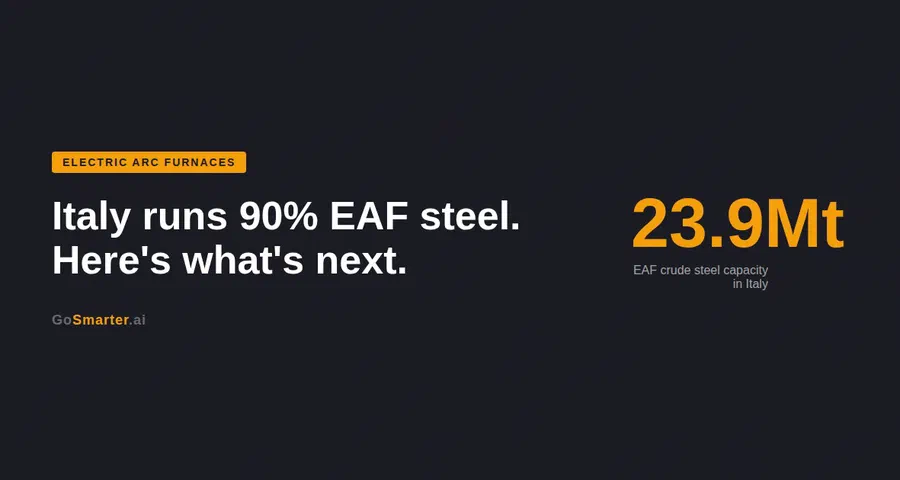
Italy's Electric Arc Furnaces: 23.9Mt Capacity and Three Bets on the Future
Italy produces 90% of its steel via EAF. Three new furnace projects are reshaping the map. Here’s what EAF operators need to manage.
Predictive Maintenance: Edge Computing in Action
- Ruth Kearney
- Blog
- Apr 3, 2026
- Updated
Learn how predictive maintenance with edge computing helps metals manufacturers detect failures in milliseconds, reduce downtime and scrap, and cut maintenance costs.
AI Augmentation for Metals: Fix What Generic ERP Can’t
- Ruth Kearney
- Blog
- Apr 2, 2026
- Updated
Generic ERP fails metals teams on mill certs, heat codes, and scrap rates. An AI layer like GoSmarter fixes the gaps without replacing your ERP.
Nightingale HQ Partners with CTAG to Drive AI-Powered Sustainability in Manufacturing
- Ruth Kearney
- News
- Apr 1, 2026
- Updated
Nightingale HQ has completed the Driving Sustainability in Manufacturing (DSM) project with the Automotive Technology Centre of Galicia (CTAG), combining Digital Twin technology with GoSmarter.ai to reduce production waste, validate AI tools in real factory environments, and launch its first commercial product.
Lifecycle Assessment Tools for Metals Manufacturers
- Steph Locke
- Blog
- Apr 1, 2026
- Updated
A practical guide to AI-powered Life Cycle Assessment tools for metals manufacturers, covering compliance, data quality, and tool selection.
GoSmarter vs Sage 50 for Metals Inventory Management
Sage 50 handles your books brilliantly. It was not built for tracking steel by heat number and grade across a yard. GoSmarter fills that gap, and the two tools work together rather than against each other.
Categories
Tags
- Artificial Intelligence
- Automation
- Cloud Technology
- Compliance
- Continuous Improvement
- Cutting Optimisation
- Data Strategy
- Digital Transformation
- Energy Management
- Glossary
- Inventory Management
- Inventory Management for Metals
- Ireland
- Manufacturing
- Metals
- Nightingale HQ and GoSmarter
- Procurement
- Production Planning
- Quality
- Research & Innovation
- Shape Code Technology
- Small & Medium Enterprises
- Steel Industry
- Supply Chain
- Sustainability
- Steel Tariffs
- Traceability
- Trade & International Steel
- Wales