Data Strategy
Data Strategy for Metals Manufacturers
Your factory produces data constantly. Shift reports, inspection results, order histories, material certifications, supplier records. Most of it is scattered across spreadsheets, email inboxes, and filing cabinets.
A data strategy is the plan for changing that. It covers what data you collect, where you store it, who can access it, and how you use it to make better decisions.
For metals manufacturers, the priorities are clear:
- Data governance: who owns each data type, and who is allowed to change it
- Data quality: are your material records accurate, complete, and traceable?
- Data security and privacy: protecting customer order data and supplier certifications
- Business intelligence: turning production records into dashboards that help you manage
- DataOps: keeping your data pipelines working when systems change
You do not need a data science team to start. You need a clear picture of what data you already have and what decisions you wish you could make faster. Start there.
For metals manufacturers considering new software: your data stays yours. GoSmarter is EU-hosted and compliant with the General Data Protection Regulation (GDPR), your records are exportable as CSV at any time, and there are no exit fees. The data-strategy questions worth asking before any new system: where does my data live, what happens to it when I leave, and does the vendor make it easy to find out? Those should have clear, written answers before you sign anything.
Posts in this section cover governance frameworks, data platform choices, and the practical steps that turn scattered records into a working system.

Removing AI bias for better decision making
- Mia Hatton
- Archive
- Nov 18, 2019
- Updated
It is difficult to deny that humans make biased decisions. Unconsciously we all make choices that are based on prejudices and flawed associations. This bias that we introduce to our business decisions can trickle through entire organisations, from recruitment to market segmentation. AI, with its lack of consciousness, human experience and gut feelings, has the potential to remove bias from businesses, and yet all too often AI is found to exhibit the same biases - link no longer works that we do.

How AI in marketing is enhancing B2B sales
- Mia Hatton
- Archive
- Nov 11, 2019
- Updated
At the end of 2018, Salesforce - link no longer works reported that adoption of AI by marketers had grown by 44% last year, and that adoption rate is unlikely to slow anytime soon. With marketers showing "extensive interest" - link no longer works in exploiting AI for their roles, more and more tools are becoming available to support companies on their journey to smarter marketing. AI is transforming the way companies market their products and services to other businesses, streamlining processes at all levels of the sales funnel.

How can you attract the best AI talent from a limited pool?
- Mia Hatton
- Archive
- Oct 31, 2019
- Updated
According to research by MMC Ventures - link no longer works, demand for AI talent has doubled in 24 months, faster than the talent pool can keep up. As of 2019 there was one AI professional for every two available jobs, so building a team of AI developers for your organisation requires both focused recruitment and a sound retention strategy.

Let your business strategy drive AI adoption
- Mia Hatton
- Archive
- Oct 30, 2019
- Updated
To reveal the tactics and behaviours of companies that are getting the most out of AI, MIT Sloan Management Review and Boston Consultancy Group undertook a survey of more than 2500 executives alongside 17 expert interviews in their 2019 report, Winning with AI - link no longer works. One of their findings was that while 9 out of 10 respondents saw AI as an opportunity for their company, the perceived risk of AI is on the rise, with 45% of respondents reporting perceived risk from AI (compared to 37% in 2017).
Decoding the hype around AI
- Steph Locke
- Archive
- Oct 29, 2019
- Updated
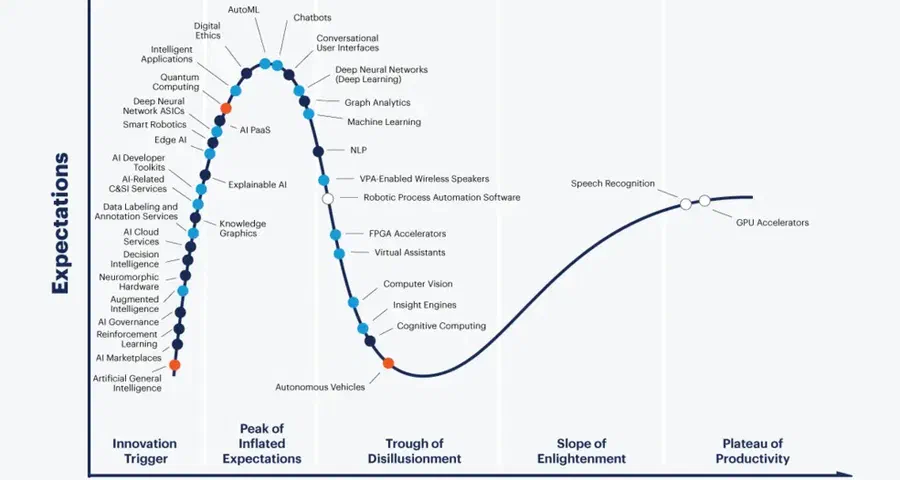
As the powers and capabilities of Artificial Intelligence (AI) expand and evolve, the same cannot be said for the general understanding of the topic. This has resulted in AI becoming a blanket term that gets misused and thrown around for all things, including things that it’s not. People also have very unrealistic expectations of what AI can do leading in some cases to fear and paranoia over things like potential world domination, in others, disillusion when the AI doesn’t perform to the high standards they were hoping.
Can AI outperform medical professionals in diagnosis?
- Mia Hatton
- Archive
- Oct 28, 2019
- Updated
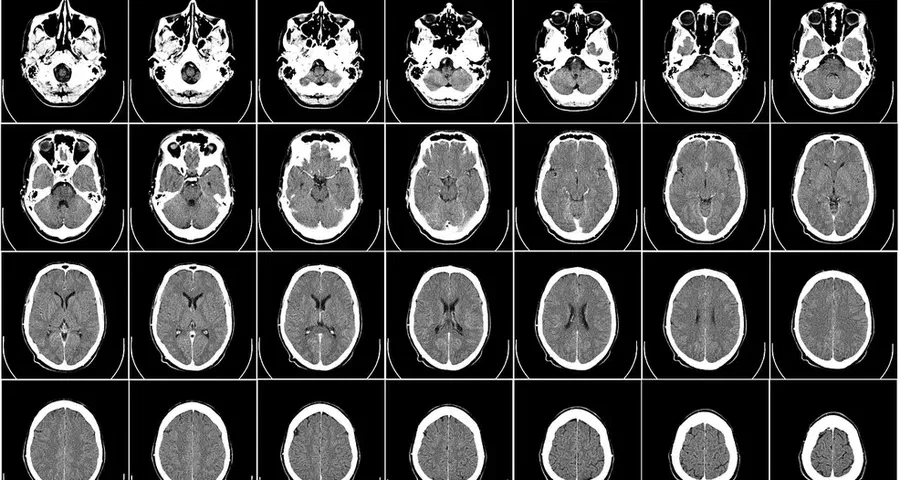
Last year the Guardian - link no longer works reported that AI is 'equal to humans in medical diagnoses' when interpreting images, referring to a study published in Lancet Digital Health. The study revealed that AI 'deep learning' systems were able to detect disease 87% of the time and correctly gave the all-clear in 93% of cases (the equivalent success rate in healthcare professionals is 86% and 93%). This means that AI in healthcare is on track to support medical professionals, leading to faster, cheaper diagnoses and drug development. This will allow healthcare professionals to achieve more with their time and help more people.

7 tips for building a data culture that will strengthen your business
Data analytics has taken off but not everyone is on the same page. While some companies are already making waves with data science, others are still struggling with the basics. Curating a healthy data culture is ever more important now to prevent the gap from growing between those who are embracing analytics and those who are lagging behind.

Project management: Are you backing the right AI projects?
As an executive with an influence over whether your company implements AI and which projects it embarks on, there’s a lot of pressure on you to be successful. The future of AI within your company could rest on you on how your chosen projects perform.

Do you really need big data to start using data science?
- Mia Hatton
- Archive
- Oct 21, 2019
- Updated
All businesses generate data. Even the smallest business has access to hundreds, if not thousands, of interesting data points that they could explore. But it is not uncommon for business owners to think their data is small, inferior and not yet worth analysing. This is where they are wrong every time. Starting small is the best thing you can do, so we say, the time to start your first data science projects is now.

How to get AI to work for your business and enhance operations
- Mia Hatton
- Archive
- Oct 18, 2019
- Updated
Enterprise cognitive computing is the application of AI to enhance business operations. It has a wide range of applications including call handling, fraud detection and maintenance scheduling. ECC systems automate repetitive tasks and improve efficiency through fast search and information processing.
Categories
Tags
- Artificial Intelligence
- Automation
- Cloud Technology
- Compliance
- Continuous Improvement
- Cutting Optimisation
- Data Strategy
- Digital Transformation
- Energy Management
- Glossary
- Inventory Management
- Inventory Management for Metals
- Ireland
- Manufacturing
- Metals
- Nightingale HQ and GoSmarter
- Procurement
- Production Planning
- Quality
- Research & Innovation
- Shape Code Technology
- Small & Medium Enterprises
- Steel Industry
- Supply Chain
- Sustainability
- Steel Tariffs
- Traceability
- Trade & International Steel
- Wales