Compliance
Compliance for Metals Manufacturers
Compliance doesn’t have to mean a wall of folders and a week of panic every time an audit comes around. For metals manufacturers, the stakes are real: BS EN 1090, EN 10204, and the National Structural Steelwork Specification (NSSS) demand traceable, auditable records. Miss one and you’ve got a non-conformance on your hands.
The problem isn’t that compliance is hard. It’s that the tools most shops use: paper binders, shared drives, and manually typed spreadsheets. They make it harder than it needs to be. AI-powered mill certificate management, automated compliance checklists, and real-time traceability systems cut the admin work without cutting corners.
Posts in this section cover the standards that matter to metals manufacturers, the common failure points that trigger audit findings, and the practical tools that help you stay ahead of them.
GoSmarter’s MillCert Reader reads any mill certificate: scanned paper, PDF, or multi-page test report. It links every heat number and material spec directly to your stock record. Most customers are live within a day. No ERP changes. No data migration project.
Stay audit-ready. Every day.
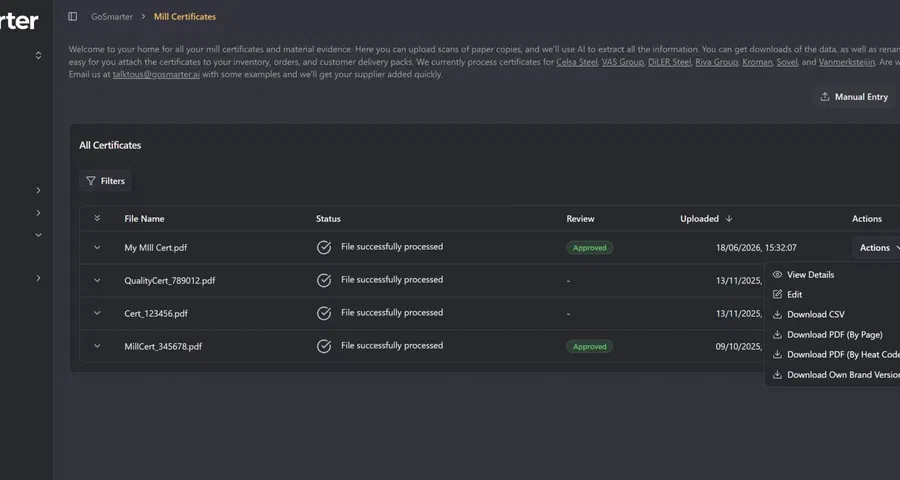
Material Test Report (MTR) vs Mill Test Certificate (MTC): What's the Difference?
- Ruth Kearney
- Blog
- Jun 21, 2026
- Updated
A Material Test Report and a Mill Test Certificate often describe the same document. Here is what each one proves, why the heat number is the part that matters, and how to manage them at scale.
Audit Trails: Because 'I Think It Was Dave' Isn't a Defence
- Steph Locke
- Blog
- Jun 19, 2026
- Updated
If a mill cert value changed and nobody logged it, did it really happen? Audit trails prove what happened to your data — not just where the material went.
Why End-to-End Traceability Is an Operations Advantage, Not a Quality Box-Tick
- Ruth Kearney
- Blog
- Jun 18, 2026
- Updated
Traceability that travels with the material through goods-in, stock, jobs, cutting and despatch gives the Operations Manager faster release, fewer wrong-material incidents, and greater audit readiness.
More Than a Certificate: Why MTRs Are the Foundation of Quality, Traceability, and Compliance
- Ruth Kearney
- Blog
- Jun 17, 2026
- Updated
Most teams treat the MTR as compliance paperwork. It’s actually the cornerstone of traceability and the proof behind every material decision you make.

Your Mill Certs Are Your Superpower
- Ruth Kearney
- Blog
- Jun 16, 2026
- Updated
Mill Certs are more than compliance paperwork. They are the foundation of traceability, risk management, and competitive advantage in metals procurement.
MTR Compliance Essentials for Buyers: What Procurement Teams Need to Know
- Steph Locke
- Blog
- Jun 15, 2026
- Updated
Price and lead time get the attention, but the Material Test Report decides whether your project passes an audit. Here’s how procurement teams verify every Mill Certificate.
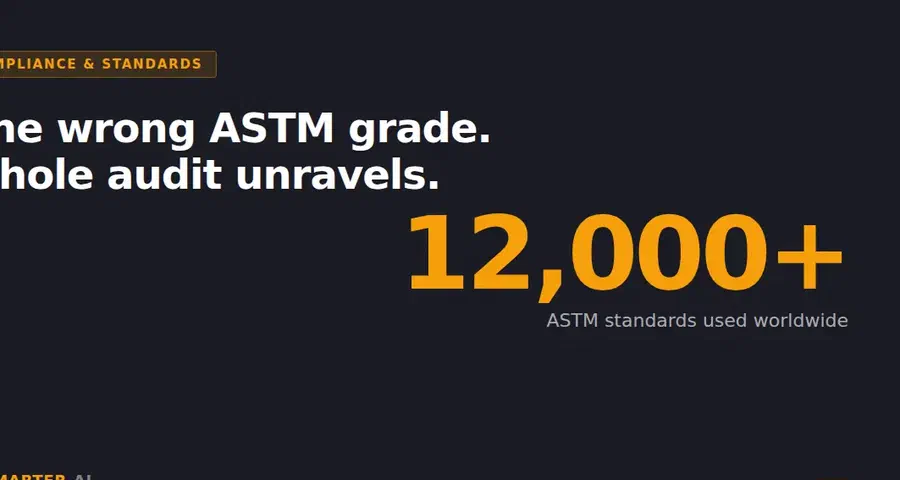
International ASTM Standards: The Foundation of Quality, Compliance, and Traceability
ASTM standards appear on every mill certificate and spec sheet. Learn what they cover, why they matter to manufacturers, and how AI automates ASTM compliance.
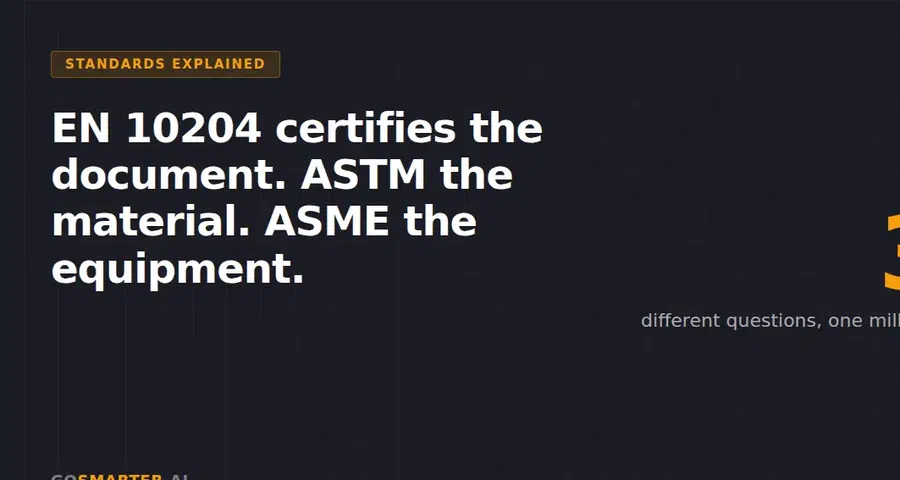
EN 10204 vs ASTM and ASME: How the Standards Fit Together
EN 10204, ASTM, and ASME turn up on the same mill certificate and confuse a lot of buyers. They aren’t alternatives but rather they answer three different questions. Here’s how the European certificate standard, the American material spec, and the American design code fit together, and what to check on a purchase order.
From Mill to Customer: End-to-End Mill Cert Traceability
- Steph Locke
- Blog
- Jun 8, 2026
- Updated
GoSmarter now covers the full mill-cert-to-customer workflow, AI-assisted and manual. Here is what changed across cert ingestion, approval, stock reservation, and customer documentation.
Compliance Doesn’t Have to Suck: Turning 2027’s Paperwork Nightmare into a Cash Machine
- Steph Locke
- Blog
- Jun 5, 2026
- Updated
Drowning in mill certificates and CBAM risk? Read how AI automates cert capture, fixes traceability, cuts scrap and avoids fines.
Categories
Tags
- Artificial Intelligence
- Automation
- Cloud Technology
- Compliance
- Continuous Improvement
- Cutting Optimisation
- Data Strategy
- Digital Transformation
- Energy Management
- Glossary
- Inventory Management
- Inventory Management for Metals
- Ireland
- Manufacturing
- Metals
- Nightingale HQ and GoSmarter
- Procurement
- Production Planning
- Quality
- Research & Innovation
- Shape Code Technology
- Small & Medium Enterprises
- Steel Industry
- Supply Chain
- Sustainability
- Steel Tariffs
- Traceability
- Trade & International Steel
- Wales