Blog and Articles
Articles Written for the Shop Floor, Not the Boardroom
Practical reads for people who run metal processing, distribution, and manufacturing operations. No generic thought-leadership. No consultancy waffle. Just articles written for people who care about what actually happens on the shop floor.
Our articles cover the decisions that actually matter for metals businesses:
- How to cut scrap without replacing your equipment
- How to stop chasing mill certificates before every delivery
- How to get real inventory visibility without a six-figure ERP bill
- How AI is changing the economics of metals manufacturing
You’ll also find articles on industry terminology, compliance standards, and the wider context of digitalisation for metals SMEs. Turns out knowing what’s broken is step one.
If you’re looking for a specific subject, browse by topic or category. The glossary is a good starting point if you’re new to the terminology your customers use on purchase orders.
Tier-Based AI Adoption for Metals Manufacturers: Start at Starter, Unlock More as You Grow
Tier-based AI adoption lets metals manufacturers start at Starter for traceability foundations, then unlock compliance automation at Workshop and full end-to-end traceability at Production. GoSmarter is designed for this pattern: each tier delivers value and unlocks more as you grow.
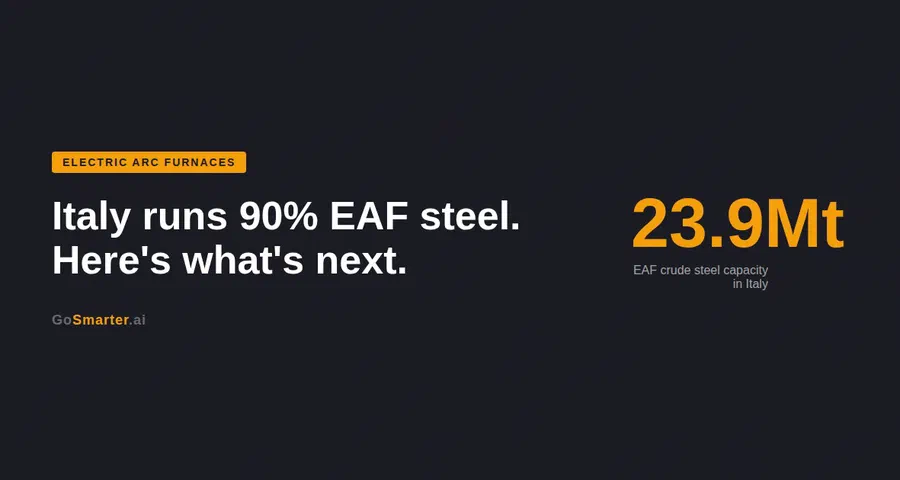
Italy's Electric Arc Furnaces: 23.9Mt Capacity and Three Bets on the Future
Italy produces 90% of its steel via EAF. Three new furnace projects are reshaping the map. Here’s what EAF operators need to manage.
Predictive Maintenance: Edge Computing in Action
- Ruth Kearney
- Blog
- Apr 3, 2026
- Updated
Learn how predictive maintenance with edge computing helps metals manufacturers detect failures in milliseconds, reduce downtime and scrap, and cut maintenance costs.
AI Augmentation for Metals: Fix What Generic ERP Can’t
- Ruth Kearney
- Blog
- Apr 2, 2026
- Updated
Generic ERP fails metals teams on mill certs, heat codes, and scrap rates. An AI layer like GoSmarter fixes the gaps without replacing your ERP.
Lifecycle Assessment Tools for Metals Manufacturers
- Steph Locke
- Blog
- Apr 1, 2026
- Updated
A practical guide to AI-powered Life Cycle Assessment tools for metals manufacturers, covering compliance, data quality, and tool selection.
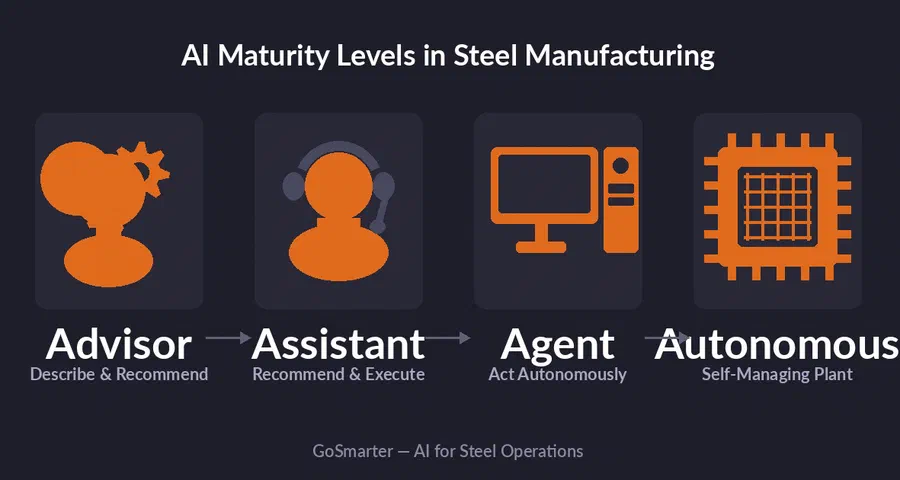
AI in Steel Manufacturing: From Advisors to Autonomous Plants
- Ruth Kearney
- Blog
- Mar 31, 2026
- Updated
From advisory dashboards to autonomous plants: four levels of AI maturity in steel manufacturing, with real examples from POSCO, thyssenkrupp, Baowu, and SSAB HYBRIT.

British Steel to be Nationalised: UK Government Steps in Amid Owner Transition
- Ruth Kearney
- Blog
- Mar 31, 2026
- Updated
UK set to nationalise British Steel within weeks after talks with owner Jingye, sources say.

Stop Running Metal Machining Like It's 1985
- Steph Locke
- Blog
- Mar 31, 2026
- Updated
AI robotics cuts scrap, downtime, and certificate admin before they eat your margin.
ERP vs AI: Scaling Manufacturing Operations
- Steph Locke
- Blog
- Mar 30, 2026
- Updated
Stop typing mill certs and fighting 1985 ERPs. AI automates the admin nightmare, cuts downtime and scrap, and gets factories scaling fast.
From Excel and Email to GoSmarter in 30 Days
A practical 30-day implementation guide for metals manufacturers moving from spreadsheets and email to GoSmarter. Covers week-by-week steps, common concerns, ERP integration, and what to keep versus what to retire.
Categories
Tags
- Artificial Intelligence
- Automation
- Cloud Technology
- Compliance
- Continuous Improvement
- Cutting Optimisation
- Data Strategy
- Digital Transformation
- Energy Management
- Glossary
- Inventory Management
- Inventory Management for Metals
- Ireland
- Manufacturing
- Metals
- Nightingale HQ and GoSmarter
- Procurement
- Production Planning
- Quality
- Research & Innovation
- Shape Code Technology
- Small & Medium Enterprises
- Steel Industry
- Supply Chain
- Sustainability
- Steel Tariffs
- Traceability
- Trade & International Steel
- Wales