The Historian and AI Webinar (AIFightsBack)
- Steph Locke
- Archive , Learning , Blog
- May 15, 2020
- Updated:
Table of contents Show Hide
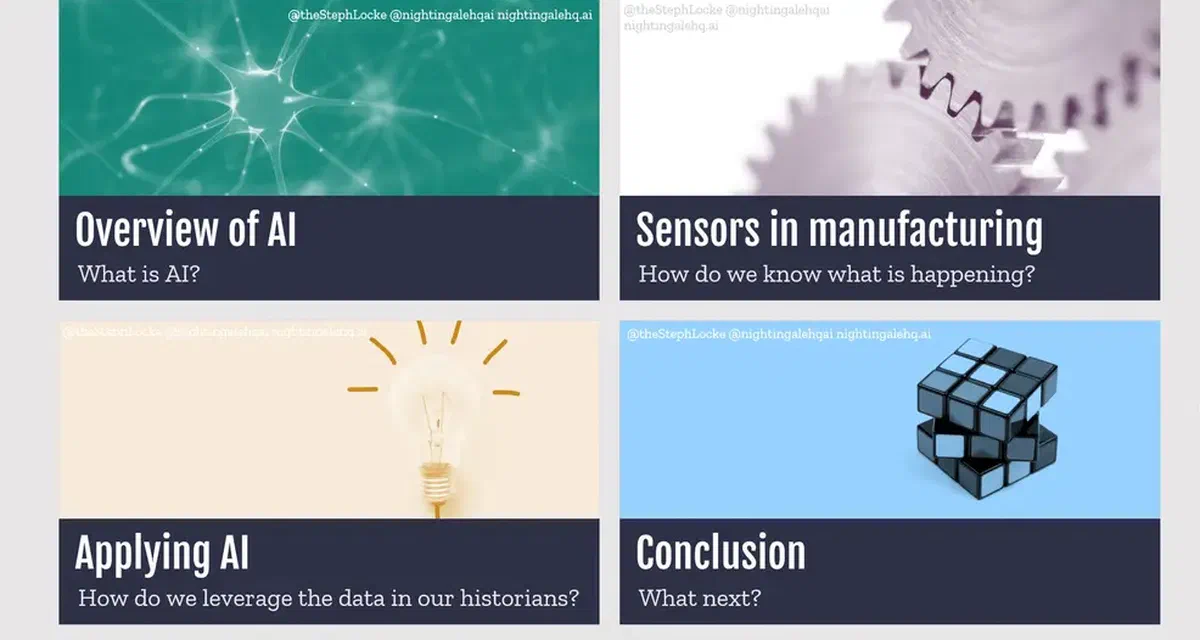
AI for manufacturing has huge potential. As well as clear AI use cases like robotics and automation, the wealth of data being consolidated into industrial time series via historian appliances presents an opportunity for further AI applications. Using the data being consolidated, we can build early warning systems for critical issues, optimise maintenance programs, and improve processes.
Delivered as part of our AIFightsBack series, this is the second AI in manufacturing focused webinar, delivered in association with the Irish Centre of Business Excellence. The next two AI in Manufacturing cover some of the relevant machine learning techniques and how IoT can be used to support social distancing in the workplace.
Video
Slides
The historian and AI from Stephanie Locke
Resources
- 7 Quick-win AI Projects paper
- AI in Manufacturing posts
- AI in Manufacturing webinar
- Mastering AI in manufacturing: the three levels of competency
AIFightsBack Webinars
- AI in Manufacturing (Technical) with Steph Locke
- A Journey to Trustworthy AI with Clare Dillon, NewWorks
- How to become a Data Science Company with Ashwini Mathur, Novartis
- Social Distancing and IoT solutions with Matthew Macdonald-Wallace, Mockingbird Consulting
- Data Science versus Privacy - during these Pandemic times with Dr. Iain Keaney, Skellig.aiCheck for upcoming webinars on Eventbrite.
About
AIFightsBack is an online webinar series for anyone in business who needs to learn about how AI can create value and help you come back stronger than ever. Learn from top-notch data practitioners about core automation tools, growth opportunities and the ‘AI quick Wins’ that you can easily adopt in your business to gain momentum. This series is brought to you by Nightingale HQ - your complete platform for AI adoption.
FAQs
AI and historical research — an unlikely but important connection?
The AIfightsback webinar series was designed to show AI working across a wide range of domains — demonstrating that the technology is not limited to tech companies and financial services, but applicable wherever there is data and a problem to solve. The session with Dr Julianne Simpson, a historian, was one of the more surprising applications in the series: using AI to analyse historical documents, identify patterns in large text corpora, and accelerate research that would take years to complete manually.
The connection to manufacturing might not be immediately obvious, but it is real. Both manufacturing and historical research involve working with large volumes of documents — some structured, some unstructured, some high quality, some poor quality — and extracting reliable information from them at scale. The AI techniques used in document intelligence are the same, whether the document is a 19th century parish record or a 21st century mill certificate.
What did the webinar demonstrate about AI adoption?
The AIfightsback webinar series was valuable not just for the specific content of each session, but for what it demonstrated collectively: that AI tools are accessible to practitioners in any domain, without requiring a data science degree or a large technology budget. Dr Simpson’s engagement with AI as a historian — approaching it as a tool for her existing research practice rather than a technology to be mastered for its own sake — reflects the right relationship between AI and professional expertise.
This is the same relationship GoSmarter encourages with manufacturers: AI as a tool that makes experienced professionals more effective, not a technology that replaces professional judgement.
What is the AIfightsback series?
About the Author

Co-founder & Head of Product
Steph Locke is Co-founder and Head of Product at GoSmarter AI — former Microsoft Data & AI MVP building practical tools to cut paperwork and automate compliance for metals manufacturers.