The EU Just Slashed CSRD Scope by 90%. What It Means for Metals Manufacturers
- GoSmarter AI
- Blog
- February 25, 2026
- Updated:
Table of contents Show Hide
Most metals manufacturers have been dreading CSRD. The EU just made it someone else’s problem — for now.
The European Council has officially approved the “Omnibus I” simplification package, dramatically cutting the scope of two major sustainability directives: the Corporate Sustainability Reporting Directive (CSRD) and the Corporate Sustainability Due Diligence Directive (CSDDD). For the majority of steel fabricators, aluminium processors, and metal manufacturers across the EU, this is a genuine reprieve from what was shaping up to be a compliance nightmare.
Here’s the no-BS breakdown of what changed and what it means for your business.
The numbers that actually matter
CSRD reporting threshold: Raised from 250 employees to 1,000 employees, with a new revenue threshold of €450 million. The result? 90% of companies are now off the hook for mandatory CSRD sustainability reporting.
CSDDD due diligence threshold: Raised to 5,000 employees and €1.5 billion in turnover. This effectively removes the vast majority of manufacturers from mandatory supply chain due diligence requirements.
Climate transition plans: No longer required under CSDDD. If you were bracing yourself for the effort of documenting your entire decarbonisation roadmap for regulators, you can stand down.
Penalties: Maximum CSDDD fines capped at 3% of global revenues — down from the original regime which had no cap and unlimited liability exposure.
Deadline: Pushed to July 2029, giving companies an additional year to get their house in order.
What this actually means if you run a metals operation
If your steel service centre, fabrication shop, or aluminium processing plant employs fewer than 1,000 people (and most do), you are no longer required to produce a CSRD sustainability report. Full stop.
If you’re a larger metals manufacturer — say, a rebar producer, structural steel mill, or integrated aluminium operation — you may still fall within scope. But even if you do, the requirements are now considerably lighter than what was originally planned.
For smaller suppliers in the metals supply chain, the news is also good: businesses with fewer than 1,000 employees can no longer be compelled by larger customers to provide more sustainability data than what’s outlined in the voluntary VSME standard. That means less pressure from your largest customers to fill in endless questionnaires about your emissions, social practices, and due diligence processes.
Don’t get too comfortable — the other compliance pressures haven’t gone away
Here’s where we need to be straight with you: CSRD being off the table doesn’t mean sustainability data stops mattering for metals manufacturers.
CBAM is still coming. The EU’s Carbon Border Adjustment Mechanism means that imported steel and aluminium now carries a carbon price. Whether or not you have to report under CSRD, your customers — and your customers’ customers — will increasingly need to know the embodied carbon in the material they’re buying. That data lives in your mill certificates, your process logs, and your production records.
Your major customers may still ask. Large OEMs, construction groups, and automotive manufacturers who remain in scope for CSRD will still need to report on their supply chain emissions. Guess who’s in their supply chain? You are. Even if you’re exempt from CSRD yourself, expect to start getting more detailed questions about material traceability and carbon equivalence from the buyers who aren’t exempt.
Winning tenders is getting harder without it. Public procurement criteria and private sector sustainability scorecards are only moving in one direction. The exemption buys you time, not a permanent escape.
The smart move: get your data house in order now
The Omnibus package has removed the compliance gun from your head — but the underlying business case for tracking your materials, scrap rates, and emissions data hasn’t changed.
If you’re still managing mill certificates in email attachments, tracking scrap by hand, or running production schedules in spreadsheets, you’re sitting on a ticking clock. The companies that will thrive when the next wave of regulation arrives (and there will be one) are the ones who’ve already got clean, accessible data on their materials and processes.
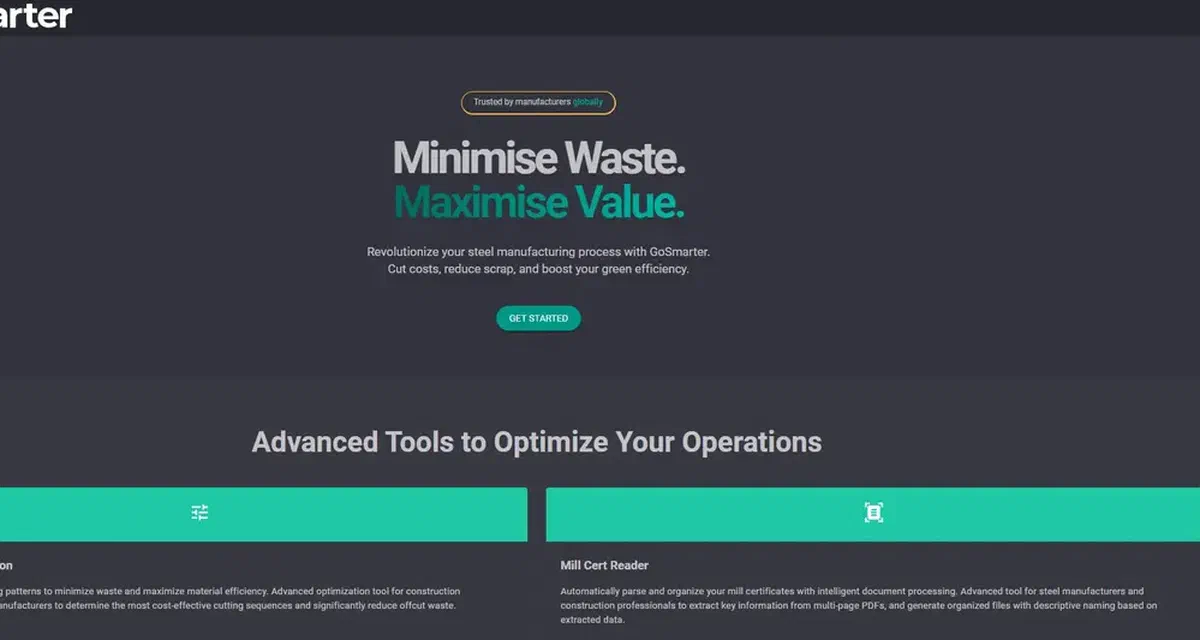
That’s exactly what tools like GoSmarter are built for — digitising mill certificates, tracking material traceability, and cutting scrap rates — not because the regulator is forcing you, but because it makes your operation leaner and your margins better.
The EU just gave you breathing room. Use it.
About the Author

AI Blog Assistant
BlogSmarter AI is GoSmarter's AI research and content assistant — surfacing practical insights from industry data and producing compelling blog posts for metals manufacturers.