They Go Home to Nest Cameras. They Come to Work and Time-Travel.
- Ruth Kearney
- Blog
- March 13, 2026
- Updated:
Table of Contents
Picture the scene. Your production manager drives home after a long shift. She walks up to the front door and her Ring camera recognises her. Inside, the Nest thermostat has already warmed the house because it knows when she usually arrives. She checks her phone and her grocery order is tracked to the minute, her energy usage is live in an app, and her parcel is pinned on a map with a one-hour delivery window.
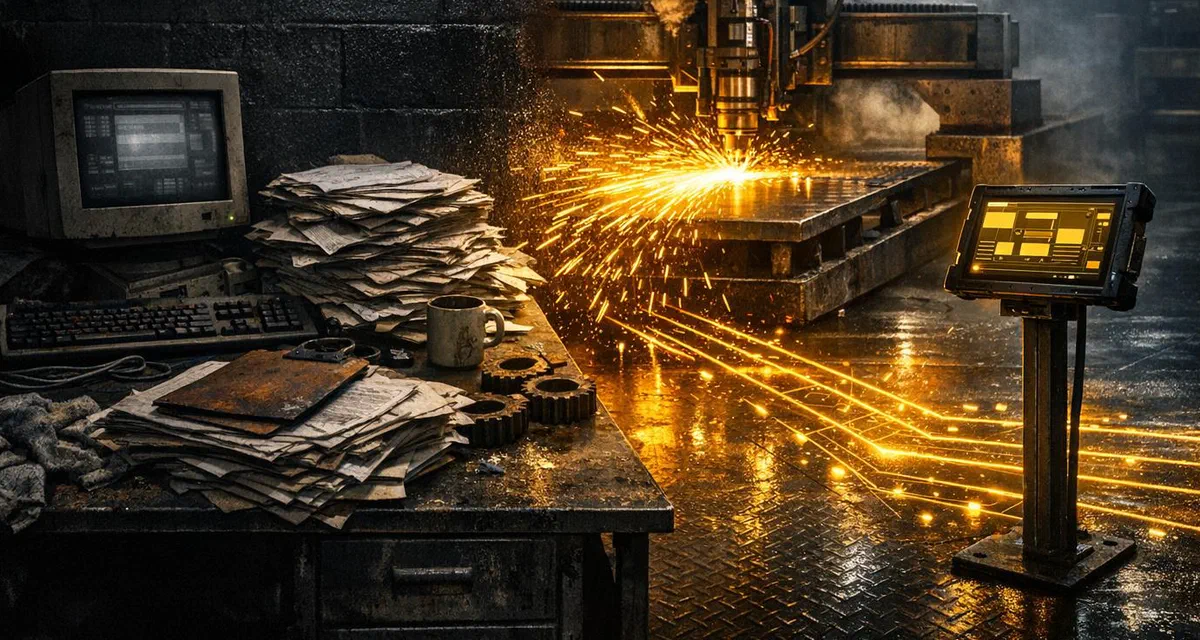
She comes back to work the next morning and opens the production system. Fourteen tabs. Six clicks to find a job. Mill certs buried in a folder called “CERTS FINAL FINAL 2.” A spreadsheet that’s been emailed around so many times nobody knows which version is current.
This is the moment she starts quietly updating her CV.
Why Your Best People Feel Like Time-Travellers
Here’s what doesn’t get said often enough: the people running your shop floor aren’t technophobes. They’re not “resistant to change.” They’re already using some of the most sophisticated technology ever built every single night, in their own homes.
They set up a smart doorbell in twenty minutes. They troubleshoot their own Wi-Fi. They manage subscriptions, track parcels, and control their heating by voice command. They do all of this without a manual, without training, and without calling IT.
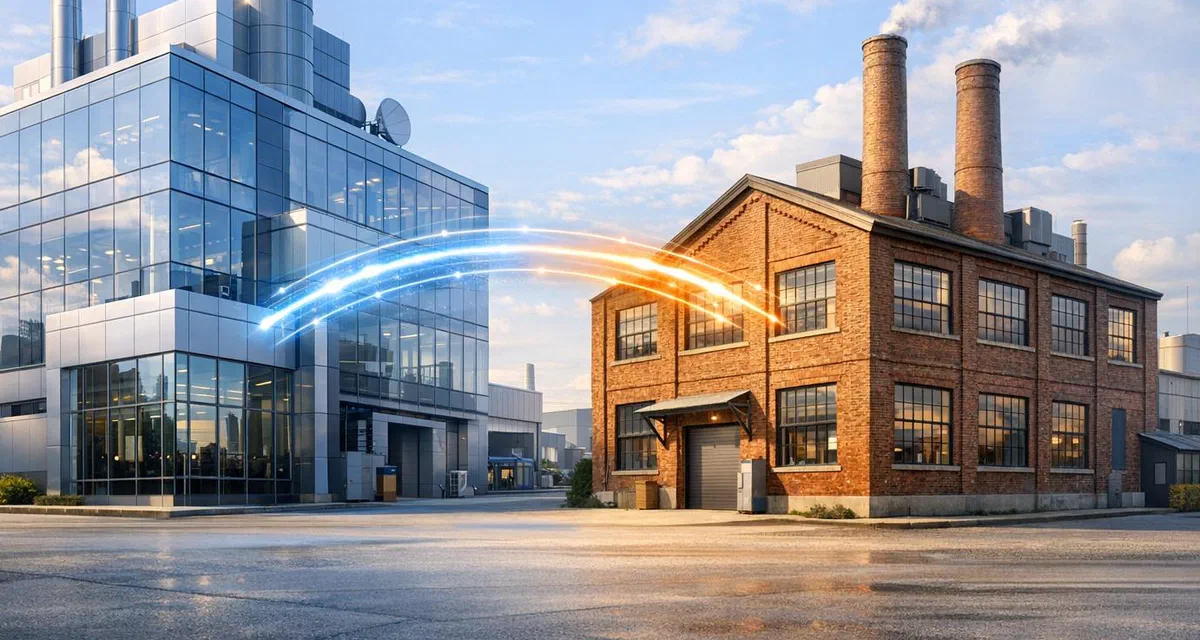
Then they walk into your factory and the experience is like stepping into a time machine set to 2005.
That gap isn’t just a source of grumbling. It’s a measurable business problem.
When Your Team Knows Better, but Can’t Do Better
The insight is simple but brutal. Your employees already know what good technology feels like. They carry it in their pockets. They have it on their walls at home. And because they know what’s possible, they know exactly how inadequate your systems are.
This doesn’t produce passive frustration. It produces workarounds.
- The production manager who keeps a parallel spreadsheet because the ERP is too slow to trust.
- The compliance officer who screenshots data from three different systems into a Word document because there’s no single source of truth.
- The estimator who built a personal Excel macro because the quoting tool hasn’t been updated since 2015.
Every workaround is a vote of no confidence in your systems. And every workaround creates its own risks including wrong data, missing audit trails, version conflicts, and tribal knowledge locked in someone’s head rather than in the system.
You’re not running on legacy software because your team can’t handle modern tools. You’re running on legacy software because nobody’s fixed it yet.
The Talent Problem You’re Not Counting
Here’s a number that should worry you: the average age of a first-line supervisor in UK manufacturing is rising. The industry is losing experienced people, and the workers coming through behind them have even higher technology expectations.
A production planner who grew up with a smartphone isn’t going to tolerate a system that takes six clicks to update a stock record. They’ll find a workaround, or they’ll find a different employer. And when they leave, they don’t just take their speed, they take everything they know about how your operation actually runs.
The same dynamic applies to your existing team. Your team uses beautifully designed consumer apps every evening. They notice every single day how far behind your systems are. That noticing compounds into frustration. Frustration compounds into disengagement. Disengagement is expensive.
Modern technology expectations aren’t optional. They’re the new baseline. The question is whether your software meets it or fights it.
What “Consumer-Grade” Actually Means
“Consumer-grade” gets used as an insult in enterprise circles. It shouldn’t be.
Consumer-grade means it works the first time, without a training course. You can figure it out without reading the manual. It’s designed around how humans actually think and not around how a database is structured. It does one thing brilliantly instead of seventeen things badly.
Your Nest thermostat doesn’t ask you to configure HVAC zones in a setup wizard before you can change the temperature. Your Ring camera doesn’t need a network engineer to get it connected. They just work.
That’s what your production team is asking for. Not bells and whistles. Not a flashy dashboard that nobody reads. Just tools that make the job easier without creating three new jobs to manage them.
The Same People, Two Different Worlds
Here’s what makes this particularly sharp: enterprise buyers are consumers. The person signing off on your ERP contract goes home and uses Nest cameras and Ring cameras. They know what frictionless looks like. They know what well-designed software feels like. They start to ask why they don’t have the same capability at work and why they have to travel twenty years into the past just because they’ve walked through the office door.
That question used to be unanswerable. Enterprise software moved slowly because the switching costs were high, the contracts were long, and the alternatives were worse. That’s no longer true.
The tools exist now to give your team a consumer-grade experience on the shop floor. The only question is whether you’ll use them.
What This Looks Like in Practice
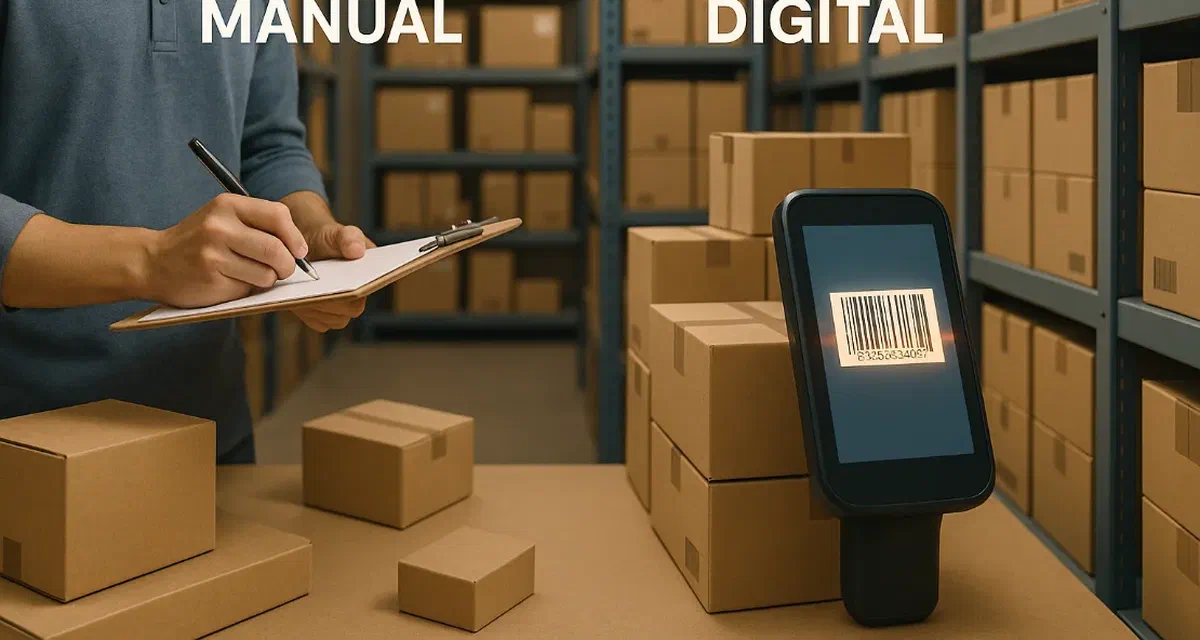
The MillCert Reader is a straightforward example. You upload a PDF. It reads the chemical composition, mechanical properties, and heat code. It renames and files the document automatically. The whole thing takes seconds. No training. No configuration. No specialist required.
The Cutting Plans works the same way. You upload your inventory and your open orders. It tells you exactly how to cut to minimise scrap. You get the plan in minutes, not hours. You don’t need to understand the algorithm any more than you need to understand GPS routing to follow the directions.
This isn’t dumbed-down software. It’s smart software that hides the complexity — the same way your Nest thermostat hides the HVAC engineering behind a dial you can actually use.
Midland Steel’s production manager put it well after switching to GoSmarter:
“I logged in for the first time and was up and running in minutes. MillCert Reader now pulls all the key info automatically. What used to take hours every week is done in seconds.”
That’s the consumer-grade experience. It shouldn’t be remarkable. But in manufacturing software, it still is.
The Bottom Line
Your team goes home to technology that respects their time and their intelligence. Your job is to make sure they get the same experience when they clock in.
The manufacturers getting ahead right now aren’t just winning on efficiency. They’re winning on talent, on morale, and on the pace at which they can improve. When your tools are good enough to trust, your team stops working around them and starts working with them.
The gap between home tech and work tech is closing. The only question is whether you close it deliberately or wait until your best people do it by walking out the door.