GoSmarter AI Blog
Categories
Tags
Tags
- Artificial Intelligence
- Automation
- Cloud Technology
- Compliance
- Continuous Improvement
- Cutting Optimisation
- Data Strategy
- Digital Transformation
- Energy Management
- Glossary
- Inventory Management
- Inventory Management for Metals
- Ireland
- Manufacturing
- Metals
- Nightingale HQ and GoSmarter
- Procurement
- Production Planning
- Quality
- Research & Innovation
- Shape Code Technology
- Small & Medium Enterprises
- Steel Industry
- Supply Chain
- Sustainability
- Steel Tariffs
- Traceability
- Trade & International Steel
- Wales
About this Section
About this Section
The GoSmarter blog covers AI and digital transformation from a metals manufacturing perspective. Practical use cases, implementation guides, industry strategy, and plain-English takes on the tech that actually matters on the shop floor.
No fluff. No thought-leadership waffle dressed up as insight. Just practical articles written for people who run metal cutting, distribution, and processing operations.
Topics covered include mill certificate automation, rebar cutting optimisation, scrap rate reduction, EN 10204 compliance, inventory management for steel stockholders, and the practical realities of replacing spreadsheets with AI-powered workflows. The blog also covers industry news relevant to UK and European metals manufacturers — tariffs, standards changes, and technology developments that affect your margins.
Articles are written for production managers, quality managers, operations directors, and business owners in metals manufacturing. Each post focuses on a specific, solvable problem: how to reduce scrap on a saw line, how to stop losing mill certificates, how to automate the cert-to-stock link without an IT project.
For deeper, structured guides on specific topics, see the GoSmarter hub pages — pillar content covering cutting optimisation, mill cert automation, yield tracking, and more.
Creative Disruption - UK Digital Manufacturing Week 2020
Major crises cause economic and social damage but they also inspire innovation. This was a major theme Digital Manufacturing Week, who themselves had to disrupt by holding the 6,000 plus attendee event completely online.

£147 million investment into manufacturing
Artificial Intelligence (AI) has been heating up for several years, and the recent challenges imposed by COVID-19 have accelerated efforts to get this tech in the hands of businesses to drive innovation and build agility and resilience. AI has been receiving lots of attention from the UK government and is one of the four Grand Challenge areas in the Industry Strategy.
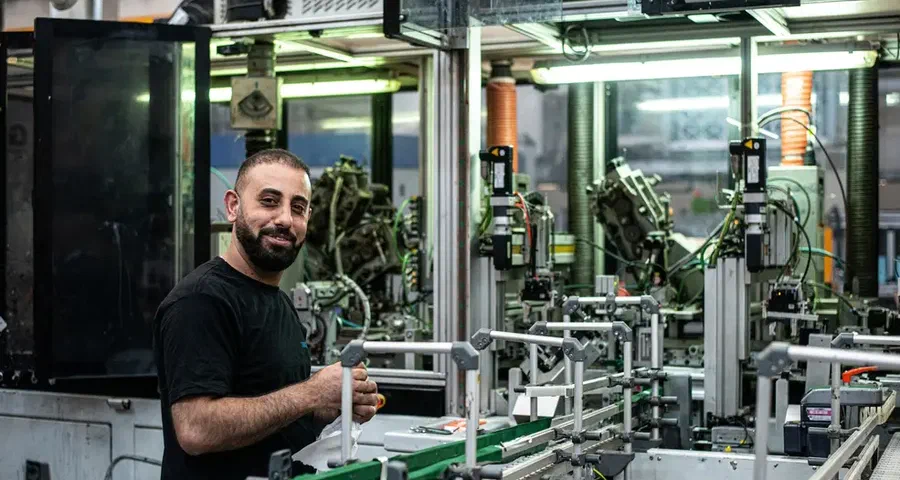
Manufacturing the future
Industry 4.0 has been budding over the last decade and has a long way yet to mature, however, the onset of the Covid-19 global pandemic has presented a suite of challenges and accelerated the need for solutions. The manufacturing industry has not had the flexibility of remote work to fall back on due to its dependency on onsite workers. Manufacturers will have had to make big changes to ensure the health of workers as they return to workplaces. At the same time, they’ve had to contend with the unpredictability of supply and demand, which could remain unstable for a prolonged recovery period. So how has this impacted manufacturing and what does this mean for the future?
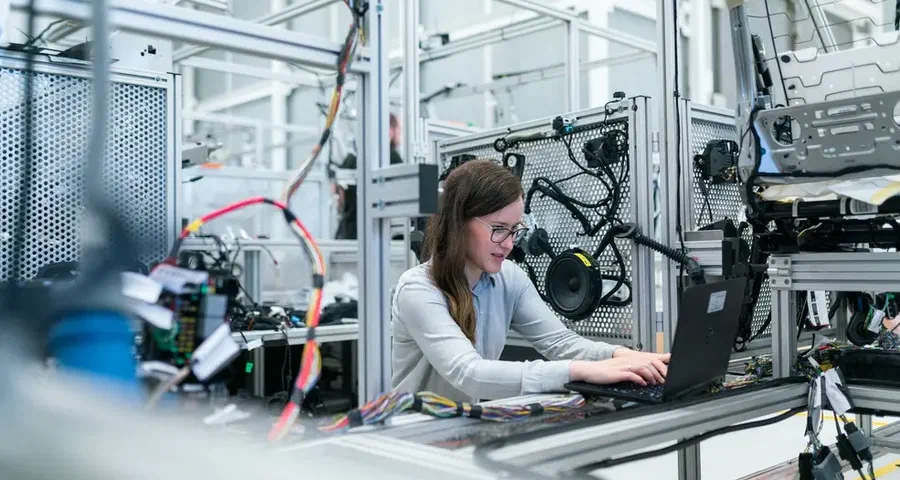
The shift to AI in manufacturing: post pandemic growth
- Steph Organ
- Archive
- Oct 8, 2020
- Updated
There is no doubt that AI has enabled major efficiencies in predictability and capacity across the supply chain in manufacturing. The global pandemic has also accelerated digitalisation and automation as key strategic priorities for business, particularly manufacturing.
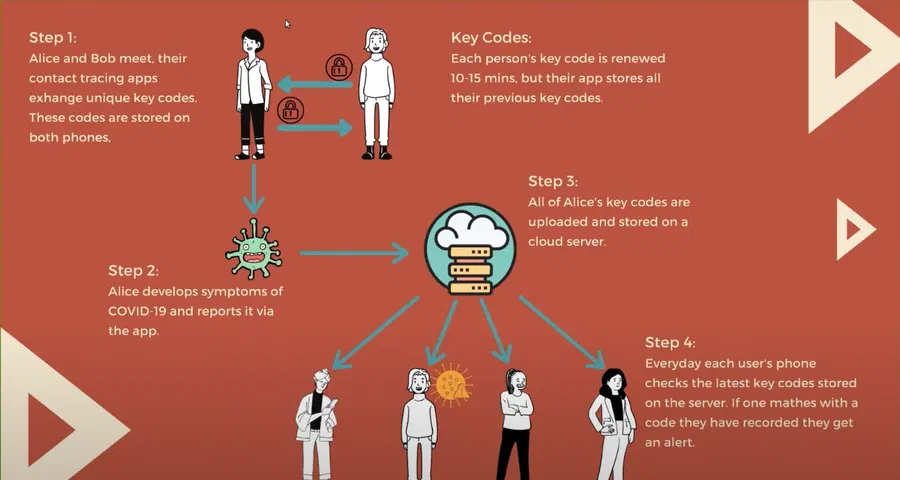
Breaking the chain with contact tracing
- Steph Locke
- Archive
- Oct 2, 2020
- Updated
There is no doubt that contact tracing apps can play a key role in crisis management especially as social distancing measures are lifted in countries across Europe and the rest of the world. In this guest blog, Dr Iain Keaney talks about solving the contact tracing privacy paradox with decentralised AI. He outlines how decentralised AI can preserve anonymity and solve privacy issues, not just in contact tracing, but as a business standard for AI, going forward.

Your business and AI: 18 weeks of webinars
- Ruth Kearney
- Archive
- Sep 29, 2020
- Updated
What do you do when a global pandemic hits and messes up your 2020 business plans? We decided to run 18 weeks of webinars. As our pipeline slowed we knew we weren’t the only ones having a hard time navigating Covid-19, so we decided to launch two webinar series, AIFightsBack and #GoSmarter. Since the webinars were a hit, we decided to compile recaps of all the content in one place for easy access, viewing and sharing.
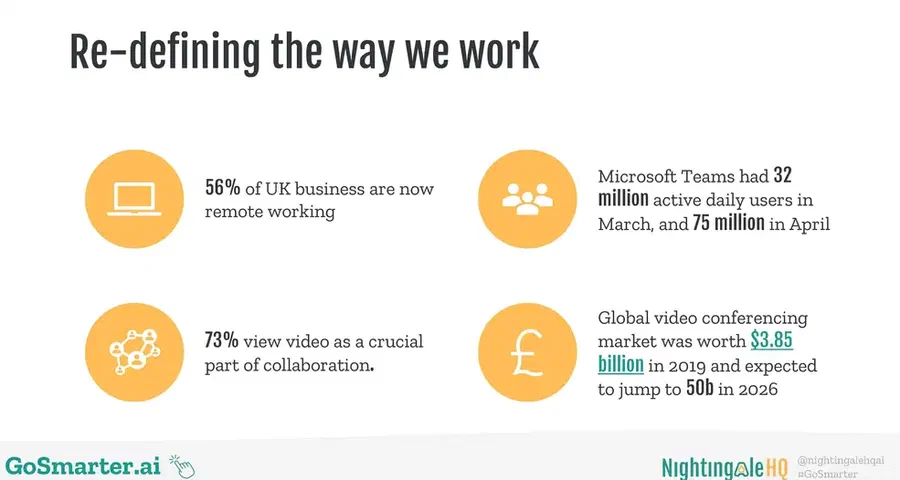
Smarter remote meetings for productivity
For the penultimate session in our #GoSmarter webinar series, Data Science Apprentice Mia Hatton takes us through various tools for hosting online meetings, lessons and the like, which has become so much more relevant during the times of the pandemic. Our very own Productive Meetings tool is one of six automation tools that we are making available to SMEs through our GoSmarter project to support them through COVID-19.
Customer service automation with an easy FAQ Chatbot
- Steph Organ
- Archive
- Aug 25, 2020
- Updated
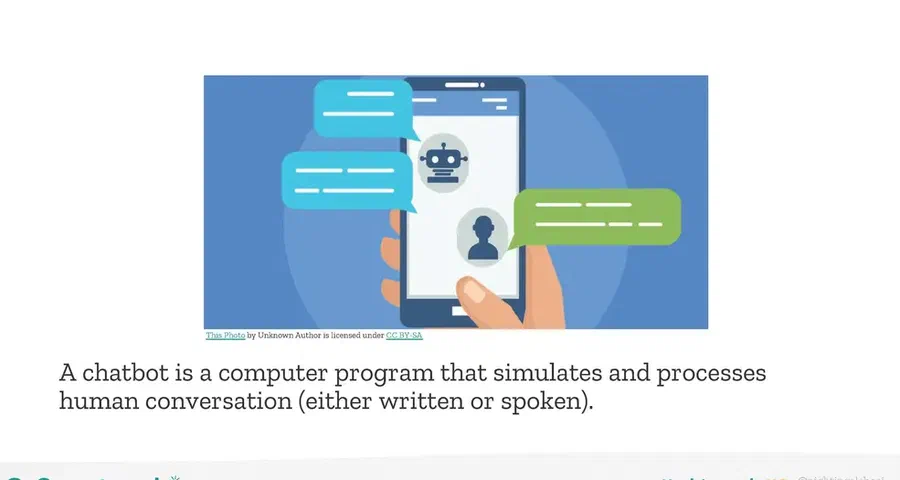
As part of our #GoSmarter webinar series, Mia Hatton, Data Science Apprentice for Nightingale HQ and founder of a small business, talks to us about the wonders that an FAQ Chatbot can do for business, approaching the topic from both points of view. Our GoSmarter project is aimed at SMEs to help them bounce back from the effects of COVID-19 by providing them with the 6 tools to get them automating and saving time.

Four tips for introducing an FAQ chatbot
- Laura Dernie
- Archive
- Aug 5, 2020
- Updated
Getting your own chatbot up and running is not as tricky as you may think. In fact there are many no-code options available and you can be setup in minutes. We have put together a list of tips to consider before you jump in on augmenting your customer service.

Bigger, better sales with AI
Automation and Artificial Intelligence can support the sales team to make bigger, better sales. AI in sales and marketing can be particularly valuable. In this #GoSmarter webinar Steph Locke, CEO of Nightingale HQ takes a look at automation tools in a B2B context and how easy they are to adopt.
Categories
Tags
- Artificial Intelligence
- Automation
- Cloud Technology
- Compliance
- Continuous Improvement
- Cutting Optimisation
- Data Strategy
- Digital Transformation
- Energy Management
- Glossary
- Inventory Management
- Inventory Management for Metals
- Ireland
- Manufacturing
- Metals
- Nightingale HQ and GoSmarter
- Procurement
- Production Planning
- Quality
- Research & Innovation
- Shape Code Technology
- Small & Medium Enterprises
- Steel Industry
- Supply Chain
- Sustainability
- Steel Tariffs
- Traceability
- Trade & International Steel
- Wales
About this Section
The GoSmarter blog covers AI and digital transformation from a metals manufacturing perspective. Practical use cases, implementation guides, industry strategy, and plain-English takes on the tech that actually matters on the shop floor.
No fluff. No thought-leadership waffle dressed up as insight. Just practical articles written for people who run metal cutting, distribution, and processing operations.
Topics covered include mill certificate automation, rebar cutting optimisation, scrap rate reduction, EN 10204 compliance, inventory management for steel stockholders, and the practical realities of replacing spreadsheets with AI-powered workflows. The blog also covers industry news relevant to UK and European metals manufacturers — tariffs, standards changes, and technology developments that affect your margins.
Articles are written for production managers, quality managers, operations directors, and business owners in metals manufacturing. Each post focuses on a specific, solvable problem: how to reduce scrap on a saw line, how to stop losing mill certificates, how to automate the cert-to-stock link without an IT project.
For deeper, structured guides on specific topics, see the GoSmarter hub pages — pillar content covering cutting optimisation, mill cert automation, yield tracking, and more.
Join the Resistance
Get the latest tips on how to stop running your factory like it’s 1985. We promise not to spam you with boring whitepapers.