Nightingale HQ meets German manufacturers and tech founders
- Ruth Kearney
- Archive , News
- November 3, 2022
- Updated:
Table of Contents
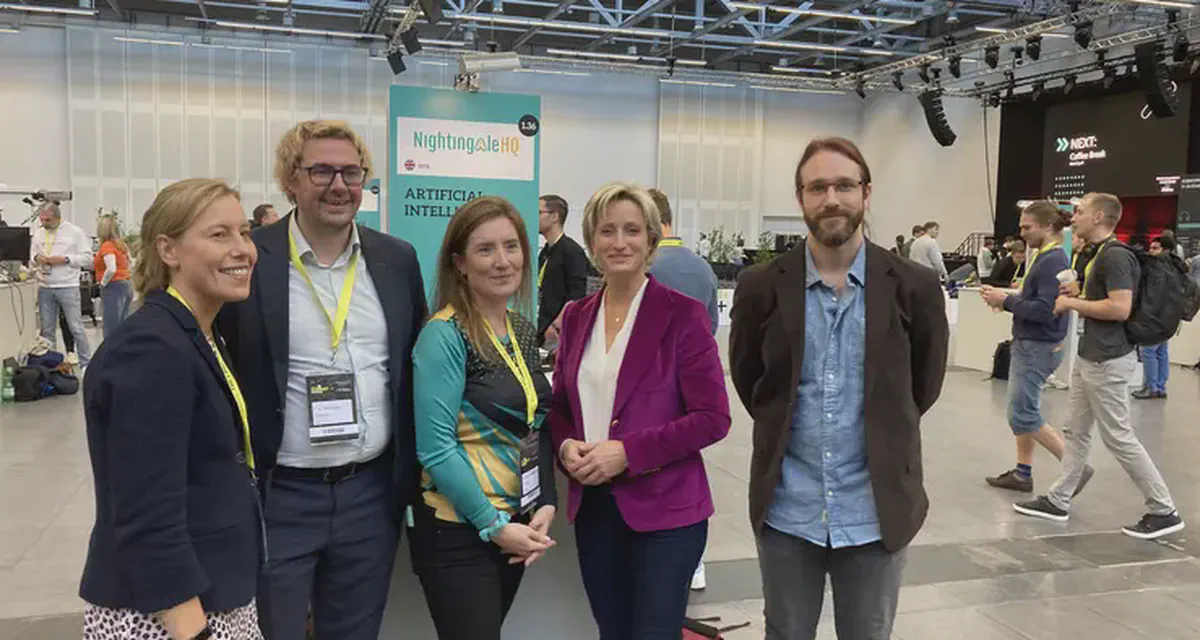
The region is one of the most industrial in Europe and is especially known for its strong economy with various industries like car manufacturing, electrical engineering, mechanical engineering. The NHQ team were selected to pitch at the summit and got the opportunity to connect with some of the most prominent German manufacturers including Festo, Bosch, Boehringer Ingelheim and Trumpf to name but a few.
We got the opportunity to meet with Dr. Nicole Hoffmeister-Kraut, the Minister of Economic Affairs, Labour, and Tourism of Baden-Württemberg who is actively pushing to improve tax and R&D incentives for founders. There was a strong emphasis on crossing-national borders recognising that many founding teams are international and operating in a global marketplace. This is certainly the case with Nightingale HQ as we continue to grow the business across the UK, Ireland, and Germany.
We were joined at the event with 48 founders from 10 Nations contributing to showcasing UK tech ecosystem. It was a great opportunity for us to meet with Welsh and UK government representatives working on the ground in Germany to develop links between both countries; Marc Shanker Senior Business Development Manager for the Welsh government and Frank Ambos Senior Trade Adviser at Department for International Trade (DIT) provide valuable insight and contacts in the market making business development easier. Nicola Pinder is another prominent contact for UK organisations interested in expanding their business or relationships into Germany.
Overall, a great event to accelerate our understanding of the German tech and manufacturing markets and to learn more about Batten-Württemberg, one of the most industrial regions in Europe.
Further info
FAQs
Why Germany is central to GoSmarter's European strategy?
Germany is Europe’s largest manufacturing economy and home to the Mittelstand — a network of mid-sized, often family-owned manufacturers who are among the most technically skilled in the world, but who often face the same challenges as UK and Irish manufacturers when it comes to digital adoption. Limited IT resource, pressure on margins, and the complexity of integrating digital tools with existing production processes are common across all three countries.
GoSmarter’s meetings with German manufacturers were part of a deliberate effort to understand the specific context of the German market — what tools they are already using, where the gaps are, and what the regulatory and commercial environment means for the adoption of AI tools in manufacturing.
What did the meetings reveal?
German manufacturers are often further ahead on certain aspects of digital adoption — particularly in areas like PLC integration, sensor data collection, and quality management systems. But they face similar challenges to UK manufacturers when it comes to using that data effectively: the data exists but is not being used to make better decisions because the tools to analyse it and act on it are not in place.
This creates an opportunity for GoSmarter’s approach: tools that work with the data manufacturers already have, rather than requiring expensive new infrastructure, and that deliver results quickly enough to justify the investment.
What are the universal operational challenges of manufacturing?
One of the consistent findings from GoSmarter’s international engagements is that the operational fundamentals of manufacturing — the specific challenges of cutting waste, managing certificates, tracking material through production — are genuinely universal. The terminology may differ, the regulatory context may vary, but the fundamental operational problems that GoSmarter addresses are the same in Germany, Ireland, the UK, and Norway.
This universality is what makes international expansion viable. GoSmarter’s tools are not culturally specific to the UK or Ireland — they address problems that exist wherever metals are manufactured.