Mill Test Certificate Management: Common Questions Answered
- Steph Locke
- Blog , Learning
- December 8, 2025
- Updated:
Table of Contents
Mill Test Certificates (MTCs) are essential documents that confirm the chemical and mechanical properties of metal materials. They ensure compliance with industry standards (like EN 10204 - link no longer works in the UK) and provide traceability across the supply chain. Effective MTC management prevents production delays, ensures regulatory compliance, and reduces safety risks.
Key Points:
- What is an MTC? A document verifying material quality, linked to a specific batch.
- Why manage MTCs? To ensure traceability, avoid penalties, and meet legal requirements.
- What do MTCs include? Details like material grade, chemical composition, mechanical properties, and testing methods.
- Types of Certificates (EN 10204):
- 2.1: Basic compliance declaration.
- 2.2: Includes internal test results.
- 3.1: Validated by an independent inspector.
- 3.2: Third-party verification required.
- Common issues: Inaccurate or incomplete certificates, missing authorisations, and counterfeit documents.
- Solutions: Centralised storage, routine verification, and AI tools for automation.
How to Improve:
- Use AI for faster processing and validation.
- Maintain a digital audit trail for easy access during audits.
- Implement clear naming conventions and regular audits.
Proper MTC management saves time, improves accuracy, and ensures compliance with industry standards.
What Information is Included in a Mill Test Certificate?
Standard Fields in an MTC
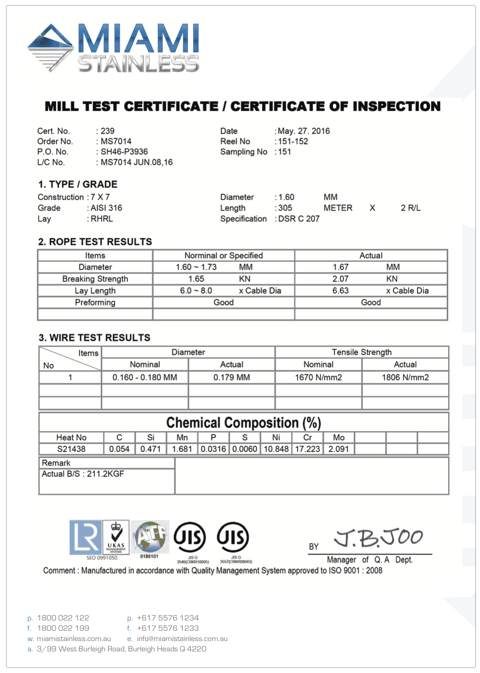
A Mill Test Certificate (MTC) includes key details that verify the material’s properties and origin. These fields are essential for ensuring the materials received meet the specifications and standards outlined in the order.
The certificate starts with the manufacturer’s information and a unique reference number linking it to a specific batch. It specifies the material type and grade, such as stainless steel, carbon steel, or aluminium, alongside the relevant standard or specification (e.g., BS EN 10025 for structural steel or ASTM A36 for carbon structural steel).
One of the most critical sections is the chemical composition, confirming the alloy adheres to grade requirements. The mechanical properties - like tensile strength, yield strength (measured in MPa), elongation, and impact resistance - are also detailed. For example, S355 structural steel must have a minimum yield strength of 355 MPa. These values are determined using standardised testing methods, which are also documented in the certificate.
Additional fields may include the dimensions and weight of the material, the heat number (identifying the production batch), details of any heat treatment processes, and the testing methods used (e.g., tensile testing to BS EN ISO 6892-1 or impact testing to BS EN ISO 148-1).
Lastly, the certificate must include the issue date, a signature, and the stamp of an authorised quality control representative. Without these, the certificate is considered invalid [2].
Understanding these fields sets the foundation for exploring the different EN 10204 certificate types and their levels of assurance.
EN 10204 - link no longer works Certificate Types Explained
The EN 10204 standard defines various inspection certificate types, each offering a different level of verification. The type of certificate determines the extent of testing and validation performed on the material.
- Type 2.1: This is the simplest form, where the manufacturer declares that the material complies with the order requirements. However, it does not include any specific test results or external verification.
- Type 2.2: This certificate includes test results for the material’s chemical composition and mechanical properties. While it offers more detail, the verification remains internal to the manufacturer.
- Type 3.1: A widely used certificate for critical applications, this involves validation by an authorised inspection representative who is independent of the production process.
- Type 3.2: The highest level of assurance, this certificate includes third-party validation in addition to the manufacturer’s testing. If a client requests a Type 3.2 certificate but the manufacturer can only provide a Type 3.1, a third-party quality inspection company must be engaged to certify the material [2][4].
The certificate type required depends on the application and industry standards. For example, pressure vessels made under the Pressure Equipment Directive - link no longer works (PED) typically require a Type 3.1 certificate, while aerospace or nuclear applications may demand the additional verification of Type 3.2.
Knowing the certificate type is key to verifying an MTC’s validity.
How to Verify an MTC is Valid
Validating an MTC is essential to ensure compliance and maintain the integrity of the materials. Issues like inaccurate information, missing signatures, or unauthorised certificates can compromise the process [2].
Start by cross-referencing the certificate details with the physical material. Ensure the reference numbers on the MTC match the markings on the material and its packaging [1]. A mismatch in heat numbers is an immediate warning sign.
Next, confirm that the material meets the ordered specifications [1]. For instance, if Grade 304 stainless steel to BS EN 10088-2 was requested, the certificate’s chemical composition and mechanical properties must align with the defined ranges.
Check for proper authorisation by examining the certificate for stamps and signatures from the quality control department. As noted earlier, a certificate without these is invalid [2].
“To verify a Mill Test Report, carefully review the document to ensure it includes all required information such as material composition, mechanical properties, and any relevant test results. Cross-reference the report with industry standards such as ASTM or ASME to confirm compliance and authenticity. If you have any doubts, consult with a qualified materials testing laboratory for further verification.” – WH Labs [3]
For critical applications, consider third-party verification. On-site sampling or laboratory tests provide an additional layer of assurance, ensuring the material properties match the certificate [2][3].
Another effective approach is contacting the manufacturer directly. Many reputable manufacturers have systems to verify certificate details using reference or heat numbers [3].
When reviewing the certificate, look for inconsistencies, such as conflicting test results for tensile strength or chemical composition [3]. Ensure all required compliance certifications, like references to ASTM or British Standards, are present and valid [3].
For organisations managing multiple MTCs, implementing an internal tracking system can streamline the process and ensure easy access during audits [3].
Common Problems with Mill Test Certificate Management
Typical MTC Issues
Handling Mill Test Certificates (MTCs) can be tricky, with several recurring issues affecting material traceability and compliance with regulations.
One major concern is inaccurate information. MTCs might include incorrect details that don’t reflect the actual materials ordered [2][6][7]. Often, they lack key information like acceptance criteria, test results (such as heat treatment or impact tests), the manufacturer’s name, or the testing methods used [5][2][6][7]. Without these details, the certificate falls short of verifying compliance or providing a dependable audit trail.
Another common problem is counterfeit or incomplete certificates. Some suppliers issue certificates without conducting the necessary tests, omitting critical quality control stamps or signatures in the process [2][7].
Then there’s the issue of altered manufacturer details. Trading companies may replace the original producer’s information with their own, making it nearly impossible to trace materials back to their source [2][7].
Lastly, dual certification issues can crop up when certificates reference multiple international standards. Differences in standard editions or heat treatment requirements can create confusion over which standard actually applies.
These problems can significantly affect the reliability of operations.
Consequences of Poor MTC Management
The issues outlined above don’t just complicate traceability - they can lead to serious operational risks. Errors in MTCs make it difficult to verify material quality, which can disrupt operations and make it harder to meet regulatory requirements. Without accurate and complete certifications, ensuring compliance becomes a daunting task, potentially leaving organisations vulnerable to costly setbacks.
How to Improve MTC Management with Technology
Best Practices for Managing MTCs
To build a strong foundation for managing Material Test Certificates (MTCs), start by clearly outlining the necessary certificate details. These typically include material grades, compositions, mechanical properties, heat treatment processes, and testing methods. Share these requirements with your suppliers upfront to avoid confusion or delays.
Centralising all MTCs in a single, easily accessible repository is another essential step. This ensures that anyone needing to verify material compliance can quickly locate the necessary documentation without wasting time searching through scattered systems.
Routine verification procedures are crucial. When materials arrive, check that material grades, batch numbers, and quantities align with the documentation. Catching discrepancies at this stage is far less costly than discovering them during production.
Adopting standardised naming conventions for digital files makes retrieval effortless. Include key details like the supplier’s name, material grade, and date in each filename. Conduct regular audits of your MTC repository to spot outdated certificates or missing documents that need attention.
Using AI to Automate MTC Processing
Technology offers powerful tools to improve MTC management further, especially through automation.
Manual MTC processing is slow and prone to mistakes. AI-driven platforms like GoSmarter can completely transform this process by automating the extraction, validation, and management of certificate data.
Automation typically involves two stages: first, digitising documents using Optical Character Recognition (OCR); second, extracting key details - such as material grades, compositions, and mechanical properties - through contextual analysis [8][10].
These platforms use machine learning, natural language processing, and computer vision to validate certificates, a task that would otherwise consume hours of manual effort [10]. For example, AI can perform rule-based comparisons by checking extracted data against your technical specifications, flagging inconsistencies automatically. Its pattern recognition capabilities can also detect anomalies, such as counterfeit certificates or data entry errors.
AI systems continuously improve, adapting to the specific formats and details of the MTCs your organisation handles [9]. Over time, they become better at recognising various certificate layouts and extracting data with greater accuracy.
This automation addresses many of the errors and inefficiencies that often plague manual MTC management. By integrating AI platforms with existing systems like ERP software, CRM tools, and laboratory management systems, you can ensure seamless data transfer without the need for tedious manual input [10][11]. Real-time monitoring and reporting features further enhance efficiency, enabling you to spot and resolve issues as they occur [11].
The benefits are clear: instead of spending hours manually transcribing certificate data and checking it against specifications, your team can focus on more strategic tasks. Automated reports provide instant summaries of compliance across your material inventory, saving time and reducing stress.
Creating a Digital Audit Trail
A digital audit trail is another game-changer for MTC management, bolstering both compliance and traceability.
By centralising certificates and linking them to inventory and production records, a digital audit trail addresses past issues like mismanaged records and questionable certificate authenticity.
This system doesn’t just store certificates - it captures the entire chain of custody. It records when each MTC was received, who verified it, what materials it pertains to, and where those materials were used in production. This creates an unbroken link from raw material supplier to finished product.
The searchability of a digital audit trail is invaluable. Whether you’re responding to customer queries or undergoing a regulatory audit, you can instantly pull up all certificates related to a specific batch number, production order, or date range. This drastically cuts down the time needed to demonstrate compliance.
To maintain accuracy, use version control to archive updated certificates with timestamps and notes on any changes. Linking MTCs to production records also enables quick traceability during quality investigations, helping you identify root causes and implement targeted corrective actions faster.
Access controls are key to keeping sensitive certification data secure. Set permissions so that only authorised personnel - such as quality managers, production supervisors, or compliance officers - can access relevant documents. This ensures data integrity while maintaining accessibility.
Finally, regular backups of your digital repository safeguard against data loss. Cloud-based systems add another layer of convenience by allowing remote access, so team members can verify material compliance from anywhere, whether they’re on the factory floor, in the office, or working remotely.
Conclusion
Summary of MTC Management Questions
Managing Material Test Certificates (MTCs) effectively is crucial for maintaining quality and regulatory compliance in metals manufacturing. This article explored the key roles of MTCs, the critical information they contain, and the classifications outlined in EN 10204.
Issues like misplaced certificates, unreadable documents, and manual errors can lead to production delays, audit complications, and financial repercussions. To address these challenges, robust MTC management involves clear documentation, centralised storage, routine verification, and consistent naming practices. Combining these approaches with AI-driven automation and digital audit trails simplifies processes and improves overall efficiency.
Benefits of Better MTC Management
Updating your approach to MTC management doesn’t just cut down on paperwork - it delivers tangible operational improvements.
One of the most immediate benefits is saving time. Instead of spending hours manually inputting certificate data or cross-checking specifications, your team can focus on more strategic tasks that drive value. Automation allows certificates to be processed in minutes, freeing up resources for other priorities.
Improved accuracy is another advantage. By using AI-powered validation, errors from manual data entry are avoided, and discrepancies are flagged before they escalate into production issues. This ensures materials consistently meet specifications, reducing waste, minimising rework, and maintaining your reputation for quality.
Quick and easy access to certification records makes compliance less of a headache. During audits, certificates can be retrieved in seconds, providing full traceability from raw materials to finished products. This capability not only meets regulatory demands but also reassures customers who expect transparency about material origins.
A digital audit trail offers secure and organised record-keeping, making it easier to address quality concerns, respond to customer queries, or prepare for certification renewals. This streamlined access transforms these tasks into straightforward processes.
Finally, better MTC management supports business growth. It can handle increased workloads without adding administrative strain, ensuring your quality systems are ready to scale as your operations expand.
FAQs
How does AI help streamline the management of Mill Test Certificates?
AI has transformed the way Mill Test Certificates (MTCs) are managed by taking over laborious tasks like extracting data, organising documents, and performing compliance checks. This not only speeds up the process but also minimises human errors, ensuring that crucial information is handled with precision and efficiency.
With AI-driven tools, manufacturers can achieve better traceability, stay aligned with regulatory requirements, and streamline their workflows. This shift allows teams to dedicate more time to innovation and quality assurance, rather than getting caught up in repetitive administrative work.
What risks are involved if an MTC is not properly verified?
Failing to check the authenticity of a Mill Test Certificate (MTC) can bring serious risks to manufacturing operations. Materials that fall short of required specifications might cause structural weaknesses, leading to expensive repairs or replacements. In extreme cases, this could result in safety issues, such as equipment malfunctions or accidents.
Making sure MTCs are accurate and genuine is essential for maintaining compliance, ensuring traceability, and upholding the quality of your products. Proper verification not only helps you avoid financial setbacks but also safeguards your reputation and the well-being of end-users.
How does a digital audit trail improve traceability and ensure compliance in managing Mill Test Certificates?
A digital audit trail plays a key role in improving traceability, offering a precise, time-stamped record of each stage in the material handling process. This allows manufacturers to track and confirm material properties, origins, and processing history with ease, ensuring operations remain fully transparent.
It also helps organisations meet compliance requirements by keeping a dependable record of data necessary for audits, certifications, and regulatory inspections. By shifting to digital processes, businesses can minimise errors, save time, and strengthen accountability throughout their operations.
Go deeper
- Mill Certificate Automation: The Complete Guide — everything about how GoSmarter reads, validates, and stores mill cert data automatically
- Integrated Cert Traceability & Auditability — what a proper EN 10204 audit trail looks like and how to build one without manual effort
- GoSmarter vs Generic OCR/IDP Tools for Mill Certificates — why domain-specific AI outperforms generic document processing tools