Lifecycle Carbon Tools for CBAM Compliance
- BlogSmarter AI
- Edited by Steph Locke
- Blog
- April 29, 2026
- Updated:
Table of Contents Show Hide
Unverified emissions data costs money. Export iron, steel, or aluminium to the EU in 2026 without product-level carbon figures and the EU assigns its worst-performing default values—adding €20–35 extra per tonne to your CBAM certificate costs. For a mid-size mill shipping 50,000 tonnes a year, that is over £850,000 in avoidable charges.
GoSmarter (built by Nightingale HQ) automates the mess. From digitising mill certificates to calculating embedded emissions, it handles the drudgery so you can focus on production. Tools like the MillCert Reader and Metals Manager module cut admin time, reduce errors, and slash CBAM costs by up to €35 per tonne.
Here’s what you get when you ditch the spreadsheets:
- Save £850k or more annually by replacing EU default values with verified emissions data (50,000 tonnes at €20–35 per tonne).
- Cut verification time by 50–60% with audit-ready digital logs.
- Track Scope 1 and Scope 2 emissions easily with real-time dashboards.
Tired of drowning in paperwork? Let’s fix it.
What Is CBAM and Why It Matters for Metals Manufacturers
CBAM Regulations Explained
The Carbon Border Adjustment Mechanism (CBAM) is the EU’s way of tackling carbon emissions in imported goods. It places a carbon cost on imports like iron, steel, and aluminium. EU importers are required to declare the greenhouse gas emissions embedded in their products and buy CBAM certificates to match those emissions. The price of these certificates is tied to the EU Emissions Trading System (ETS), with the first rate for Q1 2026 set at €75.36 per tonne of CO₂ 12.
CBAM’s main goal is to stop carbon leakage - essentially, preventing companies from moving production to countries with weaker environmental rules or replacing EU-made products with higher-carbon imports. By charging for the carbon content in imports, CBAM levels the field between EU producers (who already pay ETS carbon costs) and foreign competitors. The mechanism aims to cover over half of the emissions in ETS-regulated sectors 1.
The UK isn’t far behind. Starting 1 January 2027, it will roll out its own CBAM, with businesses needing to register if they exceed £50,000 in imports over a year 3. For metals manufacturers exporting to both the EU and UK, this means more compliance headaches and financial risks if emissions data isn’t verified. Tracking carbon footprints accurately is no longer optional - it’s essential.
Why Manufacturers Must Track Carbon Footprints
With these regulations in place, keeping precise tabs on carbon emissions is non-negotiable. Metals manufacturers are particularly in the spotlight because iron, steel, and aluminium are some of the most carbon-heavy materials. In fact, the iron and steel sector alone could account for around 75% of all potential CBAM liabilities 4. In 2022, EU imports of iron and steel were worth nearly $60 billion (€55 billion), while aluminium imports topped $40 billion (€37 billion) 5. For manufacturers, the financial stakes are massive, especially if they can’t back up their emissions claims with verified data.
CBAM shifts from a simple price model to a “carbon debt” system, where manufacturers must buy certificates to neutralise the emissions in their products 6. Those relying on coal-fired power for smelting will feel the pinch far more than those using renewable energy. For instance, coal-powered aluminium production emits 16–20 tonnes of CO₂ per tonne, while hydropower-based production emits just 4–8 tonnes 6. This makes carbon intensity a critical factor in both market access and profitability 4.
Failing to provide verified emissions data can be costly. The EU applies default emissions values - based on the worst-performing producers in the region - if no verified data is available. As noted in Alibaba.com’s Seller Blog:
If a supplier cannot provide verified, primary data on their product’s carbon footprint, the EU will apply a ‘default value’ based on the worst-performing producers within the EU. This can render a competitively priced product instantly uncompetitive 7.
For some steel imports, costs could rise by over 30% due to these defaults 2. Non-compliance doesn’t just mean higher costs; it could also disrupt supply chains, as EU importers will favour manufacturers who can deliver accurate carbon data 8. Verified emissions data not only helps avoid penalties but also lays the groundwork for tools that simplify CBAM compliance in the future.
How Lifecycle Carbon Tools Support CBAM Compliance
The Challenges of Manual Carbon Tracking
Tracking carbon emissions manually is a nightmare for metals manufacturers. Production data is often scattered across invoices, meter readings, mill certificates, and fuel bills. Trying to link these records to specific heats, casts, or batches using spreadsheets? Nearly impossible. And when it comes to products like steel, emissions need to be tracked across several stages - sintering, coking, ironmaking, and rolling - each with its own energy inputs and materials 9. One mistake in this process, and you could jeopardise an entire quarter’s CBAM declaration.
Most manufacturers rely on facility-level averages instead of product-specific emissions data, but CBAM regulations demand verified, product-level numbers 1011. If you don’t have this data, the EU will slap default values on your products based on the worst-performing 10% of EU producers. That means higher certificate costs. Worse, those markups climb steeply: 10% in 2026, 20% in 2027, and 30% in 2028 12.
The risks don’t stop there. Manual processes leave you wide open to audit failures. Starting in January 2026, embedded carbon data submitted for CBAM must be verified by an EU-accredited third party 10. If your evidence package is incomplete - missing meter calibration certificates, production logs, or clear data lineage - you risk verification failure. James Smith from Oxmaint put it bluntly:
The difference between steel plants that maintain EU export volumes and those that lose them… is whether their emissions data is traceable, verifiable, and formatted to meet EU CBAM reporting requirements 10.
Manual tracking just doesn’t cut it anymore. Automation is the only way forward.
How GoSmarter Automates Carbon Calculations
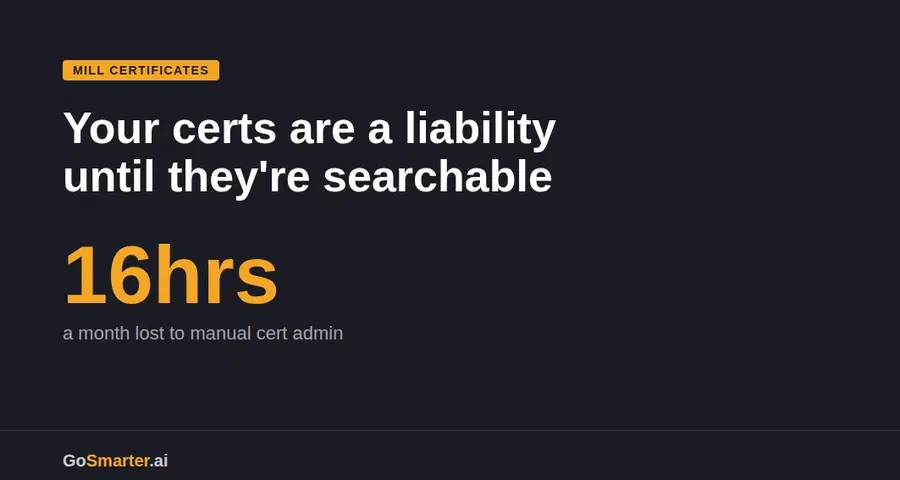
This is where lifecycle carbon tools come in. They take the grind out of data collection, calculation, and reporting. Platforms like GoSmarter integrate with your existing systems - no need to rip and replace. For example, the MillCert Reader uses AI-driven optical character recognition (OCR) to digitise PDF mill certificates in seconds, saving production teams over 10 hours a month and eliminating human errors. This means embedded emissions from materials like iron ore, ferroalloys, and scrap are automatically linked to specific heats or batches, not averaged across the whole facility.
Automated tools also provide detailed attribution. They connect energy and fuel consumption records directly to production outputs at the heat, cast, or batch level. For Electric Arc Furnace (EAF)-route steelmakers, this includes sub-metered electricity data, which is essential for 2026 indirect emissions reporting 10. Real-time dashboards show Scope 1 and Scope 2 emissions at the asset level - furnaces, casters, mills - so manufacturers can spot carbon hotspots and tackle them before CBAM declarations are due. The result? CBAM-ready, verifier-approved data 1310.
Using actual verified emissions data instead of default values can save €20–€35 per tonne in CBAM certificate costs. Automated systems also streamline the verification process, cutting third-party verification time by 50–60% 10. For a manufacturer exporting 50,000 tonnes of steel annually, this could mean savings of £850,000–£1.5 million per year, not to mention huge audit efficiencies. Instead of scrambling to pull records together at the last minute, manufacturers have immutable digital logs ready from day one.
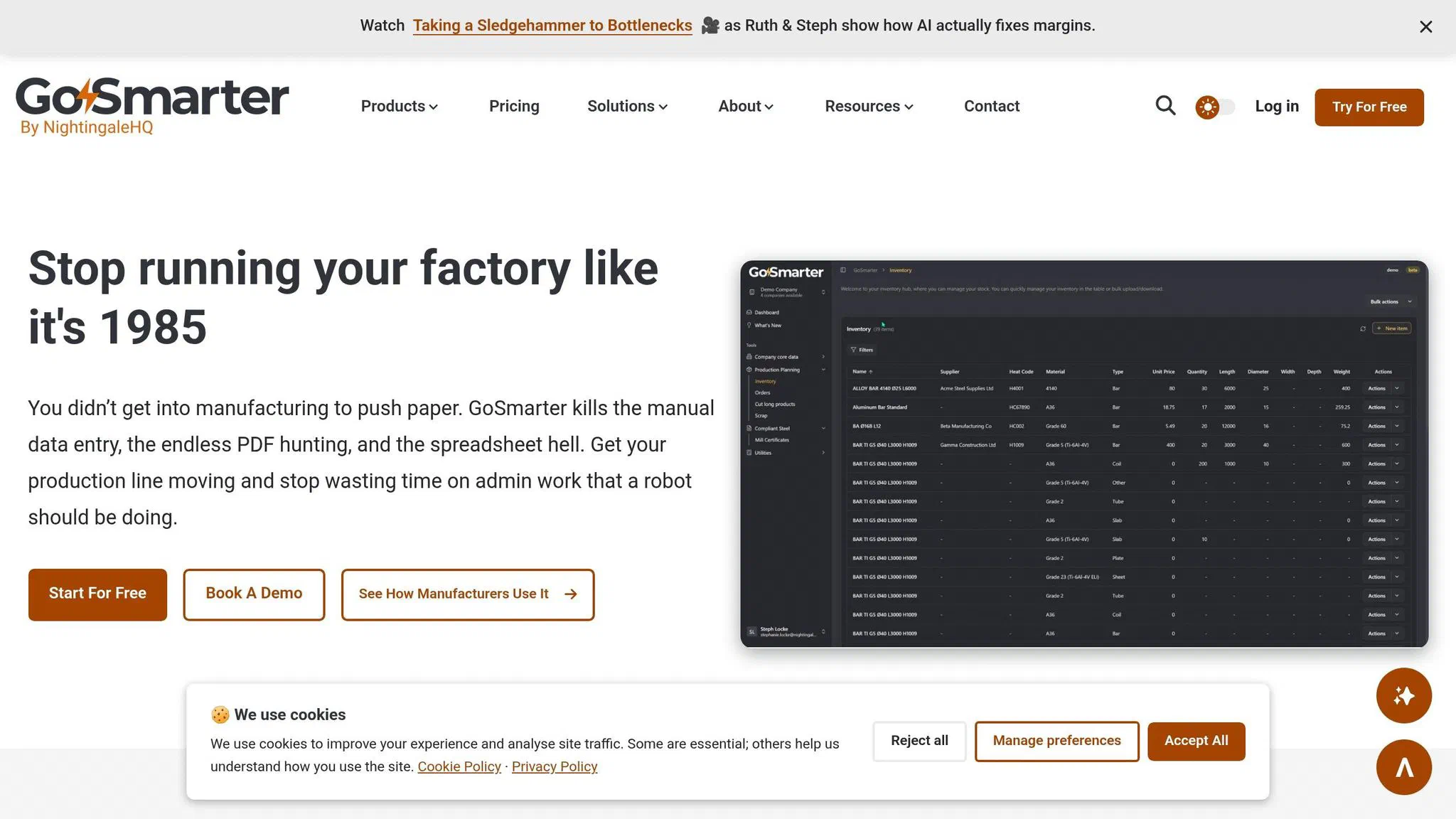
GoSmarter’s Metals Manager ties inventory directly to heat codes, retrieving mill certificates by heat code to ensure every tonne has a traceable carbon footprint, and tracks scrap and offcuts, which are critical for accurate emissions calculations. By turning chaotic records into clean, actionable data, GoSmarter helps factories run faster, greener, and without CBAM headaches - cutting costs and staying competitive in the EU market.
The Road to CBAM: Carbon Reporting in 2026
How to Implement Lifecycle Carbon Tools: A Practical Guide
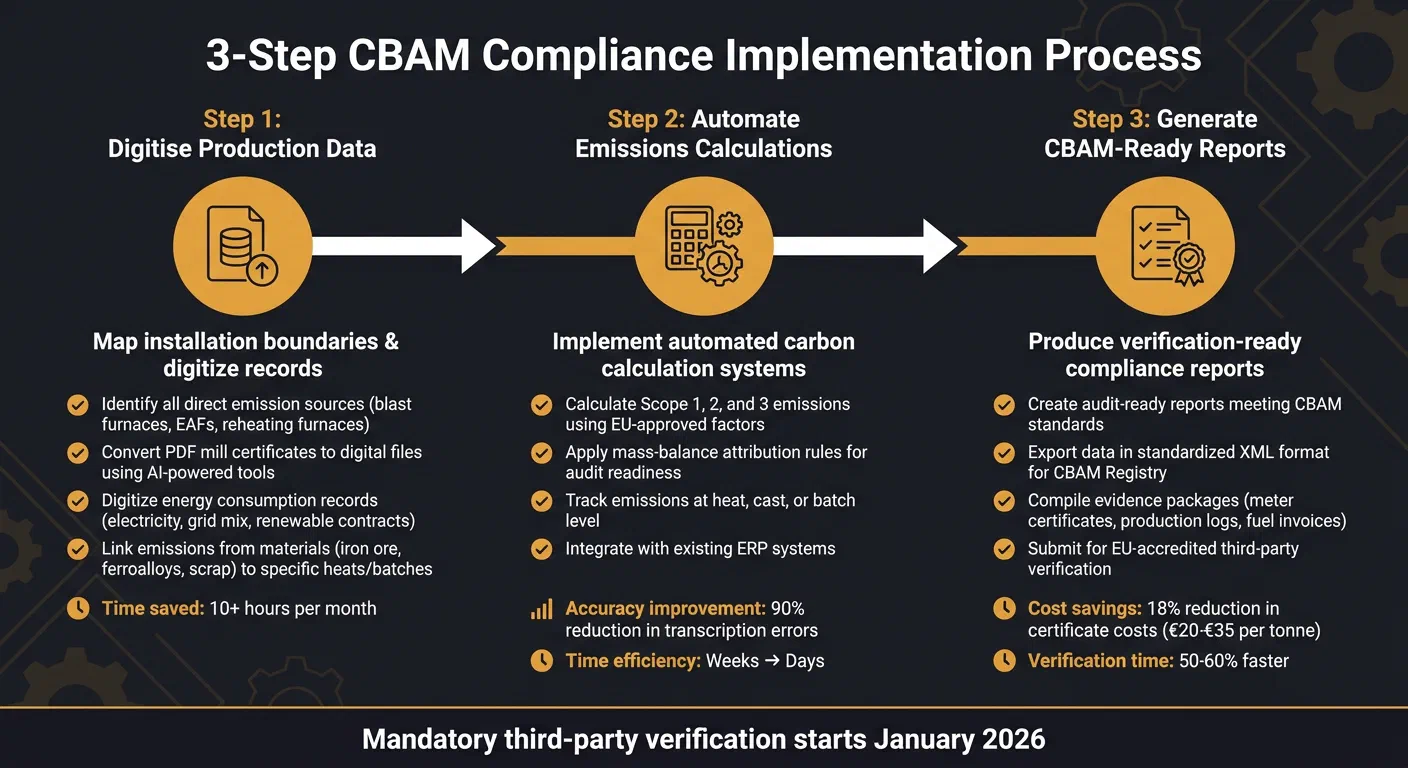
Breaking the process into three practical steps - digitising production data, automating emissions calculations, and generating verification-ready reports - makes navigating CBAM compliance far less daunting. Here’s how to tackle it.
Step 1: Digitise Production Data
Manual tracking is a recipe for chaos. Start by mapping your installation boundaries. Pinpoint every direct emission source - whether it’s blast furnaces, Electric Arc Furnaces (EAFs), or reheating furnaces - and set up your process boundaries in line with CBAM methodology 14. Next, ditch the paper trail and go digital. Tools like GoSmarter’s MillCert Reader can transform your PDF mill certificates into digital files in seconds. This AI-powered tool links emissions from iron ore, ferroalloys, and scrap directly to specific heats or batches, saving you hours of manual work.
Don’t stop there. Digitise your energy consumption records too. This includes electricity purchase data, grid mix details, and renewable energy contracts. For EAF producers, documenting renewable power purchase agreements is especially important - properly recording these contracts could significantly reduce your CBAM exposure. By digitising all records, you ensure every tonne of material is traceable and ready for scrutiny.
Step 2: Automate Emissions Calculations
Once everything’s digital, it’s time to automate. Lifecycle carbon tools can handle Scope 1, 2, and 3 emissions calculations for materials like pig iron or Direct Reduced Iron (DRI) 1415. These systems use EU-approved emission factors and mass-balance attribution rules, so your data is audit-ready without constant manual checks 14.
Automation doesn’t just boost accuracy - it slashes the risk of transcription and version-control errors by up to 90% compared to manual spreadsheets 16. What took weeks now takes days. Real-time dashboards give you detailed insights at the heat, cast, or batch level, helping you spot carbon hotspots well before CBAM declarations are due. GoSmarter’s Metals Manager takes it a step further by tracking scrap and offcuts and connecting directly with your existing Enterprise Resource Planning (ERP) system.
Step 3: Generate CBAM-Ready Reports
With your data streamlined, the final step is creating CBAM-compliant reports. From January 2026, embedded carbon data must be verified by an EU-accredited third party 12. Digital tools simplify this process, producing audit-ready reports that meet CBAM standards, cutting down both verification time and costs 14. Instead of scrambling to organise records at the last minute, these tools compile everything into a standardised XML format compatible with the CBAM Registry schema 16.
Beyond meeting regulatory requirements, these tools offer manufacturers a competitive edge. Verified emissions data can replace the EU’s default values, potentially cutting certificate costs by around 18% 11. This structured approach not only keeps you compliant but also sharpens operational efficiency and helps reduce emissions - all while protecting your margins.
Common CBAM Compliance Mistakes to Avoid
Even with the right tools, manufacturers can still trip over common errors that turn compliance into a costly mess. These mistakes often come down to incomplete data or unnecessarily complicated processes. Here’s what you need to keep an eye on - and why capturing data at the installation level is so important for CBAM compliance.
Incomplete or Inaccurate Production Data
Data gaps and errors can quickly derail compliance efforts, especially when it comes to emissions reporting:
Using national averages instead of specific installation data: This can result in defaulting to the EU’s punitive values, which are based on the worst-performing 10% of EU installations. For instance, the EU default for Blast Furnace-Basic Oxygen Furnace (BF-BOF) steel is around 2.04 tCO₂ per tonne, while modern mills typically achieve emissions between 1.65 and 1.75 tCO₂ per tonne. That difference could cost you an extra £20 to £35 per tonne unnecessarily 1014.
Overlooking precursor emissions and indirect electricity use: If you’re using pig iron, DRI, or ferroalloys from separate installations, the carbon embedded in these materials must be accounted for. Similarly, many manufacturers focus on Scope 1 emissions (direct emissions) but ignore Scope 2 (indirect electricity emissions). For steel producers, tracking indirect electricity emissions will be mandatory from January 2026 1014. Relying on plant-wide invoices won’t cut it; you’ll need sub-metered data for each production unit.
Misdefining installation boundaries: Leaving out key components like co-generation units, oxygen plants, or lime kilns can lead to audit failures. As Michael Finn from iFactory explains:
A broken audit trail - even if the final number is correct - results in a qualified verification opinion that undermines CBAM reporting credibility 14.
Automated tools help by capturing complete, traceable data at the installation level, ensuring compliance and avoiding these costly mistakes.
Making Compliance More Complex Than Necessary
Overcomplicating your compliance process is another trap to avoid.
Manual spreadsheets: These lack the version control, validation, and audit trails needed for third-party verification. An Export Sales Director shared their experience:
Our EU customers started asking for CBAM-ready embedded carbon declarations in 2024, and we were completely unprepared. We had plant-level energy bills but no per-heat or per-product attribution 10.
Layering on unnecessary workflows: Instead of piling on new processes, integrate compliance tools with your existing systems. Solutions that connect directly to your ERP or Computerised Maintenance Management System (CMMS) ensure data flows smoothly from the plant floor to reporting engines without manual intervention 1417.
For example, GoSmarter’s Metals Manager simplifies the process by tracking scrap and offcuts while working with your current setup. It automatically compiles all the evidence you need - like meter calibration certificates, production logs, and fuel invoices - cutting verification time and costs by 40–60% 14.
Streamlining compliance through automation and integration isn’t just smart - it saves time, money, and a lot of headaches. Focus on tools that simplify data flow and reduce the risk of errors.
Getting Started with CBAM Compliance
Making the shift to CBAM compliance doesn’t mean tearing your operation apart. The simplest way to get started? Digitise your mill certificates and hook them up to an automated extraction system. You’ve already got the data - it’s just buried in email attachments, shared drives, or filing cabinets.
GoSmarter was designed for exactly this type of challenge. It sits on top of your existing ERP, email inbox, or shared drive—no rip-and-replace required. GoSmarter connects via REST API with OAuth 2.0 / Microsoft Entra authentication, runs on UK-hosted Microsoft Azure infrastructure, and never trains its models on your production data. Most users are up and running within a day, and they’re processing their first certificates in under an hour 18. It’s a straightforward fix to the chaos of manual tracking.
For teams handling over 200 certificates a month, the benefits are immediate. You’ll claw back 8–12 hours of admin time every week. One production manager even saved over 120 hours in a year by ditching spreadsheets and switching to the MillCert Reader 1819. That extra time goes straight into better production planning, stronger supplier deals, and getting ready for the mandatory third-party verification starting January 2026 1012.
GoSmarter also keeps a full, searchable record for every document, slashing verification fieldwork time by 50–60% 10. When the verifier shows up, you won’t be rooting around for calibration certificates or production logs - they’re already sorted and ready to go.
You can start for free with GoSmarter’s Insights tools for scrap and emissions calculations. The same heat-number record feeds the Scrap Calculator and Cutting Plans—one entry, every tool. As your requirements grow, upgrade to Metals Manager on the Starter tier (£120/month billed annually) or Cutting Plans on the Production tier (£760/month billed annually) 19. Most users find the subscription pays for itself within the first quarter, thanks to reduced admin hours and scrap savings 18. With these steps, you’ll be set for smooth CBAM compliance reporting.
FAQs
What CBAM evidence will my plant need for third-party verification in 2026?
How do I calculate embedded emissions per heat, cast, or batch without spreadsheets?
Forget juggling spreadsheets to calculate embedded emissions for each heat, cast, or batch. Lifecycle carbon assessment tools do the heavy lifting for you. These platforms automatically crunch the numbers by pulling in data like fuel usage, process emissions, and electricity consumption, then applying standardised emission factors.
All you have to do is enter your batch or heat data. The system takes care of the rest, giving you accurate results that meet CBAM requirements - no manual tinkering needed.
What data should I digitise first to avoid EU default emissions values?
Further Reading
1: Carbon Border Adjustment Mechanism - Taxation and Customs Union
2: CBAM: What It Is & How It Affects Your Industry | carbmee
3: Factsheet: Carbon border adjustment mechanism - GOV.UK
4: CBAM regulation report: navigating the EU’s new carbon border rules for metals - Fastmarkets
5: CBAM: What it means for importers and exporters of steel, iron and aluminium | The Carbon Trust
6: CBAM Compliance Guide: Costs, Materials & Checklist
7: 2026 Southeast Asia Industrial Minerals & Raw Materials Export Strategy White Paper - Alibaba.com Seller Blog
8: EU Carbon Border Adjustment Mechanism (EU CBAM)
9: A Practical Guide to CBAM Reporting Requirements
10: EU CBAM for Steel Exports: Track Embedded Carbon & Ensure Compliance
11: EU CBAM Impact on Steel Exports: Track Embedded Carbon with AI-driven
12: Navigating EU CBAM: What U.S. Manufacturers Must Do | BDO
13: Carbon Glance for Manufacturers - Reduce Carbon Footprint
14: CBAM Readiness Checklist for Steel Producers and Exporters
15: EU CBAM Compliance Guide for Steel Exporters: 2026 Definitive Period
16: Why Automated CBAM Reporting Tools Are Essential?
17: CBAM for Iron and Steel: Sector Specific Reporting Rules
About the Author

Editor· Co-founder & Head of Product
Steph Locke is Co-founder and Head of Product at GoSmarter AI — former Microsoft Data & AI MVP building practical tools to cut paperwork and automate compliance for metals manufacturers.