Lifecycle Assessment Tools for Metals Manufacturers
- BlogSmarter AI
- Edited by Steph Locke
- Blog
- April 1, 2026
- Updated:
Table of Contents Show Hide
Most metals manufacturers are drowning in spreadsheets. AI-powered Life Cycle Assessments finish in minutes, not weeks. The old way? Chasing supplier data and crunching numbers manually. The new way is simpler. AI handles the grunt work, cuts costs, and gives you cleaner audit evidence for Carbon Border Adjustment Mechanism (CBAM) and Corporate Sustainability Reporting Directive (CSRD).
Here’s what you get with AI-powered Life Cycle Assessments (LCAs):
- Faster results: Cut LCA cycle times by up to 95% - often from months to days, depending on data quality and product complexity.
- Lower costs: Cut assessment spend without hiring pricey consultants.
- Better data: Real-time insights into Scope 3 emissions and carbon hotspots, backed by verified databases.
- Smarter decisions: Test “what-if” scenarios instantly - like switching to recycled materials or tweaking energy inputs.
Manual LCAs are eating into your margins and leaving you exposed to compliance risks. Let’s fix that.
METALLICO Webinar: How can LCA Support Innovation in Minerals and Metals Production
How AI Speeds Up Lifecycle Assessment Processes
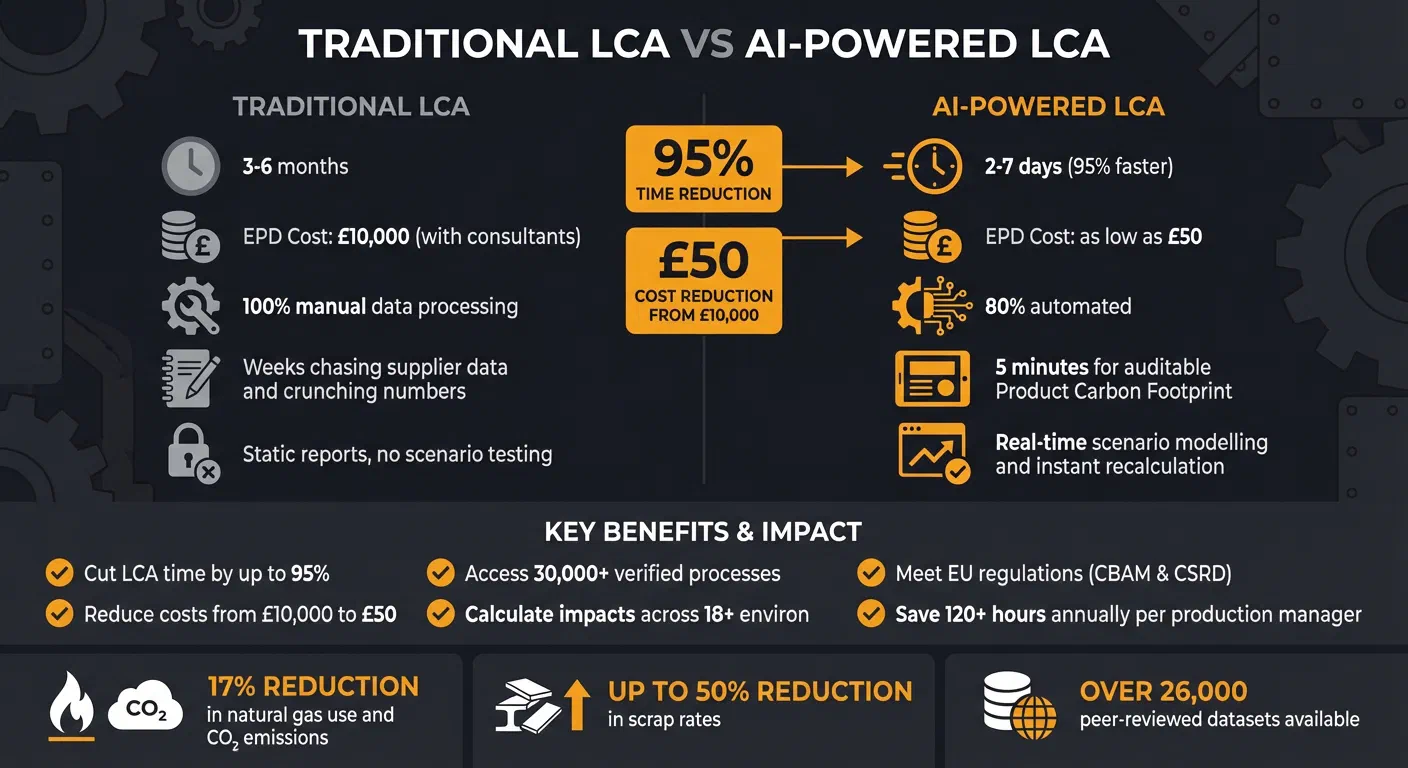
Traditional LCAs are a slog. Teams waste weeks chasing supplier data. Then they wrestle spreadsheets just to match emission factors. AI flips this on its head by automating about 80% of the manual work that LCA practitioners usually endure1. What used to take 3–6 months can now be done in just 2–7 days1. For manufacturers juggling complex supply chains and countless stock-keeping units, this time-saving isn’t just convenient - it’s essential for hitting regulatory deadlines.
AI-powered platforms handle the tedious bits: pulling product specs from PDFs and catalogues2, automatically linking raw materials and energy inputs to verified emission factors1, and even filling in data gaps using proxies from secondary databases when suppliers can’t deliver3. Some tools boast the ability to generate an auditable Product Carbon Footprint in as little as 5 minutes2. So, how does AI manage to make such a difference? It’s all about precise automation across the entire LCA workflow.
Reducing LCA Time from Weeks to Minutes with AI
The speed boost comes from automating every stage of the ISO 14040 workflow. AI systems can figure out the study’s objectives and scope, match components to a database of over 30,000 verified processes, calculate impacts across more than 18 environmental categories, and pinpoint carbon hotspots1. For metals manufacturers dealing with alloys, coatings, and multi-stage production processes, this means no more digging through Ecoinvent for the right steel grade or recalculating emissions every time a supplier changes location.
The impact is staggering. AI-driven systems can cut LCA completion times by 95%1, all while generating reports that comply with ISO 14040/44 and ISO 14067 standards. This is a process that would otherwise take weeks of painstaking documentation45.
“This is going to radically reduce the time we spend doing LCAs and help us focus on driving change” (Stephanie Richardson, Sustainability Leader)4.
For factories under the gun to produce Environmental Product Declarations for entire product ranges, this shift from weeks to minutes makes compliance not just feasible, but financially manageable. And it’s not just about speed - AI opens the door to smarter design decisions, too.
Real-Time Scenario Modelling with AI
AI doesn’t just make LCAs faster - it makes them smarter. Real-time scenario modelling allows research and development teams to test “what-if” scenarios on the fly. Want to compare recycled versus virgin aluminium? Or see the difference between local and international suppliers? How about trying out alternative alloy compositions? AI recalculates the environmental impact of these choices instantly2. This turns LCA from a backward-looking compliance task into a forward-thinking design tool that helps engineers make greener decisions before production even starts.
Dynamic recalculation engines ensure that the entire impact chain updates the moment any variable changes - whether it’s switching to a lower-carbon coating or tweaking energy inputs6.
“We can test different materials and packaging options and see the impact instantly. Helps us make better design decisions” (Supply Chain Manager, Manufacturing Company)2.
For metals manufacturers, this is a game-changer. Modelling the carbon footprint of a new product variant no longer takes months - it takes minutes. This means any claims about low-carbon products are backed by solid, real-time data. By turning LCA into a strategic tool, AI doesn’t just help with compliance; it gives manufacturers a competitive edge in sustainability.
LCA Tools for Metals Manufacturers
AI has shown it can shrink Life Cycle Assessment (LCA) timelines from months to just days. But which tools are worth your time? Broadly, there are three categories: platforms that slot into production workflows, databases that help you pick low-carbon materials, and tools that trim emissions in real time. Each tackles a different piece of the LCA puzzle, and the most effective setups combine all three. Let’s break them down to help you decide what fits your operation.
AI-Powered Platforms for Metals Production
Accurate LCAs start with solid data, and that means sorting out the chaos of mill certificates, heat numbers, and inventory records. This is where GoSmarter steps in. Its MillCert Reader uses AI to pull data from PDF mill certificates in seconds, linking batches to live inventory and heat codes. This creates a reliable foundation for LCA calculations. At £280/month billed annually, it’s far cheaper than hiring consultants and works with your current enterprise resource planning system - no need for a costly systems overhaul.
Steelmakers looking for deeper insights might turn to Metal Minds, which offers tools like OptiScrap to fine-tune scrap mixes and CoreMelt for creating digital twins of Electric Arc Furnaces. These tools help refine chemical compositions, ensuring carbon footprint calculations are spot-on. Then there’s LCAi, which automates the ISO 14040 workflow. It matches components to over 30,000 verified processes, delivering audit-ready reports in just 2–7 days at $750 per product for scale agreements.
Material Databases for Low-Carbon Alternatives
Once you’ve got your data sorted, the next step is finding greener materials. Caly (Carbalyze) does this by transforming Bills of Materials into actionable sustainability insights. It maps material emissions and suggests eco-friendly substitutes. For manufacturers exporting to the European Union, its CBAM Invoice Analyser ensures compliance with the Carbon Border Adjustment Mechanism.
Ecochain takes things a step further with scenario modelling. Want to see what happens if you switch from virgin to recycled aluminium? Ecochain shows the carbon impact instantly. Its pricing model - “verify once, pay once” - can slash Environmental Product Declaration costs to as low as €50 per declaration, compared to the usual €10,000 consultants charge.
Access to reliable life cycle inventory databases is a must. Tools like Sustainly integrate with ecoinvent (housing over 26,000 peer-reviewed datasets) and World Steel, providing verified emission factors for precise calculations. When supplier-specific data isn’t available, AI steps in to fill the gaps with proxies, ensuring the results remain audit-ready.
Production Process Tools to Cut Emissions
LCA isn’t just about crunching numbers - it’s about cutting emissions. GoSmarter’s Cutting Optimiser tackles waste head-on by generating cut lists for long products like rebar, reducing scrap by up to 50%.
“Smart technology choices can have a direct, measurable impact on reducing carbon emissions in steel manufacturing. The integration of AI and digital tracking has significantly improved our operational efficiency and sustainability performance” (Tony Woods, CEO of Midland Steel)7.
For high-volume cutting jobs, this kind of scrap reduction doesn’t just lower your carbon footprint - it saves you money on materials.
Then there’s CarbonBright’s Solara AI Co-Pilot, which provides real-time LCA insights. This tool lets production teams assess environmental impacts before making process changes, turning LCA into a proactive decision-making tool rather than a box-ticking exercise. For manufacturers under pressure to meet tight regulations and ambitious sustainability goals, tools like these don’t just simplify LCA - they make it actionable.
Data Integration and Accuracy for Reliable LCA
An LCA is only as good as its data. If your input data is scattered or flawed, your carbon footprint calculations won’t hold up. Most metals teams have data everywhere: mill certs, heat numbers, scrap logs, and energy meters. None of those systems talk to each other, so reporting turns into a circus. ISO 14044 lays down the law: your data must be complete, consistent, and traceable. This means every tonne of steel needs to be linked to its actual material properties - not just generic industry averages. Without this level of precision, your LCA isn’t worth the paper it’s printed on. That’s where integrated LCA tools come into play, offering the traceability and accuracy that sustainability efforts demand.
Connecting LCA Tools to Production Systems
Manual data entry sabotages LCA projects. GoSmarter’s MillCert Reader fixes this headache by using AI to pull data from PDF mill certificates in seconds, linking it directly to inventory records and heat numbers. At £280/month billed annually, it creates a fully auditable trail from raw materials to finished products. This ensures your LCA calculations are based on actual production data, not guesswork.
Modern LCA platforms go a step further by connecting to enterprise resource planning and product lifecycle management systems through application programming interfaces. These connections sync Bill of Materials and production data in real time, eliminating version control issues. This means your sustainability metrics reflect what’s happening on the factory floor, not outdated spreadsheets. For manufacturers exporting to the European Union, this level of traceability is critical for staying compliant with the Carbon Border Adjustment Mechanism (CBAM), where regulators demand primary data over generic assumptions. By integrating systems, you not only reduce errors but also set the stage for smarter automation.
Automated Data Collection Reduces Errors
Manual mill certificate processing wastes time and creates errors. Automating this process can save over 120 hours a year while cutting out costly mistakes7. AI-powered tools extract key details like material grades, chemical compositions, and energy inputs directly from PDFs or supplier catalogues. These tools then map the data to trusted databases like ecoinvent or World Steel, filling in gaps when supplier data is missing - all without sacrificing audit-ready quality.
When production data flows straight into LCA tools, teams can model scenarios in minutes. Want to know how switching to recycled aluminium impacts your carbon footprint before you place an order? You can. This turns LCA from a dull, retroactive task into a powerful decision-making tool. But it only works if your data is accurate, integrated, and up-to-date.
How to Choose the Right LCA Tool
Key Criteria for Evaluating LCA Tools
Picking the right Life Cycle Assessment (LCA) tool can be the difference between chasing data across spreadsheets and having everything you need at your fingertips. For metals manufacturers, where data is often scattered and complex, the tool must handle this chaos without adding to it.
Integration matters most. Your LCA tool should connect directly to your enterprise resource planning or product lifecycle management systems through application programming interfaces, pulling Bills of Materials and production data automatically. This ensures your assessments reflect real-time factory conditions, not outdated or generic figures. If you’re exporting to the European Union, this isn’t just convenient - it’s essential. Regulators under CBAM demand primary data, not industry averages pulled from a database89. Without this, you’re risking compliance headaches.
Speed and ease of use also can’t be ignored. Traditional consulting approaches can cost upwards of £8,500 and drag on for weeks. By contrast, AI-based platforms can slash costs to as little as £45 per Environmental Product Declaration (EPD) and deliver results in days9. The tool should be simple enough for your team to use without needing a specialist, yet reliable enough to produce accurate carbon footprints.
Look for tools offering scenario modelling and hotspot analysis. Can it show you how switching to recycled materials or changing your energy source impacts emissions? Can it pinpoint which production stage is driving your carbon footprint? These features aren’t just nice-to-haves - they’re what make LCA a practical tool for improving your operations and cutting costs.
These are the basics for any tool built to handle the complexities of metals manufacturing.
Why GoSmarter Works for Metals Manufacturers
GoSmarter ticks all the boxes for metals manufacturers. Its MillCert Reader uses AI to extract and digitise data from PDF mill certificates in seconds, syncing directly with your production records. At £280/month billed annually, it provides a fully traceable data trail - from raw materials to finished goods - perfect for accurate LCA calculations and meeting CBAM requirements.
Unlike tools that demand you rip out and replace your existing systems, GoSmarter works with your current enterprise resource planning setup, reducing downtime and making implementation quick. You can start using it immediately, with LCA data based on actual production inputs like material specs, energy consumption, and scrap rates - not generic averages. Whether you’re assessing the carbon impact of switching suppliers or tweaking cutting patterns, GoSmarter gives you real, actionable numbers. It turns chaotic data into clean insights that feed directly into your sustainability goals and reporting.
Getting Started with AI-Powered LCA
The benefits of AI-driven lifecycle assessment (LCA) are crystal clear. For instance, AI tools have cut natural gas use and CO₂ emissions by 17% at large steel facilities 10. Scrap rates? They’ve been slashed by up to 50% thanks to AI-powered cutting optimisation 7. And let’s not forget the 120 hours saved annually for each production manager by automating tedious tasks like reading mill certificates 7. These aren’t just numbers - they’re proof that AI-powered LCA can make a real difference in operations.
You don’t need a big-bang transformation. Start small and get proof fast. Use the free emissions and scrap calculators first, then use those results in tenders and environmental, social, and governance reporting. No accounts, no strings. See the return first. Then roll out MillCert Reader to digitise quality docs and kill manual entry errors. From there, connect to Metals Manager for instant stock visibility linked to material certifications, and finally, scale up with AI-driven cutting plans to reduce waste even further 7.
Worried about integration? Don’t be. You can upload spreadsheets or link your enterprise resource planning system using application programming interfaces to sync data in real time. Most teams get up and running within a day or two. The platform works alongside your existing setup, improving processes without disrupting them.
For metals manufacturers grappling with CBAM deadlines, soaring energy prices, and shrinking margins, AI-powered LCA isn’t optional - it’s the tool you need to stay ahead. GoSmarter transforms your production data into clean, traceable insights that feed directly into compliance reports, supplier decisions, and carbon reduction goals. The data is already there. The tools are ready. Start using AI-powered LCA today to turn scattered data into actionable insights and keep your edge in a competitive market.
FAQs
What data do I need to run an LCA for a metal product?
How do AI-powered LCAs stay audit-ready for CBAM and CSRD?
How quickly can GoSmarter plug into my enterprise resource planning system and start producing results?
Further Reading
1: AI-Powered LCA Software | Fast, Affordable Life Cycle Assessment | LCAi
2: Devera | AI-powered Life Cycle Assessment (LCA)
3: LiveCycle | Live, accurate LCA automation for portfolios
4: https://www.carbonbright.co/carbonbright-ai-suite
5: CarbonBright | AI-Powered Life Cycle Assessment & Carbon Footprint Software
6: Product-Level LCA | Dynamic Life Cycle Assessment , Dcycle
7: GoSmarter AI | AI Tools for Metals Manufacturing
8: Sustainly: an LCA Tool with AI - Sustainly Learning Page
9: Ecochain LCA Software | Automate Product & Portfolio Footprints
10: How AI is transforming the steel, aluminum, and copper industry - SMS group GmbH
Related reading
- AI vs. Spreadsheets: Predictive Analytics for Factories
Stale spreadsheets cause downtime and scrap; this shows how predictive analytics turns live shop-floor data into decisions that cut waste.
10 min read
- From Mill to Customer: End-to-End Mill Cert Traceability
Mill certs fail customers when the traceability chain breaks. This guide covers every gap — from upload and approval to branded certs and order packs.
14 min read
- Compliance Doesn’t Have to Suck: Turning 2027’s Paperwork Nightmare into a Cash Machine
Drowning in mill certificates and CBAM risk? Read how AI automates cert capture, fixes traceability, cuts scrap and avoids fines.
17 min read
About the Author

Editor· Co-founder & Head of Product
Steph Locke is Co-founder and Head of Product at GoSmarter AI — former Microsoft Data & AI MVP building practical tools to cut paperwork and automate compliance for metals manufacturers.