Go Green Without Going Broke: Cutting Carbon While Protecting Margins.
- BlogSmarter AI
- Blog
- March 1, 2026
- Updated:
Table of Contents
Stop running your factory like it’s stuck in 1985. If you’re still manually typing mill cert data into spreadsheets, overpaying for energy, or guessing at scrap rates, you’re not just wasting time - you’re burning cash.
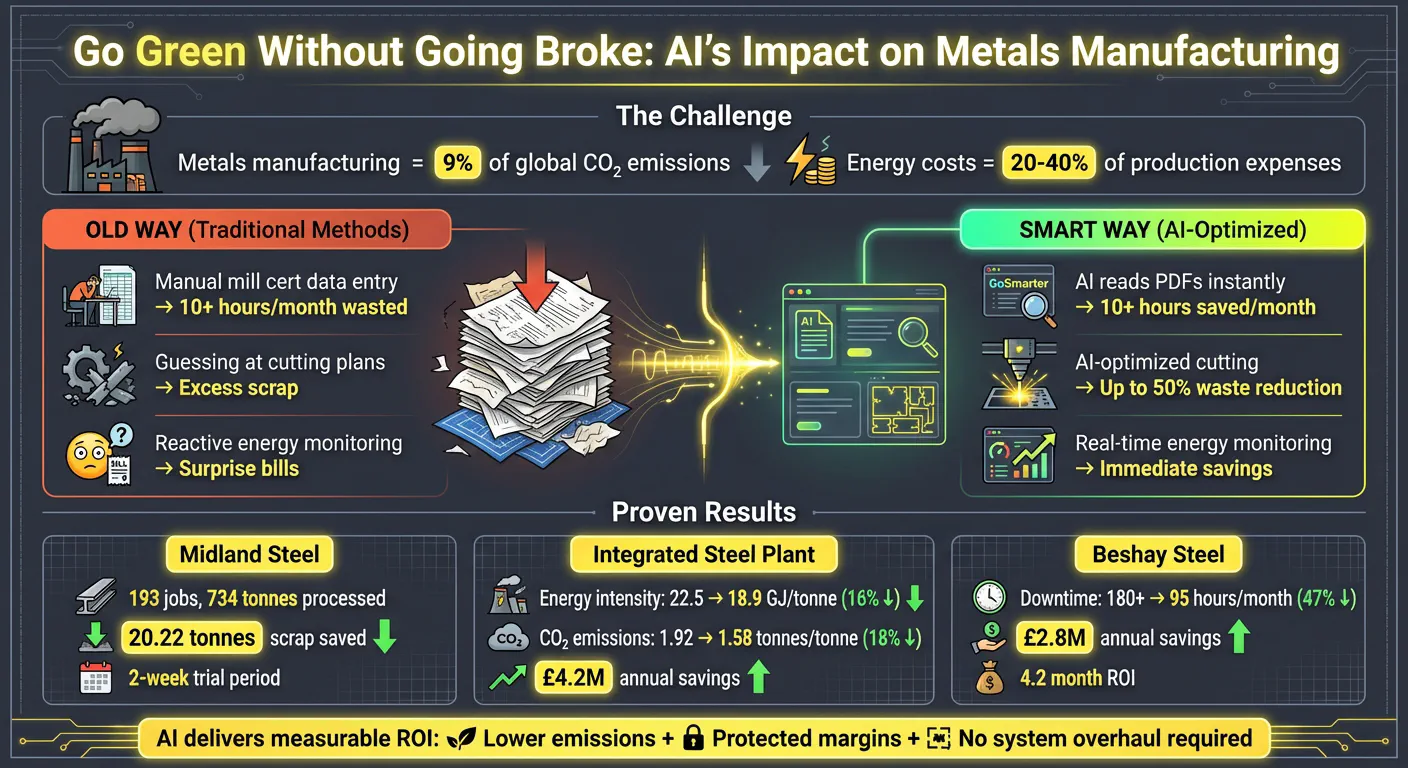
Here’s the hard truth: metals manufacturing is one of the biggest contributors to CO₂ emissions, responsible for 9% of global CO₂ output. With energy costs skyrocketing and carbon taxes like the EU’s CBAM kicking in this year, every wasted tonne of steel or kilowatt-hour of energy is directly eating into your margins.
But there’s good news. AI is changing the game, helping metals manufacturers reduce emissions, cut costs, and protect profits - all without ripping apart your current systems. Tools like GoSmarter automate the boring, time-sucking tasks that slow you down, from digitising mill certificates to optimising cutting plans.
The Old Way vs. The Smart Way
| The Old Way | The Smart Way |
|---|---|
| Manually entering mill cert data into Excel. | AI reads PDFs instantly, saving 10+ hours/month. |
| Guessing at cutting plans, creating excess scrap. | AI schedules cuts, reducing waste by up to 50%. |
| Reacting to energy bills after the fact. | AI monitors energy use in real time, saving ££. |
Let’s look at how AI can fix the mess and help you stay competitive in 2026 and beyond.
AI Reduces Energy & CO₂ by 25%
How AI Makes Sustainability Affordable and Practical
AI is already helping metals plants save money and reduce emissions - without requiring a complete system overhaul or a team of data scientists. By analysing thousands of variables in real time, AI makes small adjustments that add up to big savings. Let’s dive into a few ways this works.
AI-Driven Energy Optimisation Cuts Costs and Emissions
Energy costs can make up 20% to 40% of total production expenses in smelting operations [4]. AI tackles this by continuously fine-tuning furnace temperatures, airflow, and fuel blends to maintain the ideal thermal balance [4]. Instead of waiting for monthly utility bills to spot inefficiencies, AI identifies and addresses issues as they happen - like spotting burner wear before it starts eating into your profits.
“One operator, who has been there for 30 years, told me that this tool increased operational speed fivefold, minimising operator errors” [3].
Osas Omoigiade, Founder of Deep.Meta
While energy optimisation reduces costs and emissions, AI-powered scheduling ensures even more efficiency by cutting down on waste.
Reduce Waste and Scrap with Better Scheduling
AI-driven scheduling is a game-changer for cutting patterns and production runs, reducing scrap waste by as much as 50%. Even before full AI integration, tools like scrap and emissions calculators can provide instant insights to help you make smarter decisions [5].
Automate Manual Data Entry and Focus on Production
Manually entering data from PDF mill certificates into spreadsheets is a drain on time and resources. AI takes over this tedious task with computer vision and advanced language models, digitising certificates and feeding the data straight into your ERP system [1]. For example, Gerdau used AI to streamline ferroalloy use, cutting alloy costs by £3 per tonne while also improving their carbon footprint by using fewer additives [7]. This kind of automation not only simplifies workflows but also supports leaner, more sustainable production.
“AI is not just another tool – it’s a transformative force that redefines how we approach industrial automation; it enables us to shift from reactive operations to proactive, comprehensive decision-making” [6].
Thiago Maia, Executive Vice President at SMS group
GoSmarter: AI Tools Built for Metals Manufacturers
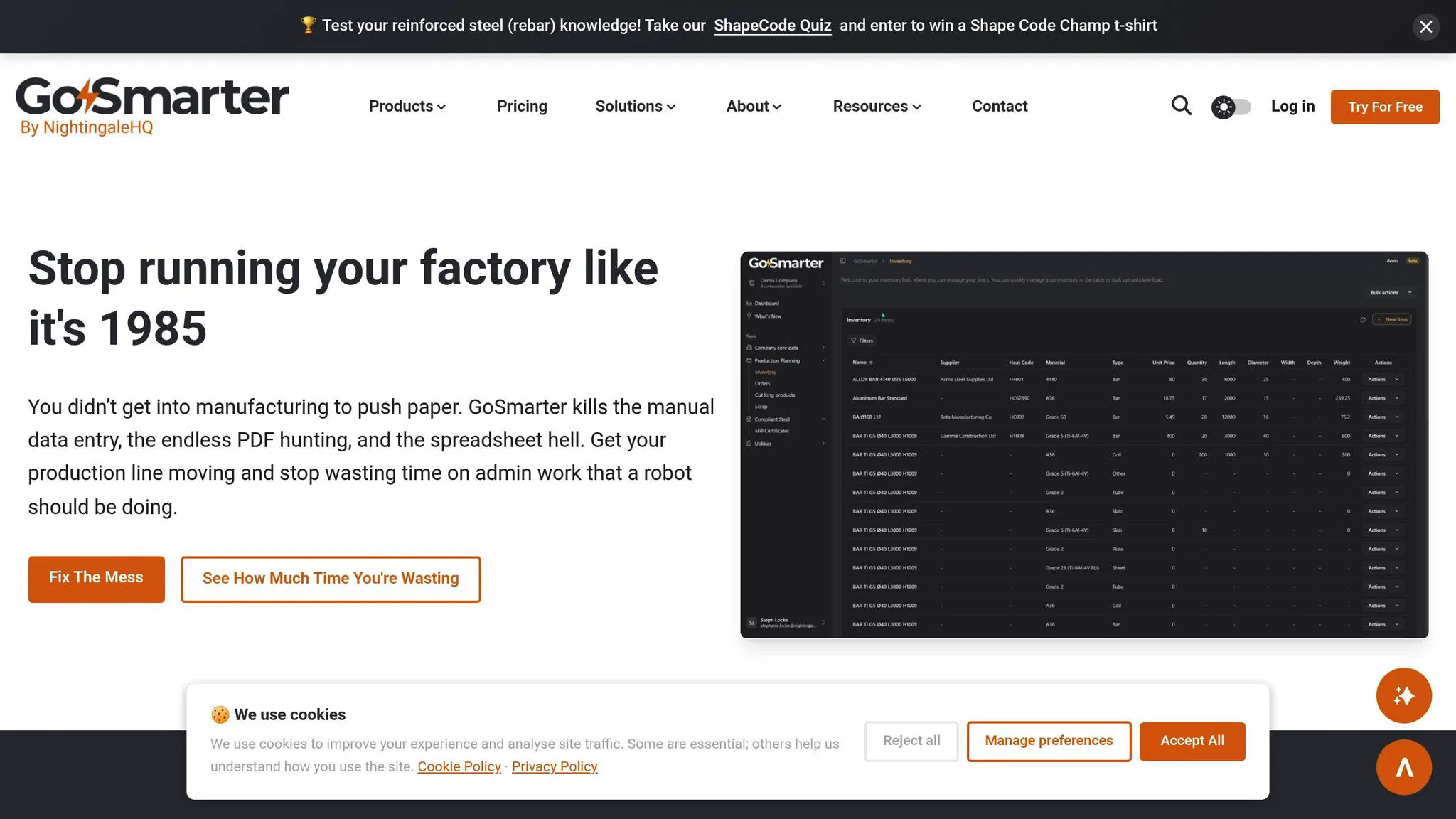
GoSmarter offers a collection of AI tools designed to take the hassle out of running a metals manufacturing operation. By automating tasks like mill certificate data entry, production scheduling, and scrap tracking, these tools let you focus on what truly matters - keeping the shop floor running smoothly, without drowning in spreadsheets.
Here’s a closer look at how GoSmarter simplifies cutting plans, digitises certificates, and integrates effortlessly with your ERP systems.
Smart Production Scheduler: Smarter Cuts, Less Waste
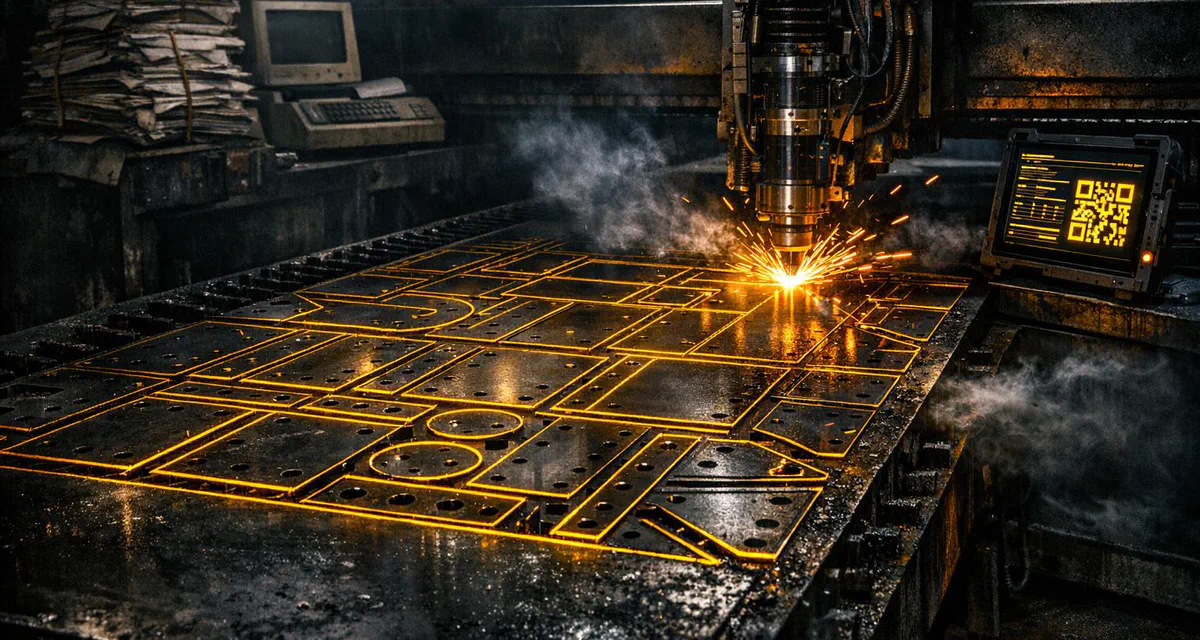
The Smart Production Scheduler leverages Genetic Algorithms to sift through thousands of cutting combinations for products like rebar. It aligns open orders with your inventory to create efficient cutting plans, significantly reducing leftover steel and scrap. Instead of manually piecing together plans and hoping for the best, the scheduler provides optimised first drafts that can cut scrap waste by as much as 50%. The result? Lower material costs, fewer emissions, and no need to overhaul your production process.
MillCert Reader: Automate Mill Certificate Data Entry
The MillCert Reader uses AI-powered OCR technology to extract data from unstructured PDF mill certificates, turning them into organised, actionable information. It even creates single-page PDFs sorted by heat code, eliminating the manual errors that often lead to compliance headaches. This tool can save production teams over 10 hours a month, freeing up time for more important tasks [8].
Seamless Integration with Your ERP Systems
No need to scrap your legacy ERP system to take advantage of GoSmarter. The platform works with what you already have, integrating smoothly through tools like Microsoft Azure Logic Apps, Power Automate, and Power BI. Setup is quick - log in, and you’re ready to go. Plus, the pricing is straightforward: start for free with basic scrap and emissions calculators, and scale up when you’re ready. No surprise fees or forced upgrades [1]. Just practical tools that fit right into your existing processes.
The ROI of AI in Manufacturing: Results You Can Measure
AI isn’t just a buzzword in manufacturing anymore; it’s delivering measurable results that directly impact the bottom line. By cutting waste, lowering emissions, and improving efficiency, manufacturers are seeing margins improve dramatically. The numbers speak for themselves - traditional methods simply can’t keep up.
Here are some real-world examples that showcase the power of AI optimisation.
Case Study: Before and After AI Optimisation
Midland Steel put GoSmarter’s Rebar Optimiser to the test in a two-week trial in 2025. Across 193 jobs and 734 tonnes of steel, the AI-powered cutting plans saved an impressive 20.22 tonnes of steel scrap - material that would have otherwise gone to waste.
“Smart technology can have a direct, measurable impact on reducing carbon emissions in steel manufacturing. The integration of AI and digital tracking has significantly improved our operational efficiency.”
Tony Woods, CEO at Midland Steel [2]
Another success story comes from a 2.4-million-tonne integrated steel plant that used AI for energy management in its blast furnaces and rolling mills. Over 18 months (2024–2025), the plant cut its energy intensity by 16% and reduced CO₂ emissions by 18%, saving £4.2 million annually [9]. These results underscore the financial and operational benefits of AI adoption.
| Metric | Baseline | AI-Optimised | Improvement |
|---|---|---|---|
| Energy Intensity | 22.5 GJ/tonne | 18.9 GJ/tonne | 16% reduction |
| CO₂ Emissions | 1.92 tonnes/tonne steel | 1.58 tonnes/tonne steel | 18% reduction |
| Unplanned Downtime | 180+ hours/month | 95 hours/month | 47% reduction |
In Egypt, Beshay Steel adopted AI-powered predictive maintenance to tackle unplanned downtime. The result? A 47% reduction in downtime and annual savings of £2.8 million. Even better, they recouped their investment in just 4.2 months [10].
How Lower Emissions Improve Your Bottom Line
Every tonne of material saved and every kilowatt-hour conserved adds up. With rising carbon taxes in the UK, cutting waste and optimising energy use isn’t just good for the planet - it’s a direct boost to your finances. By reducing emissions, you lower costs, protect margins, and free up resources without needing additional investments. It’s a win-win: better efficiency and a stronger competitive edge, all while maintaining quality.
Conclusion: Time to Modernise Your Manufacturing Operations
AI-driven solutions are reshaping metals manufacturing, delivering real-world results. These tools help reduce scrap, lower energy costs, and minimise emissions - all while protecting your bottom line. The numbers speak for themselves, and case studies highlight how quickly businesses see returns on their investment.
With carbon taxes and rising energy costs here to stay, the pressure to modernise is only increasing. The good news? You don’t need to rip out your existing ERP system or endure a drawn-out implementation process. GoSmarter works with what you already have, automating tedious tasks like processing mill certificates, optimising cutting plans, and tracking scrap. This lets your team focus on what matters most: production.
Start with a simple four-week audit to understand your current operations. From there, you can secure meaningful improvements in just 90 days by tackling areas like sealing air leaks, balancing furnace operations, and digitising documentation [1]. Real-time dashboards make energy efficiency visible, empowering operators to make smarter decisions. With flexible pricing that grows with your business, there are no hidden contracts tying you down. Every tonne saved and every kilowatt-hour conserved strengthens both your efficiency and profitability.
The choice is clear: stick with outdated, wasteful processes or embrace smarter, greener manufacturing that directly benefits your bottom line. The tools are here, the results are proven, and the time to act is now. By moving forward, you position your business for sustainable success and a lasting competitive advantage.