COVID triggers a wave of automation
- Steph Organ
- Archive
- July 23, 2020
- Updated:
Table of Contents Show Hide
For companies that have survived thus far through the global pandemic, the next huge challenge they face is getting back to normal. Numerous factors, from uncertain cashflow to making the workplace safe enough to return to, prove that the old ways just won’t work.
Recovery isn’t about getting back to where you were, it’s about building something new.
Renovation with automation
Nightingale HQ recently won funding from Innovate UK to help businesses do just do that. We believe that every company could save time and money by using automation, and thanks to our GoSmarter project, we are now able to offer help to the UK businesses who could benefit from our 6 easy automation tools.
A step into the unknown
If automation is new to you, don’t fear. We have created a series of in depth webinars explaining each of our 6 tools in and how they are applicable to businesses. Our tools come with guided installation, so don’t need any technical skills to install them, and thanks to the funding, two of the tools come at no cost at all, and the others use very inexpensive Microsoft-based subscriptions, which are even cheaper if you already have an Office 365 subscription.
You can get started by checking out our quick videos on automation.
Automation isn’t about replacing
If you could get an extra member of staff without paying a whole extra salary, you would probably take them on, and you wouldn’t have to fire someone else to do it. Automation is about achieving more with what you have, which is more important than ever right now while resources are limited.
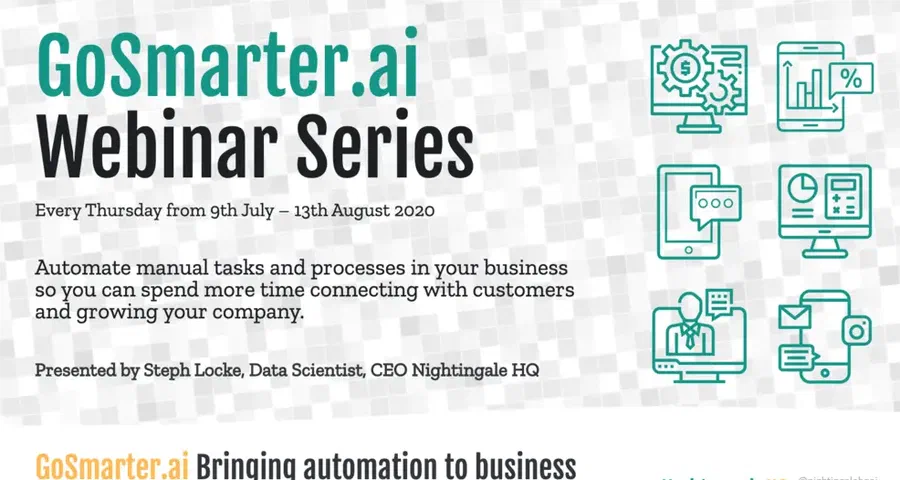
You can catch up on the GoSmarter webinar series below. Each webinar describes each of the GoSmarter tools and how to use them. You can already start using the tools when you sign up for GoSmarter:
- Process Automation tool for less admin and more business
- Social Media Listening tool to manage your online reputation
- Supercharge Sales tool to automate sales and win more
- FAQ Chatbot tool to augment your customer service
- Productive Meetings tool to get more out of meetings and support remote teams
- Invoice Processor tool to keep on top of accounts payable
FAQs
What did the automation wave actually look like?
The term ‘automation wave’ might suggest a coordinated, strategic shift across the SME sector. The reality was more chaotic and more pragmatic. Businesses that had always managed with manual processes found themselves unable to operate in the same way with reduced staff, remote working, and changed customer behaviours. They looked for solutions to specific, immediate problems — and they found them in automation tools that, in many cases, had been available for years but had never been prioritised.
For GoSmarter, the COVID-19 period saw rapid adoption of tools for exactly these immediate problems: managing customer queries with reduced customer service staff (FAQ chatbots), processing invoices without people physically present in an office (invoice processing automation), and keeping sales pipelines active with less face-to-face selling (sales AI). The problems were urgent; the solutions existed; the pandemic created the pressure to act.
Why did some businesses come out ahead?
The businesses that came out of COVID-19 in the strongest position were those that used the disruption as an opportunity to adopt tools and practices that they had been postponing. Automation that reduced their dependency on physical presence, headcount, and manual processes gave them advantages that persisted after restrictions lifted — lower administrative costs, better data visibility, and operational resilience.
This is the lesson that should outlast the pandemic: automation investment is not just a response to crisis. It is a structural improvement to the business that makes it more competitive in normal times and more resilient in abnormal ones.
What is the manufacturing sector's particular opportunity?
For manufacturers, the automation wave triggered by COVID-19 has a lasting relevance. The sector was already under pressure before the pandemic — skills shortages, margin pressure, increasing sustainability demands, and growing customer expectations for traceability and documentation. COVID-19 accelerated the recognition that manual, paper-based processes are not just inefficient but fragile.
GoSmarter’s focus on metals manufacturing reflects the conviction that this sector has both the most to gain from automation and the tools available to deliver it — starting now, with processes that work, without a multi-year digital transformation programme.
About the Author