The Bone Yard Is Killing Your Margins: The Metal Waste Paradox
- Steph Locke
- Blog
- April 16, 2026
- Updated:
Table of Contents Show Hide
You buy prime steel. You cut it with precision. Then you throw usable leftovers into a muddy pile and act surprised when margins shrink.
That is the metal waste paradox. You pay for good material, then treat it like junk because your process cannot see it.
A hard clean-up of the bone yard can recover instant value. You can turn dead stock into scrap cash and free up floor space. That first sweep can cover a big chunk of your first year of GoSmarter. Then you lock in gains by logging offcuts at source before buying fresh material.
This is not theory. It is a process and purchasing fix.
Why the bone yard quietly drains profit
Most yards drift into chaos for the same reasons:
- offcuts get labelled by hand, then labels fade
- location data lives in someone’s memory
- planning systems trust old records, not real stock
- buyers stop trusting inventory data and reorder “just in case”
If your planner cannot find a remnant in 10 seconds, it does not exist for production.
That drives three losses at once:
- Cash loss from avoidable new-stock purchases
- Space loss from racks and yard zones blocked by unknown material
- Speed loss when teams spend time searching instead of cutting
Selling to scrap has a place, but only after you have proven reuse is not possible. The UK waste hierarchy puts reuse ahead of recycling for a reason (UK Government).
The 48-hour clean-up that can fund the rollout
Start with one focused exercise. Do not overcomplicate it.
Step 1: Sweep, sort, tag
For 48 hours, run a dedicated yard sweep.
- assign a temporary ID to every unknown bar, plate, and bundle
- capture grade, dimensions, estimated weight, condition, and location
- split material into three lanes: reusable, rework, scrap
This gives you immediate visibility.
Step 2: Release value fast
Move true scrap through your normal recycler route for immediate cash recovery. Move reusable stock back into planning queues before your next purchase cycle.
Track four numbers during the clean-up:
- tonnes identified
- tonnes reusable
- tonnes scrapped
- space released (racks or square metres)
You are converting ghost inventory into decisions.
Step 3: Prove the business case with your numbers
Now run the maths with your own data using the Business Case Calculator.
Model the combined impact of:
- reduced new-stock purchasing
- reduced waste leakage
- reduced handling/admin time
- better space utilisation
This turns a “software pitch” into a decision backed by operational evidence.
Why legacy systems keep the mess alive
Most legacy Enterprise Resource Planning (ERP) systems were not built for real-time shop-floor remnant control. They assume stock records are clean and updated instantly. They are not.
At the saw, teams cut material. Offcuts appear. If no one logs that event in the moment, system data drifts from physical reality.
Then your nesting and planning tools inherit bad stock data. Buyers lose trust. They order new bars and sheets because uncertainty feels safer than stock risk.
That behaviour protects delivery dates in the short term. It damages margin every week.
The workflow that stops bone-yard relapse
A one-off clean-up helps once. A shop-floor-first workflow keeps the gains.
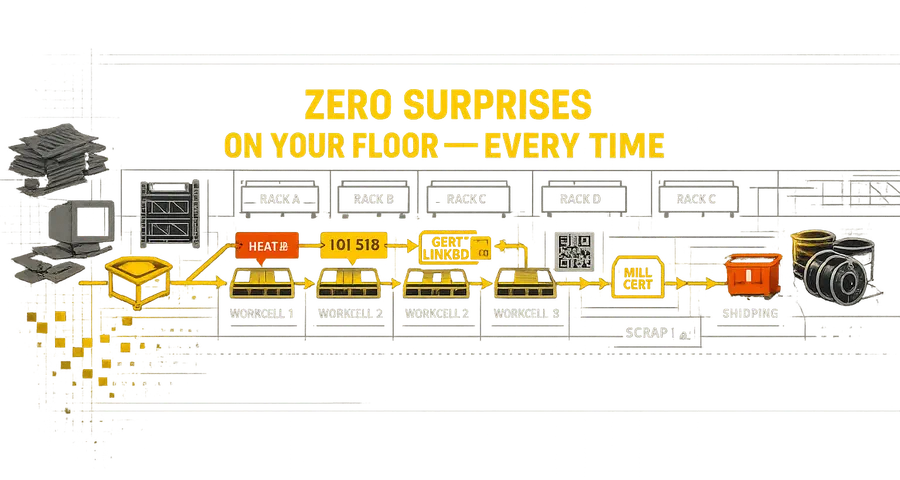
With GoSmarter, operators can log offcuts at the point of cut. The remnant becomes a searchable digital asset immediately, with dimensions, grade, and location.
A practical day-to-day flow looks like this:
- Operator cuts a parent length and records the remnant in-app.
- Remnant inherits traceability details and current location.
- Planning checks reusable stock first during cut-list generation.
- Purchasing reviews reusable coverage before raising new orders.
- Teams consume, reserve, or scrap remnants with a clear reason code.
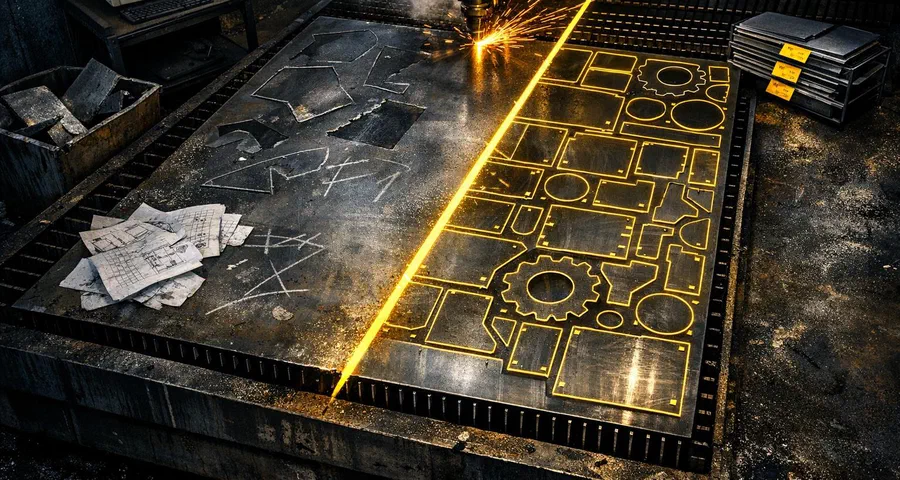
No grease-pencil mystery pieces. No “we think we had one in Bay 3” guesswork.
Reuse first, scrap second
Steel’s recyclability is a major industry advantage, and global steel production uses substantial scrap input every year (World Steel Association).
But from a margin perspective, “recyclable” is not the same as “optimal”.
If a remnant can fulfil a live order, reuse usually beats scrap disposal financially. Scrap should be the deliberate final step, not the default outcome of poor visibility.
This is where process discipline and software work together:
- clean process turns yard chaos into usable categories
- live data stops categories drifting back into chaos
- purchasing controls lock in the financial upside
How this pays for itself
The payback comes from compounding gains, not one magic metric.
1) Process gains
- less time spent searching and checking stock
- fewer planning delays from uncertain availability
- cleaner yard flow and faster picking
2) Purchasing gains
- fewer panic buys
- fewer duplicate buys of material already on site
- better timing of replenishment
3) Waste gains
- more remnants consumed internally
- less usable stock downgraded to scrap
- more intentional scrap sales from clearly unusable stock
When teams ask, “Will this software pay back?”, this is the answer: it pays back by fixing the decisions you make every day.
If you want to quantify it before rollout, use the Business Case Calculator with your clean-up baseline.
Frequently Asked Questions
Can a bone-yard clean-up really pay for software?
What should we record for each offcut?
How do we trial this without disrupting operations?
Does this still work if we already run legacy planning software?
Go deeper
- Scrap, Waste & Yield Optimisation — practical guidance on reducing waste and protecting margin
- Spreadsheet-to-System Planning — replace disconnected planning files with live operational data
- Cutting Optimiser — generate remnant-aware cut plans from real stock positions
- Midland Steel Case Study — measurable operational impact from AI-led workflows
If your yard is full of unknown metal, that is not “normal”. It is trapped margin.
Do the clean-up. Run the numbers. Then stop the pile from coming back with a workflow that pays for itself.
About the Author

Co-founder & Head of Product
Steph Locke is Co-founder and Head of Product at GoSmarter AI — former Microsoft Data & AI MVP building practical tools to cut paperwork and automate compliance for metals manufacturers.