Top AI Tools for Supply Chain Visibility in Metals Manufacturing
- BlogSmarter AI
- Edited by Ruth Kearney
- Blog
- April 21, 2026
- Updated:
Table of Contents Show Hide
The best AI tools for supply chain visibility in metals manufacturing are GoSmarter, Project44, FourKites, Kinaxis, Blue Yonder, Oracle SCM, and SAP Integrated Business Planning. For metals-specific operations (mill certificate processing, cutting optimisation, and heat number traceability), GoSmarter is the only purpose-built option on this list. The others excel at global logistics and enterprise planning. This guide compares all seven on real-time visibility, automation, and fit for metals manufacturers.
How many hours did your team lose this week digging through certificates, chasing suppliers, or re-keying data? If you’re in metals manufacturing, the answer is probably too many. Missed certs, late shipments, and manual stock checks aren’t just frustrating - they burn cash and risk production delays.
AI tools like GoSmarter, Project44, and others are cutting through this chaos. They automate the grunt work: tracking inventory, managing mill certs, and flagging disruptions before they hit. For metals manufacturers, this means fewer emergencies, better compliance, and lower costs.
Here’s what you can expect:
- Save 120+ admin hours a year: Automate cert handling and inventory checks.
- Cut scrap rates by up to 50%: Smarter cutting plans mean less waste.
- Stay audit-ready: Real-time traceability from heat number to finished product.
- Avoid production hiccups: Predict delays and adjust before they cost you.
Let’s sort this out.
1. GoSmarter
Real-time visibility and traceability
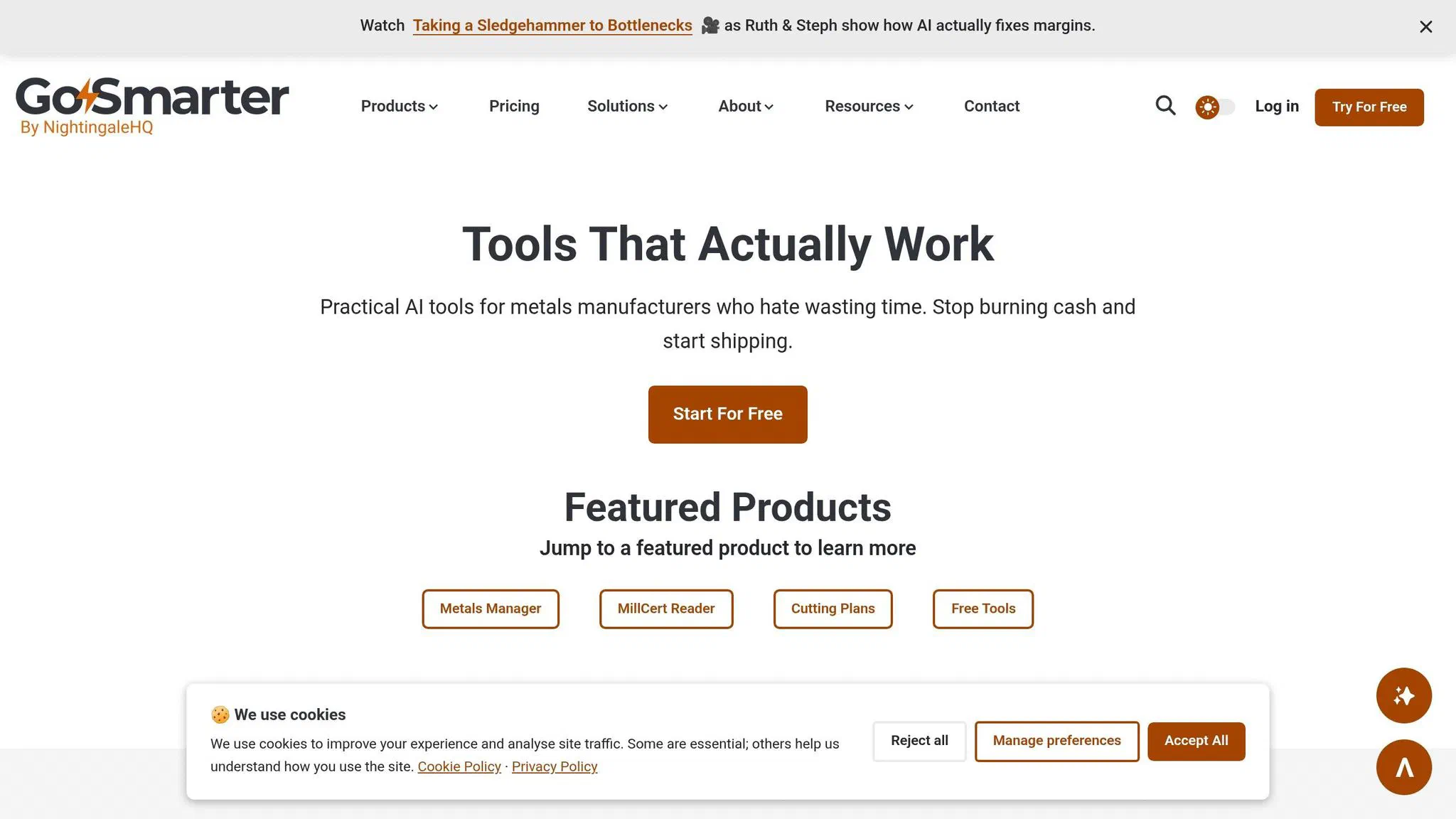
GoSmarter’s Metals Manager gives you live tracking of inventory by grade, heat number, and certificate. No more manual stock checks. It covers main sites, satellite stores, and off-site facilities — all from one dashboard. Every movement is logged, creating a full audit trail. Each item is tracked from its heat number right through to the finished product, ensuring you’re ready for those routine EN 10204 material test certificate audits. This kind of transparency is exactly what metals manufacturers need to prove material origin and compliance when regulators or customers come knocking. Companies using this live inventory tracking have reported a 30–40% drop in emergency procurement 1. With this level of traceability, you can start automating even more of those time-sucking manual processes.
Automation of manual processes
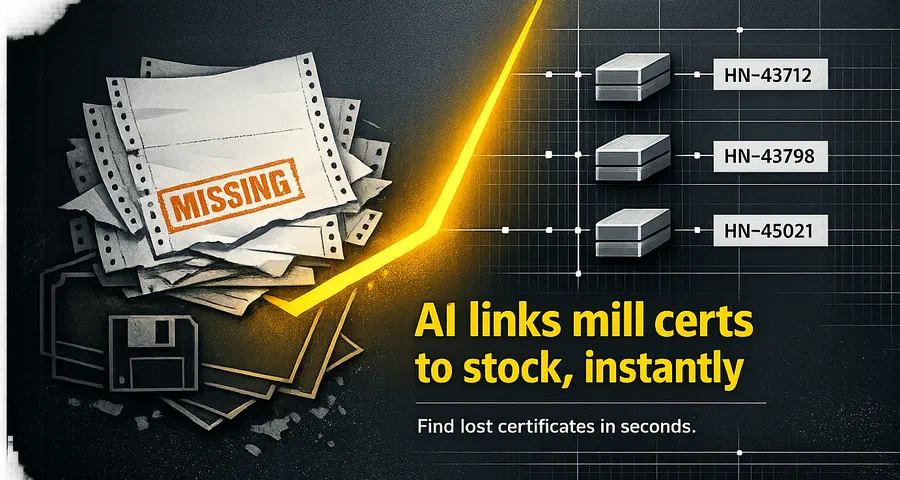
The MillCert Reader takes the tedious work out of handling mill certificates. Using AI, it pulls chemical composition and mechanical properties straight from scanned or digital PDF certificates, turning them into searchable data. No more wasting over 120 hours a year manually re-keying information. Every QC team knows the pain. It also flags anomalies: certs that don’t match the order spec, missing mechanical properties, or non-conforming material grades get flagged automatically before stock is booked in. And it handles bulk PDF renaming based on heat codes, so you’re not stuck hunting through folders to rename files one by one.
Then there’s Cutting Plans, which uses advanced algorithms to match orders with available multi-grade, multi-dimension inventory. What used to take hours of planning now takes just minutes, and scrap rates can drop by as much as 50% 2.
Built for the metals industry
GoSmarter isn’t some generic software trying to fit into your world. It’s built specifically for fabricators, stockholders, and mills. It works on top of your existing Enterprise Resource Planning (ERP) systems (Infor, Epicor, Dynamics, Sage) via REST application programming interface (API) or CSV file import. No integration fees. No consultants. No rip-and-replace. The GoSmarter team walks you through setup on day one. Most teams are live in 1–2 days 2.
Tony Woods, CEO of Midland Steel, saw it first-hand:
“The integration of AI and digital tracking has significantly improved our operational efficiency and sustainability performance” 3.
Pricing is straightforward and tier-based, not per feature: Metals Manager is already included from £120/month billed annually (Starter tier), MillCert Reader’s AI cert reading unlocks at £280/month billed annually (Workshop tier), and Cutting Plans’ AI cut planning unlocks at £760/month billed annually (Production tier) 2. Plus, there are free tools like scrap rate and emissions calculators available - no account needed. Together, these features simplify operations and help you manage risks across the metals manufacturing supply chain.
GoSmarter as a supply chain visibility stack
Together, these three capabilities give metals manufacturers end-to-end supply chain visibility — from material origin to finished product:
- MillCert Reader — visibility into material compliance: what arrived, from which supplier, with which chemical and mechanical properties
- Metals Manager — visibility into live stock: what grade, what dimension, where it is, and what certificate it carries
- Cutting Plans — visibility into production yield: what was cut, from which bar or sheet, and how much material remains
That connected picture drives real On-Time In Full (OTIF) performance. When you know exactly what certified stock you have, where it is, and how to cut it without waste, you stop firefighting and start shipping on time.
Most enterprise supply chain platforms give you logistics visibility — where your truck is. GoSmarter gives you metals visibility — what’s in your warehouse, whether it’s certified, and how to cut it without waste. That distinction matters when a customer asks for a 3.1 material test certificate before delivery.
2. Project44
Real-time visibility and traceability
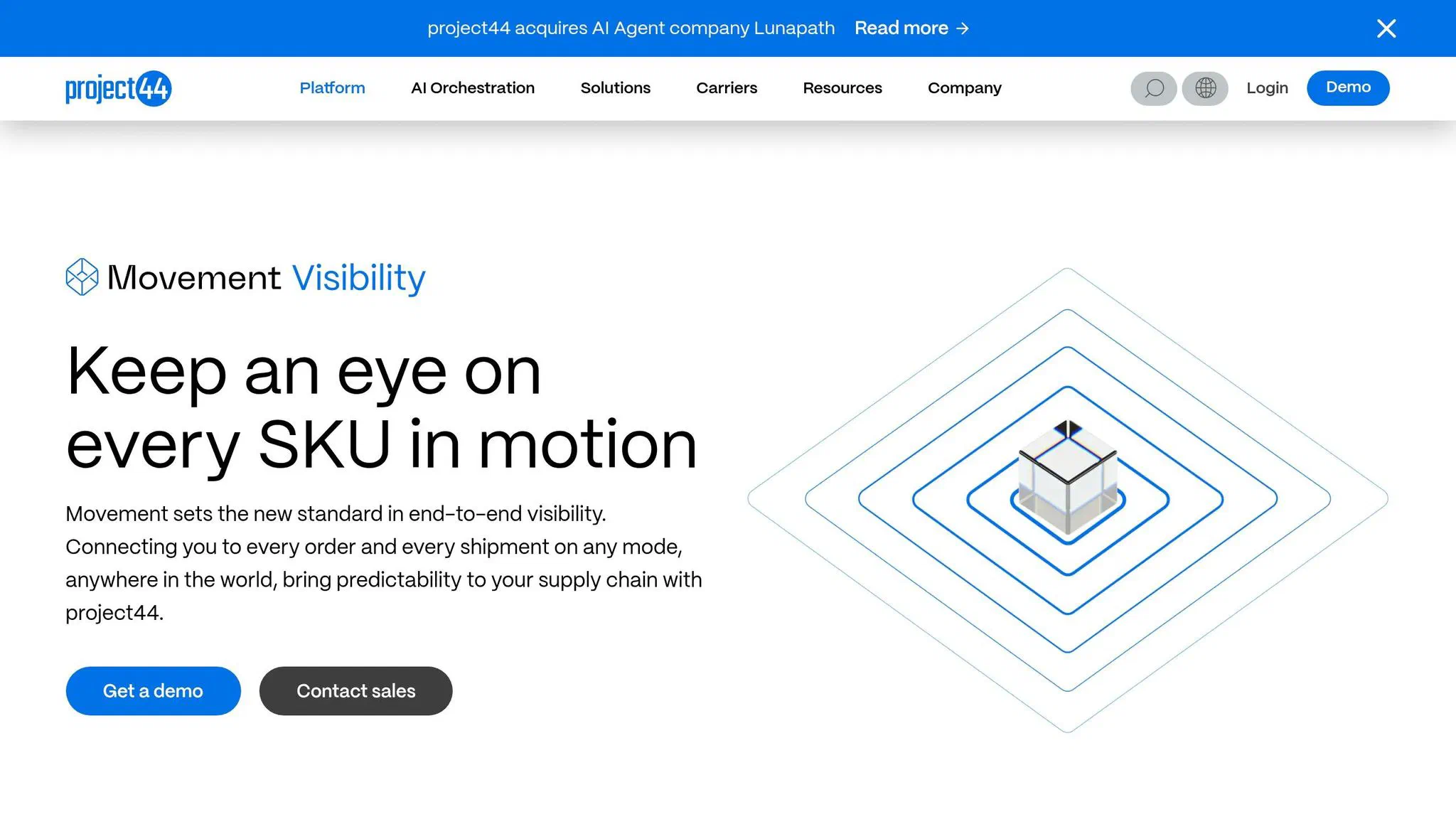
Project44’s Movement Platform connects with over 259,000 carriers and 1 million facilities, giving you a live, real-time view of your supply chain 45. It tracks shipments across ocean, air, road, and rail, and lets you zoom in by purchase order (PO), sales order (SO), stock transfer order (STO), or even stock keeping unit (SKU) 5. For metals manufacturers, this means you can pinpoint the exact location of your steel coils or aluminium sheets at any moment.
The platform handles 700 million events daily, validating trillions of data points 4. It uses AI to clean up fragmented data from countless sources, turning chaotic carrier updates into a single, reliable source of truth 65. Users report resolving supply chain issues 85% faster and improving on-time deliveries by 40% 5. Its AI assistant, MO, provides instant answers in plain English to questions like, “Where’s PO 4521?” 65. This level of tracking is the backbone for its advanced risk management tools.
AI-driven risk management and disruption alerts
Every day, Project44 tracks 8 billion external risk signals across more than 120 categories - everything from natural disasters and labour strikes to cyberattacks and port congestion 47. Its Disruption Management Agent sifts through millions of news events daily, linking risks to your shipments 89. So, if a port shuts down or a bridge collapses, you’ll know immediately which shipments are affected, helping you avoid costly delays. For metals manufacturers, this means fewer production hiccups and tighter compliance.
Take the Baltimore Bridge collapse, for example. A £22 billion automotive company rerouted shipments in time to avoid £12 million in costs 4. Another example: a £4.3 billion global spirits company slashed detention fees by 99% by anticipating delays 4. The Exception Management Agent automatically identifies reasons for late deliveries and kicks off resolution workflows, eliminating the need for manual follow-ups 8. This kind of automation can resolve problems up to 90% faster 89.
Automation of manual processes
Building on its tracking and risk management capabilities, Project44 uses more than 29 AI agents to automate tasks like exception management, slot booking, and freight procurement 84. The Slot Booking Agent, for instance, manages the entire appointment lifecycle, cutting down the back-and-forth between carriers and facilities 8. A £12 billion Canadian automotive parts retailer used this feature to reduce gate wait times by 86% 4. Meanwhile, the Freight Procurement Agent negotiates rates across thousands of carriers in minutes, replacing hours of manual work 8. These automated tools reduce human error and speed up decision-making, which is critical when dealing with the complexities of metal logistics.
“Our team can now access real-time shipment visibility, keeping customers up to date and addressing disruptions before they prevent on-time delivery. This is a strategic implementation for our company” 5.
That’s Jean-Marc Viallatte, GVP Global Supply Chain at Arkema. Users cut manual tasks by 60% and trim supply chain costs by 30% 5. For metals manufacturers juggling tight schedules and complex logistics, that means fewer late-night crises and fewer emergency air freight bills.
3. FourKites
Real-time visibility and traceability
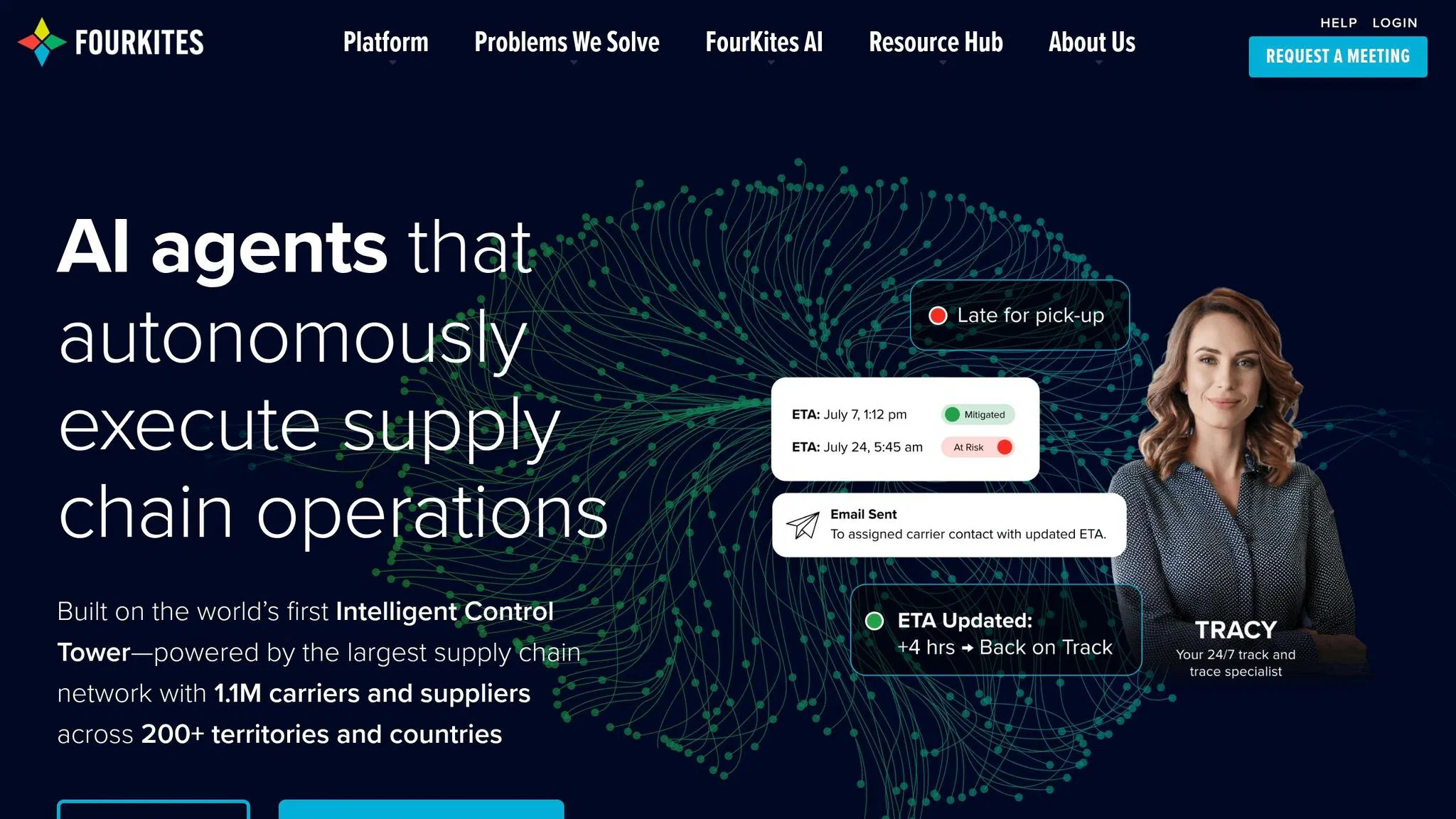
FourKites handles an impressive 3.2 million supply chain events and shipments daily, tracking activity across 1.9 million locations and pulling data from 1.1 million logistics providers 1011. Its Intelligent Control Tower brings together shipments, orders, and yard events into one real-time dashboard. This clarity removes the uncertainty about when raw materials will finally show up at your factory door.
Ferenc Polgar, Crop Protection Transportation Lead at Bayer, puts it simply:
“Utilising FourKites helps all our teams internally to access data on the spot” 10.
With FourSight AI, users can ask straightforward questions like, “Which shipments are delayed this week?” and get tailored visualisations and performance insights - no data scientist required 11. This centralised view allows teams to actively manage risks before they escalate.
AI-driven risk management and disruption alerts
FourKites uses predictive intelligence, built on data from over 1,600 global businesses, to spot potential problems weeks ahead 1011. AI agents like Tracy and Cassie dig into root causes and send proactive alerts about disruptions 10. According to FourKites, these AI agents resolve 85% of supply chain exceptions on their own, cutting manual interventions by the same percentage and improving predictive accuracy by 40% 1011.
Amy Moe, Global Logistics Analyst at Brown Forman, highlights the impact:
“FourKites empowers us to stay ahead of delays and disruptions, whilst shaping discussions that drive cost reduction” 10.
The system processes 117 million shipment data points daily, enabling it to recommend solutions for issues like port closures or carrier breakdowns 10. By combining predictive alerts with automated tasks, it helps businesses stay resilient even during operational hiccups.
Automation of manual processes
FourKites deploys a digital workforce - including agents like Alan, Sam, and Polly - to handle repetitive tasks. These include rescheduling pickups, converting messy email or Bill of Lading data into usable formats, and chasing down missing Proof of Delivery documents to speed up freight audits and payments 10. This automation slashes communication overhead by 73% and resolves issues 60% faster, with Polly alone increasing team capacity by 2.5 times without adding extra staff 1011.
The platform also uses Visual AI to automate facility operations like gate processing and dock management 11. For heavy inbound raw material flows, this cuts gate processing time and drives a 4% boost in on-time delivery within the first year 10. By cutting out manual oversight, FourKites helps teams focus on what really matters: keeping operations running smoothly.
4. Kinaxis
Real-time visibility and traceability
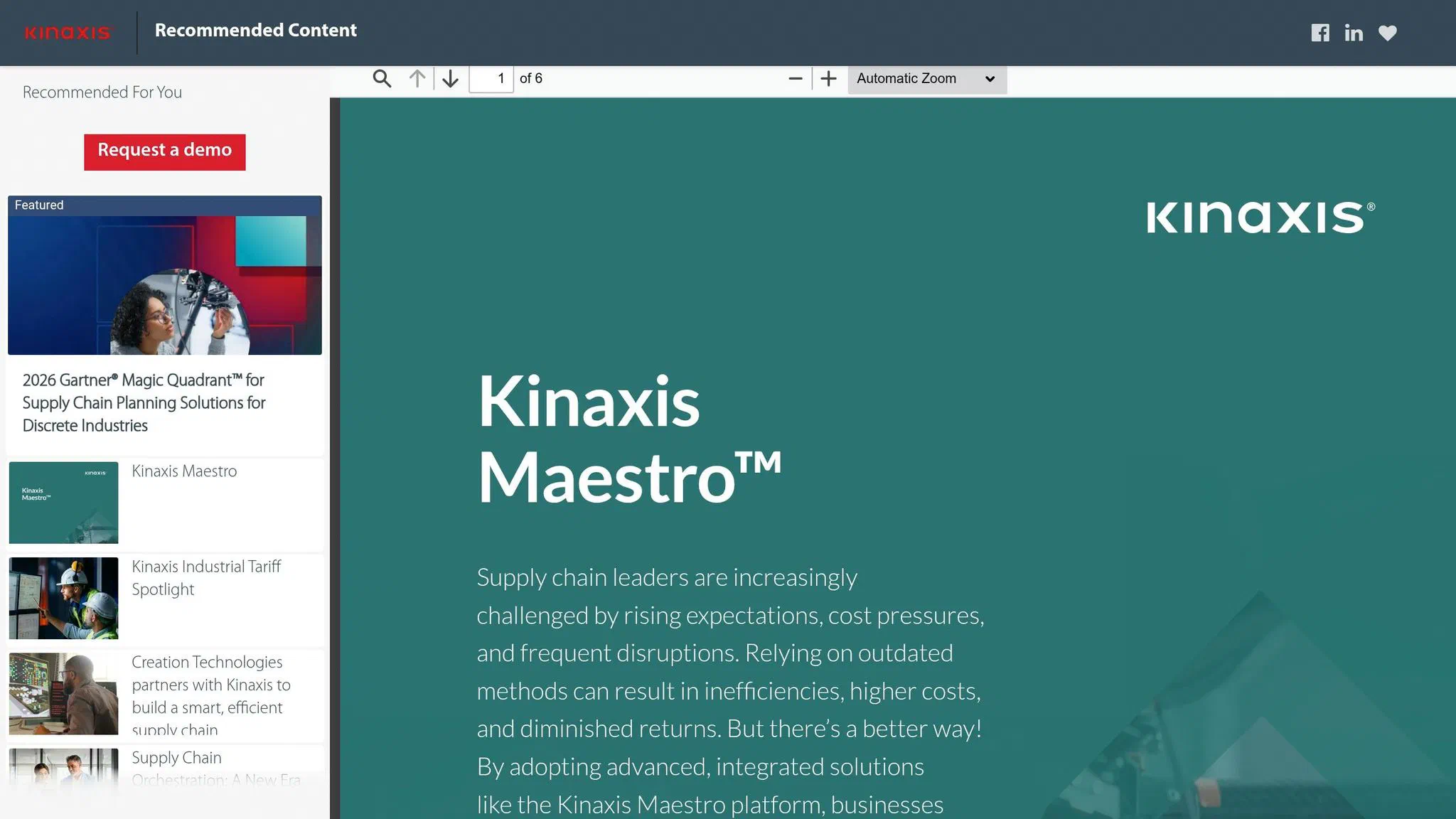
Kinaxis’ Maestro platform connects the dots across supply chains, from initial planning right through to final delivery 12. Its Control Tower feature offers planners a real-time dashboard view of operational data, allowing them to keep tabs on the entire network and react instantly to disruptions or opportunities as they arise 1213. This eliminates the fragmented data silos that bog down older systems, delivering a single, unified source of truth 1213.
For metals manufacturers juggling raw material deliveries, production schedules, and customer deadlines, this level of transparency is exactly what the job demands. If a coil of steel is delayed or a furnace unexpectedly goes offline, the platform highlights the ripple effects immediately — so you can act before they cost you.
AI-driven risk management and disruption alerts
Kinaxis uses AI to monitor and predict disruptions by analysing diverse inputs, including weather reports, news updates, and even social media 13. Its “sense and respond” system allows users to simulate scenarios and assess potential risks 12.
Dr. Nada Sanders, a Distinguished Professor at Northeastern University, summarises the approach:
“Integrating AI with humans is the only way to navigate what I see as really turbulent waters ahead. We have AI and humans, each doing what they do best” 14.
The platform’s concurrent planning model balances demand, supply, and inventory in real time. Unlike traditional sequential planning, which suffers from data delays, this method gives you a complete picture 156. This is particularly crucial for metals manufacturers, where long production cycles and unpredictable lead times are the norm.
Tailored for metals manufacturing
Kinaxis isn’t a one-size-fits-all solution. It’s built with industries like metals manufacturing in mind 15. The platform incorporates best practices and AI that adapts to the specific processes of your plant 1516. For instance, its Scheduling module allows manufacturers to translate complex operations - like furnace cycles or rolling mill sequences - into measurable, company-wide activities 15.
Dr. Pascal Van Hentenryck, a professor at Georgia Institute of Technology, explains the potential:
“Kinaxis, in collaboration with AI4OPT, is exploring how the fusion of machine learning and optimisation may bring a step change in capabilities for the next generation of supply chain management systems” 14.
This industry-specific focus means the platform gives you answers that match the actual challenges of heavy industry — not advice built for a generic business.
Automating the grind of manual processes
Kinaxis takes things a step further by automating tedious tasks. It handles data preparation, cleaning, and transformation automatically 14. Using machine learning and analytics, the platform provides real-time recommendations to balance supply and demand, cutting down on the need for manual interventions 1314. Beyond just offering insights, the AI can guide decisions and even execute approved actions directly within the system 14.
This shift from outdated, siloed tools to what Kinaxis calls “resilient planning” is designed to help manufacturers stay ahead in a world of constant global uncertainty and rapid market shifts 13. For metals manufacturers, these automation features are key to building a supply chain that can handle the pressure.
5. Blue Yonder

Real-time visibility and traceability
Blue Yonder takes supply chain visibility up a notch with its Luminate Platform, a digital control centre that processes a staggering 25 billion AI predictions daily. This platform provides a real-time, unified view of the supply chain, linking data from ore suppliers to distributors of finished products into one dependable system 6.
What sets it apart is the Supply Chain Knowledge Graph, built with RelationalAI on Snowflake 17. This feature maps out relationships across operations. Say a steel coil gets delayed at the port - this tool identifies exactly which production runs, customer orders, and downstream processes will feel the impact. Impressively, users of Blue Yonder’s Control Tower have been able to detect 96% of disruptions within an hour 17, giving teams the chance to act before small issues snowball into major problems.
AI-driven risk management and disruption alerts
Blue Yonder employs AI agents to keep a constant eye on operations, flagging potential disruptions and suggesting solutions 18. Whether it’s rerouting shipments due to bad weather or tweaking production schedules to handle delays, these agents don’t just report problems - they help fix them.
The Supply Chain Command Center offers a real-time, end-to-end view of operations, helping teams understand and respond to challenges as they unfold 1920. Thanks to these tools, companies have cut response times to supply chain disruptions by 65%, with 96% of issues spotted within an hour 18.
Industry-specific customisation
For metals manufacturers, Blue Yonder’s Industrial Manufacturing solution suite addresses the hard stuff head-on [22]. Tools like the Factory Planner juggle customer demand with material and capacity constraints, tackling challenges unique to the metals industry - think managing furnace cycles or rolling mill schedules.
The platform also features ML Studio, which lets manufacturers build and test custom machine learning models tailored to their specific needs. By integrating external data through the Snowflake Marketplace, teams can improve predictive accuracy. Plus, its “what-if” scenario planning tools help businesses prepare for potential disruptions before they happen.
Automation of manual processes
Blue Yonder’s AI agents take over repetitive tasks, giving human planners the freedom to focus on decisions that actually need them 18. Using explainable machine learning, the platform turns raw data into clear recommendations — improving forecasts while cutting out inefficiencies, delays, and risks 18.
For metals manufacturers still coordinating by spreadsheet and email, the contrast is stark. The system monitors the supply chain continuously, triggering alerts and enabling immediate action. Blue Yonder turns data into decisions — fast.
6. Oracle Supply Chain Management
Real-time visibility and traceability
Oracle Supply Chain Management applies AI across key areas like planning, logistics, procurement, manufacturing, and fulfilment 621. For metals manufacturers juggling supplier relationships, furnace schedules, and distribution networks, this system provides real-time visibility without needing to patch together multiple disconnected tools. By using predictive analytics, it can anticipate customer demand and even flag potential equipment failures before they happen.
AI-driven risk management and disruption alerts
Oracle takes its real-time oversight a step further with AI-powered risk management. The platform’s AI agents are designed to spot disruptions and alert teams immediately. For example:
- The Manufacturer Onboarding and Risk Assessment Advisor (Update 25C) evaluates supplier reliability during onboarding.
- The Planning Advisor for Exceptions (Update 25D) flags anomalies and notifies planners in real time.
- The Planning Stockout Advisor (Update 26B) predicts material shortages before they disrupt production.
On the logistics front, tools like the Planned Shipment ETA Prediction (Update 24C) forecast delays in deliveries, while the Expedite Orders at Risk assistant (Update 24C) identifies orders that need fast-tracking. For quality control, the Disposition Assistant for Rejects (Update 25D) provides recommendations on handling rejected materials.
Industry-specific customisation
Oracle SCM Cloud is built with the complexity of large enterprises in mind, offering extensive functionality across planning, logistics, procurement, and production 21. It connects directly with Oracle’s finance and HR systems, creating a single operational hub for metals manufacturers. Custom AI agents address specific needs on the shop floor and in procurement, while routine tasks are automated to simplify workflows.
Automation of manual processes
Oracle’s tools are tailored for large-scale metals manufacturers, covering everything from risk management through to automating tedious processes. The platform handles shipment tracking, exception reporting, and stockout prediction automatically. Features such as the Work Order Sync Assist (Update 26A) and Operational Procedure Advisor (Update 25C) help ensure manufacturing operations stay in sync with changing schedules and safety requirements. The Production Shift Operations Workspace further smooths shift transitions. However, as a full enterprise platform, Oracle SCM demands a significant investment in time, money, and training — making it a better fit for manufacturers already committed to Oracle’s ecosystem.
7. SAP Integrated Business Planning
Real-time visibility and traceability
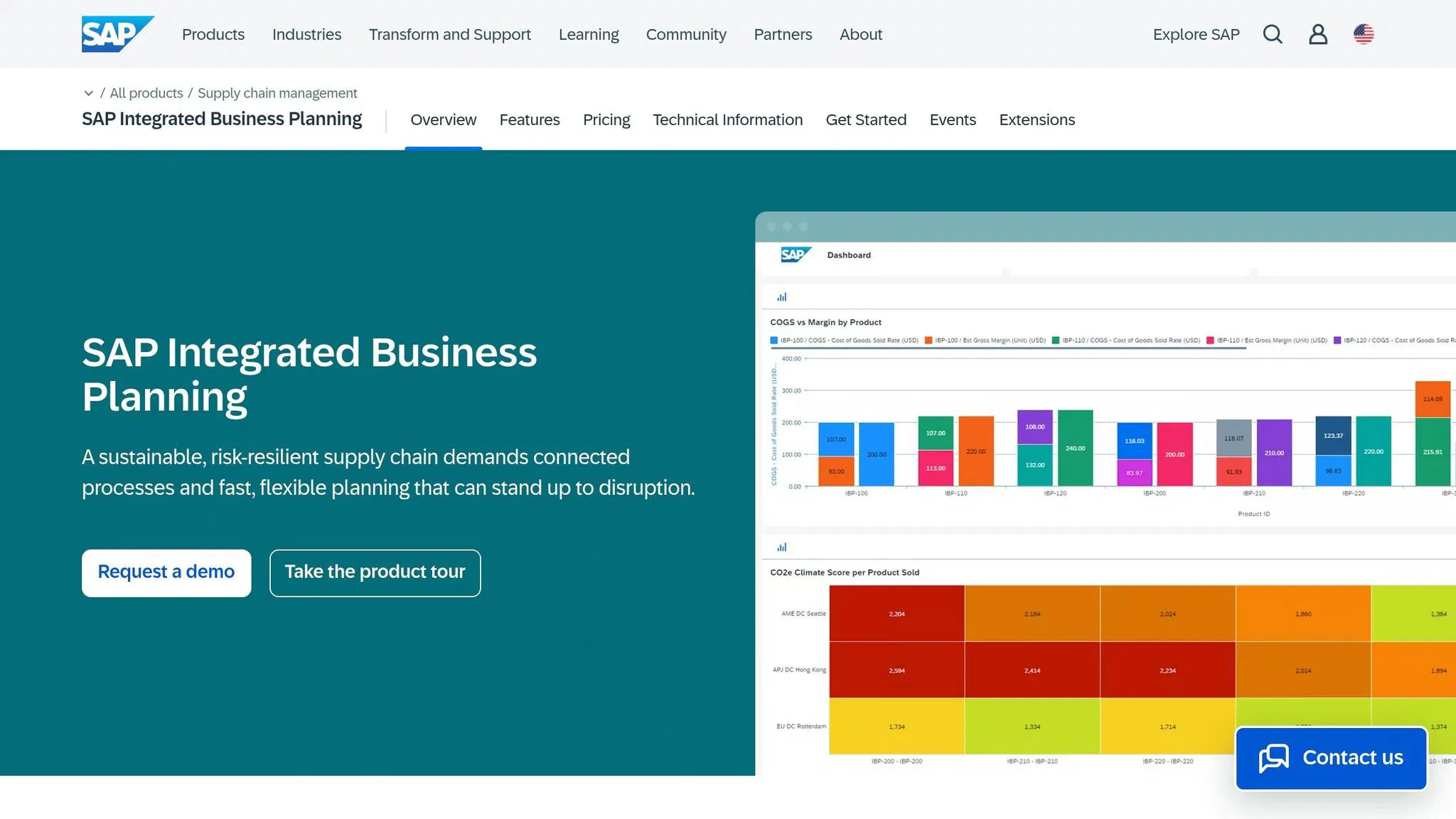
SAP Integrated Business Planning (IBP) pulls data from SAP S/4HANA, Digital Manufacturing Cloud, and Transportation Management to give metals manufacturers a clear, real-time view of their supply chains 22. For those tracking materials through multiple processing stages, the SAP Supply Chain Control Tower offers a complete view by monitoring the flow of materials alongside real-time alerts 22. The platform supports complex structures like multilevel bills of materials and cross-location models, which are crucial for intricate production setups 2324. Users can visualise the supply chain as a network, complete with supply lanes and analytics, making it easier to spot and address disruptions 2223. By linking with the SAP Business Network, manufacturers can also monitor their suppliers’ capacities, providing a broader picture of the supply chain 22. This unified approach doesn’t just track material flows - it also enables proactive risk management.
AI-driven risk management and disruption alerts
SAP IBP uses machine learning to sift through supply chain data, prioritising the most critical alerts 22. Planners can use real-time simulations to explore the impact of potential disruptions - be it tariffs, raw material shortages, or trade disputes - and compare different solutions before making a decision 2324. The platform also includes procedure playbooks, which outline best practices and suggest specific actions for handling exceptions 22. Machine learning-driven demand sensing refines short-term forecasts, helping predict demand fluctuations and lowering inventory risks 2324. On top of that, automated outlier correction uses AI to identify and fix anomalies in historical sales data, boosting forecast accuracy 24.
Industry-specific customisation
SAP IBP can be tailored to meet the unique needs of metals manufacturers. The SAP API Business Hub offers prebuilt integrations and APIs for creating custom extensions 23. Additionally, manufacturers can enhance the platform’s core features by using trusted partner applications available in the SAP App Store 23.
“SAP IBP is a powerhouse for creating a single, cohesive plan that spans the entire organisation” 6.
Mitch Belsley, a Project Contributor, further explains:
“The platform’s greatest strength is its ability to connect supply chain decisions directly to financial outcomes, providing a clear picture of how operational changes will impact the bottom line” 6.
The solution also includes Demand-Driven Material Requirements Planning, which helps manufacturers strategically position inventory buffers to better handle market shifts 24. These tailored features work together to simplify and optimise supply chain management.
Automation of manual processes
SAP IBP takes over repetitive tasks like statistical forecasting by using advanced machine learning to create demand plans 2223. Powered by SAP HANA, the platform processes data quickly, ensuring smooth operations 24. SAP’s AI assistant, Joule, allows users to analyse data and get answers using plain language queries 2223. That said, its complexity means it’s often better suited for larger enterprises with dedicated IT teams 21.
The AI-Enabled Supply Chain: End-to-End Visibility and Enhanced Decision-Making
Feature and Pricing Comparison
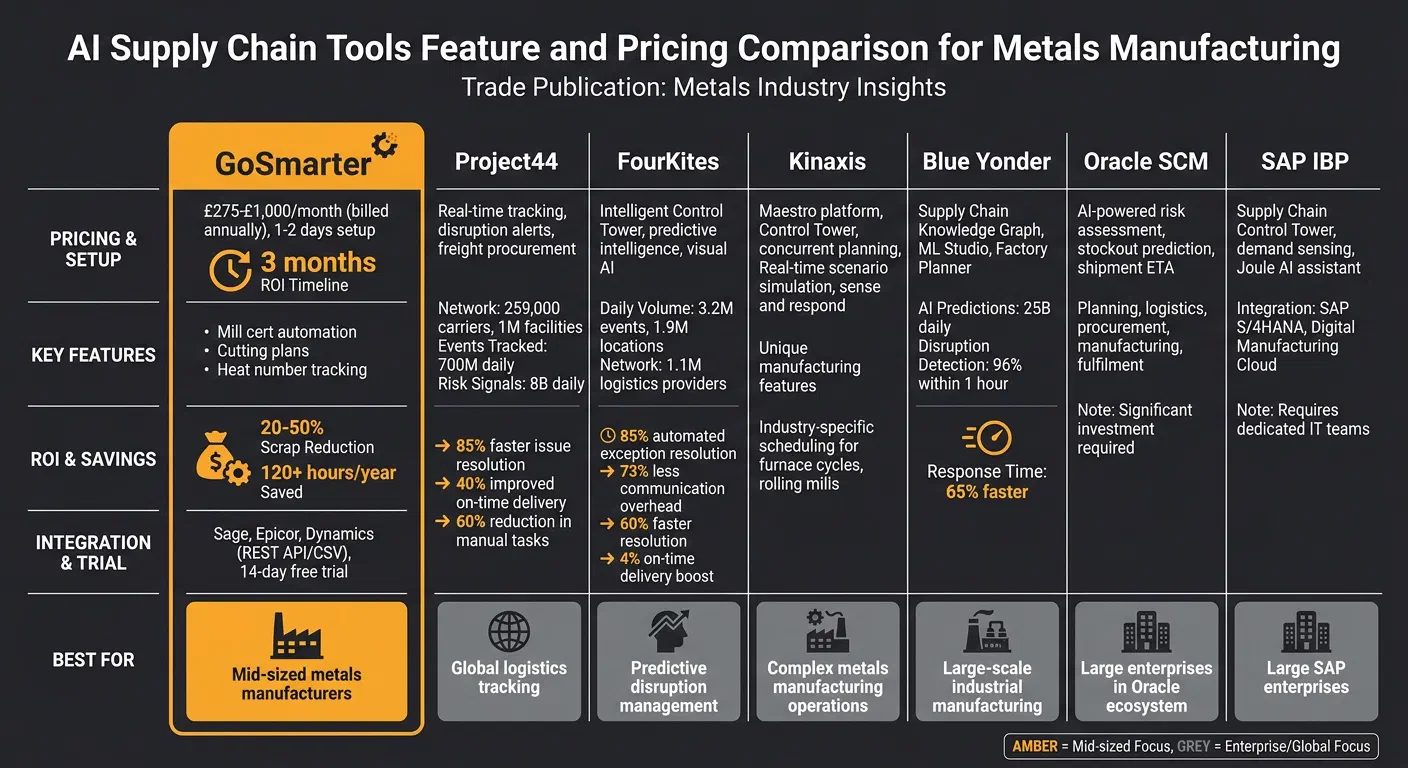
| Tool | Metals-specific? | Key strength | Starting price | Deployment | Scrap reduction |
|---|---|---|---|---|---|
| GoSmarter | ✅ Yes — built for metals | Mill cert automation, cutting optimisation, heat number traceability | From £120/month billed annually (Starter) | 1–2 days | 20–50% |
| Project44 | ❌ No — cross-industry | Global shipment tracking across 259,000+ carriers | Custom (enterprise) | Weeks | Not applicable |
| FourKites | ❌ No — cross-industry | AI disruption alerts; resolves 85% of exceptions automatically | Custom (enterprise) | Weeks | Not applicable |
| Kinaxis | ❌ No — cross-industry | Concurrent supply chain planning; scenario simulation | Custom (enterprise) | Months | Not applicable |
| Blue Yonder | ❌ No — cross-industry | 25 billion AI predictions/day; disruption detection within 1 hour | Custom (enterprise) | Months | Not applicable |
| Oracle SCM | ❌ No — enterprise ERP | End-to-end procurement, fulfilment, and manufacturing planning | Custom (enterprise) | Months–years | Not applicable |
| SAP IBP | ❌ No — enterprise ERP | Integrated planning across S/4HANA, DMC, and transportation | Custom (enterprise) | Months–years | Not applicable |
When it comes to supply chain visibility tools, metals manufacturers need solutions that are both effective and budget-friendly. GoSmarter fits the bill with four tiers priced between £120/month billed annually and £1,872/month billed annually. These tools are designed to tackle the tedious manual tasks like mill certificate processing, scrap reduction, and heat number tracking. The result? A return on investment that often shows up within the first three months 3.
Take Midland Steel, for example. By using GoSmarter, they slashed their scrap rates by 50% during rebar production planning in 2026 3. Tony Woods, CEO of Midland Steel, highlighted the wider benefits:
“The integration of AI and digital tracking has significantly improved our operational efficiency and sustainability performance” 3.
GoSmarter’s cutting plans can reduce scrap by 20–50% on structural sections, tubes, and bars. Meanwhile, the MillCert Reader saves over 120 hours annually by automating certificate handling 3. And the best part? It works smoothly with popular ERPs like Sage, Epicor, and Dynamics through REST APIs or simple CSV uploads. Most teams are up and running in just a day or two 3.
GoSmarter’s subscription model is a different category of decision. It’s a monthly operating cost you can cancel — not a capital investment you’re locked into 25. Every subscription comes with a 7-day free trial. Plus, free calculators let manufacturers estimate their savings before committing 3. For mid-sized metals manufacturers, this setup addresses the big headaches - like certificate admin, scrap waste, and traceability issues - without the hassle of a long implementation process.
The Right Tool for the Right Problem
Supply chain visibility in metals manufacturing isn’t a one-size-fits-all problem. GoSmarter steps in to tackle the nitty-gritty metals-specific issues - think mill certificate verification, heat number traceability, and cutting plans - while broader platforms handle global logistics headaches. Unlike a full MES (Manufacturing Execution System) or ERP rollout, GoSmarter deploys in 1–2 days and works alongside whatever system you already run.
Start by fixing your biggest operational headache. If your team is buried in PDF mill certificates, start there — GoSmarter’s MillCert Reader is live in a day and pays for itself within weeks. Once certs are under control, layer on Metals Manager for live stock visibility. Then add Cutting Plans to protect your margins. You don’t have to boil the ocean. Start with the pain that costs you the most right now. Once those fires are out, you can layer on broader systems to sharpen forecast accuracy by as much as 30–50% 26.
Most metals manufacturers who deploy GoSmarter aren’t replacing their ERP — they’re fixing the three problems their ERP was never built to solve: reading mill certificates in seconds, planning cuts without waste, and knowing exactly what certified stock they have right now.
Every hour you save and every tonne of scrap you avoid feeds directly into your bottom line. Cutting bar stock scrap by even one tonne also avoids roughly 1.8 tonnes of CO₂ emissions — a number your sustainability report will thank you for. Tools designed for metals manufacturing - covering EN 10204 compliance, heat number tracking, and long-product cutting - mean you’re not wasting time trying to make generic software do what it was never built for.
The right tools don’t just give you better visibility; they free up your engineers to focus on the work that matters. Whether you’re running a mid-sized shop or a massive operation, the goal is the same: automate the grunt work, protect your margins, and build a supply chain that’s faster, greener, and shock-free. With GoSmarter’s targeted automation, metals manufacturers can stop firefighting and start leading.
FAQs
How do I choose the right AI tool for supply chain visibility?
Can AI extract data from scanned EN 10204 mill certificates accurately?
What does it take to integrate GoSmarter with my ERP?
There are two paths depending on how your systems are set up. If you’re on Sage, Epicor, Infor, or Dynamics 365, GoSmarter connects via REST API for live, two-way data sync — stock movements, cert records, and cut results flow automatically. If you’d rather start simple, CSV import works out of the box with no API configuration required.
Most teams complete their ERP connection during the initial 1–2 day setup, with the GoSmarter support team walking through the configuration. There are no additional integration fees. GoSmarter can also run independently if you need to get started quickly and integrate later — some teams begin with CSV and switch to the API once they’re comfortable with the data flows. Your data stays in your systems; GoSmarter doesn’t hold it hostage.
What are realistic benchmarks for scrap reduction using AI in metals manufacturing?
What payback period should metals manufacturers expect from AI supply chain tools?
How can I get real-time visibility on material usage, scrap, and remaining stock across my metals plant?
How do specialised metals AI tools compare to a full ERP or MES for production planning?
How do AI tools handle multi-grade, multi-dimension stock when optimising cutting plans?
Further Reading
1: Metals Inventory Management Software | GoSmarter
2: GoSmarter AI | AI Tools for Metals Manufacturing
3: GoSmarter AI | AI Tools for Metals Manufacturing
4: Decision Intelligence Platform | project44
6: Top 10 AI Supply Chain Visibility Softwares and Solutions
7: Disruption Management Agent | project44
8: AI Agent Orchestration | project44
9: AI Agent Orchestration | project44
10: FourKites: AI Supply Chain Orchestration & Visibility Platform
11: AI-Powered Supply Chain Intelligence | FourKites
12: Kinaxis control tower capabilities: Real-time su | Kinaxis
13: Supply chain planning | Kinaxis
14: AI in Supply Chain | Kinaxis
15: Agile Supply Chain Management Solutions | Kinaxis
16: AI in Supply Chain | Kinaxis
17: AI Supply Chain Software | Blue Yonder
18: AI Supply Chain Software | Blue Yonder
19: Supply Chain Management Solutions | Blue Yonder
20: End-to-End Supply Chain Management Solutions | Blue Yonder
21: Top 10 Supply Chain Management Tools [2025] | Tradeverifyd
22: https://www.sap.com/features/scm/integrated-business-planning/features/supply-chain-visibility.html
23: https://www.sap.com/uk/features/scm/integrated-business-planning/features.html
24: https://www.sap.com/features/scm/integrated-business-planning.html
25: GoSmarter Pricing: Per Site, Unlimited Users
26: Best AI Tools for Manufacturing & Supply Chain Optimization in 2026 (Top 15 Ranked) - AI Tool Mapper
About the Author

Editor· Co-Founder & CEO
Ruth Kearney is Co-Founder and CEO of GoSmarter AI — driving commercial growth and strategic partnerships to help metals manufacturers adopt AI and digital tools that actually deliver on the shop floor.