AI Load Balancing: Lessons from Steel Plants
- BlogSmarter AI
- Edited by Steph Locke
- Blog
- March 29, 2026
- Updated:
Table of Contents Show Hide
Ever feel like your factory’s stuck in 1985? Here’s the hard truth: manual processes are bleeding your margins dry. From overheating slabs to cranes sitting idle, steel plants relying on outdated systems are wasting time, energy, and cash—often because they lack the right toolkits for smart manufacturing.
Take reheating furnaces, for example. Operators, worried about under-heating, crank up temperatures unnecessarily - burning far more energy than needed. Or the long delays before anyone even spots a maintenance issue when data is logged manually. These inefficiencies aren’t just inconvenient - they’re expensive. Plants that stay manual often run much thinner Earnings Before Interest, Taxes, Depreciation and Amortisation (EBITDA) margins than those that invest in modern AI-driven operations.
Here’s the fix: AI load balancing. It’s not about replacing people; it’s about replacing the boring, error-prone tasks they hate. AI can juggle hundreds of variables in real time: temperature, flow rates, crane schedules. That keeps operations smooth and precise. POSCO nailed it, boosting efficiency and cutting energy use across their operations.
The Old Way vs. The Smart Way
| The Old Way | The Smart Way |
|---|---|
| Overheating slabs to avoid under-heating | AI adjusts furnace temps in real time |
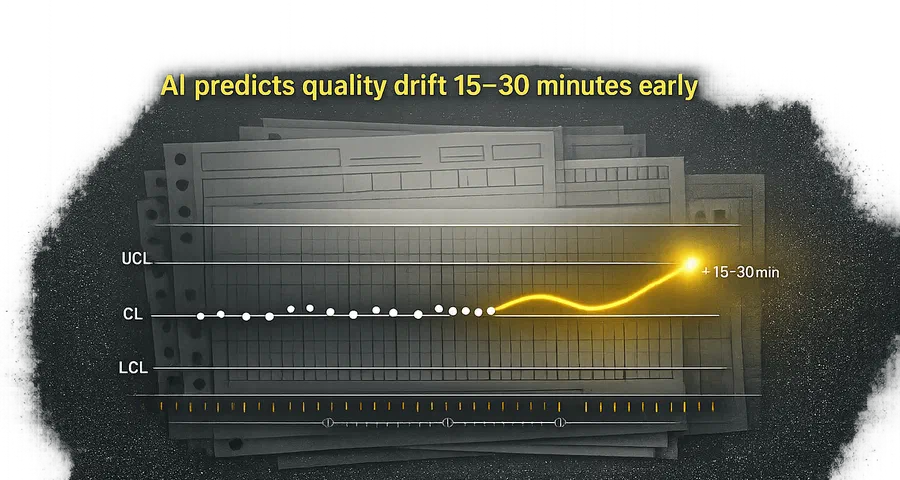
| Slow to spot maintenance issues | Predictive alerts weeks in advance |
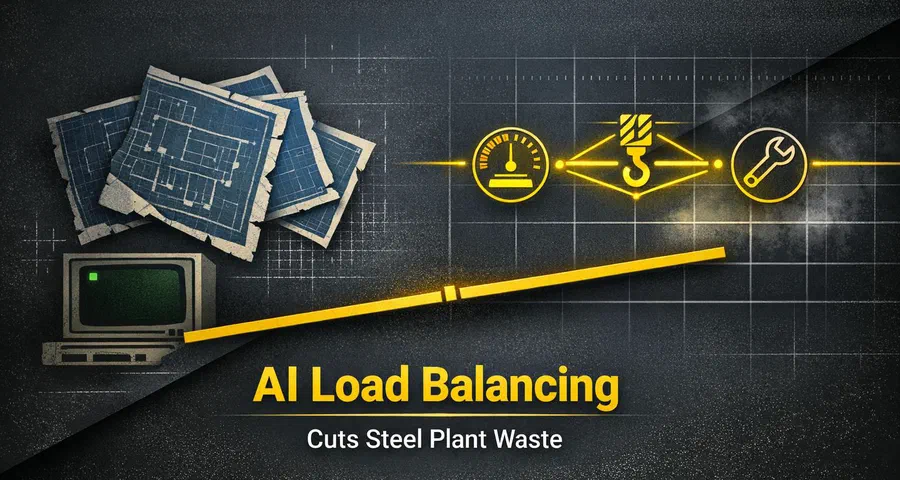
| Manual crane scheduling causing bottlenecks | AI schedules cranes for max efficiency |
If you’re tired of firefighting inefficiencies, it’s time to rethink your approach. Let’s dive into how the biggest names in steel - Tata Steel, U.S. Steel, Big River Steel, and ArcelorMittal - are using AI to cut waste, boost output, and protect their bottom line.
Tata Steel: Using Simulations to Optimise Capacity
The Problem: Crane Bottlenecks and Manual Decisions
Tata Steel’s melting shop was dealing with a frustrating bottleneck caused by uneven distribution of cranes and ladles. The issue? Crane tasks were being assigned manually, without a clear strategy or the benefit of real-time optimisation. This manual approach struggled to keep up with the complex interdependencies between equipment, fluctuating processing times, and unexpected breakdowns. It became clear that a safer, more efficient way to test and implement process improvements was desperately needed 1.
The Solution: Using AI Simulations
To address these challenges, Tata Steel created a digital twin of its melting shop using AnyLogic simulation software. This virtual model, developed by a team including S. Choudhary, A. Kumar, and S. Kumar, replicated every crane movement and physical constraint with precision. They then used Microsoft Bonsai to train a reinforcement learning model aimed at reducing crane waiting times at LD converters.
This digital twin allowed them to conduct 270 virtual experiments, including unconventional scenarios like suspending empty ladles nine metres above the floor. These rigorous tests ensured that process changes could be implemented with confidence, achieving a first-time success rate of over 90% 2 3 4 5.
The Results: Higher Output and Better Efficiency
The results were game-changing. By introducing AI-driven crane scheduling, Tata Steel boosted daily throughput by 8%, adding an extra two heats per day. In practical terms, that’s about 3.3 tonnes of additional steel daily, saving the company millions of pounds each year. Crane utilisation hit a steady 80%, while vessel waiting times dropped significantly.
This initiative was part of Tata Steel’s broader digital transformation programme (2015–2020), which included over 250 digital twin models managed through their Industrial Revolution Optimisation Centre (iROC). Altogether, this programme delivered cumulative cost savings of £1.4 billion 2 4 5.
U.S. Steel: Generative AI for Real-Time Scheduling
The Problem: Complex Scheduling Challenges
U.S. Steel, like many heavy manufacturers, struggled with time-consuming inefficiencies. Technicians spent hours combing through paper manuals to diagnose equipment failures, while production schedules were frequently disrupted by supply chain hiccups and unexpected breakdowns. These issues made it clear that a more efficient, AI-driven solution was needed to streamline real-time scheduling.
The Solution: Generative AI for Smarter Forecasting
To tackle these challenges, U.S. Steel turned to AI, drawing inspiration from other steel plants’ successes. In September 2023, the company partnered with Google Cloud to roll out MineMind, a generative AI system powered by Vertex AI and Document AI. This tool can instantly summarise repair instructions and create detailed diagrams, complete with validity scores. The initial deployment at Minnesota Ore Operations covered over 60 haul trucks, allowing MineMind to start delivering results right away 6.
Matt Wilding, U.S. Steel’s Senior Director of Financial Data, Analytics, and Enterprise Performance Management, highlighted the collaborative effort:
“We’ve been engaging in a partnership with Google Cloud to create the first generative AI applications for the steel industry. We take the expertise on the application side from the Google team and U.S. Steel’s expertise on the operations side, put our heads together and came up with some innovative solutions.” 7
Beyond maintenance, the AI was designed to handle real-time data analysis and decision-making. By integrating data from sensors, Programmable Logic Controllers (PLCs), and legacy systems, MineMind evaluates thousands of production scenarios and adjusts schedules automatically when disruptions occur 68.
The Results: Faster Repairs and Improved Efficiency
The impact of MineMind has been immediate and measurable. Work order completion times have dropped by an estimated 20%, allowing technicians to focus on more critical tasks rather than being bogged down with paperwork 68. David Burritt, President and CEO of U.S. Steel, described the benefits:
“Faster repair times, less down time, and more satisfying work for our techs are only some of the many benefits we expect with generative AI.” 8
Looking ahead, U.S. Steel aims for a 20% boost in overall productivity as the AI expands into areas like logistics, supply chain management, and process automation. By layering AI on top of existing systems instead of overhauling them entirely, U.S. Steel has shown how legacy operations can embrace modern tools to achieve substantial improvements.
Big River Steel: Predictive Analytics for Yield and Downtime
The Problem: Inconsistent Yield and Unplanned Downtime
Big River Steel faced a familiar struggle in the steel industry: equipment failures and unpredictable yield levels. These issues led to production losses and delayed deliveries, leaving both operations and customers in a tough spot. Relying on reactive maintenance only made things worse, as problems were addressed after they disrupted operations. What they needed was a forward-thinking system to tackle downtime and yield unpredictability head-on.
The Solution: AI-Driven Predictive Maintenance and Load Balancing
To address these challenges, Big River Steel turned to predictive analytics, building on their AI-powered load balancing strategies. They implemented a “learning mill” architecture - known as Big River 2 - that crunches enormous amounts of data to spot potential problems before they become critical 9. This system integrates data from over 14,000 sensors spread across key processes. The AI keeps a close eye on electrical signatures, temperature, and vibration, flagging anomalies in real time 10.
To make this even more effective, they layered AI analytics onto their existing Computerised Maintenance Management System (CMMS). This ensures that every predictive alert is automatically turned into a structured work order, streamlining maintenance workflows 1011. On the production side, the Endless Strip Process (ESP) uses live data feedback to fine-tune production parameters on the fly. This keeps each coil consistent and eliminates surprises between batches 9.
The Results: Enhanced Yield and Reduced Downtime
By combining predictive maintenance with AI-driven load balancing, Big River Steel shifted from reactive to proactive operations. Improved yield. Fewer rejected coils. Less emergency downtime. Longer equipment lifespans. Addressing issues before they escalate has transformed their production process into a smoother, more reliable operation.
The AI Revolution Nobody Noticed in the Steel Industry | T V Narendran | Tata Steel
ArcelorMittal: Sensor-Based Maintenance and AI Monitoring
ArcelorMittal has taken its AI capabilities to the next level by combining sensor-based maintenance with advanced monitoring systems, aiming to revolutionise how equipment reliability is managed.
The Problem: Reactive Maintenance and Costly Failures
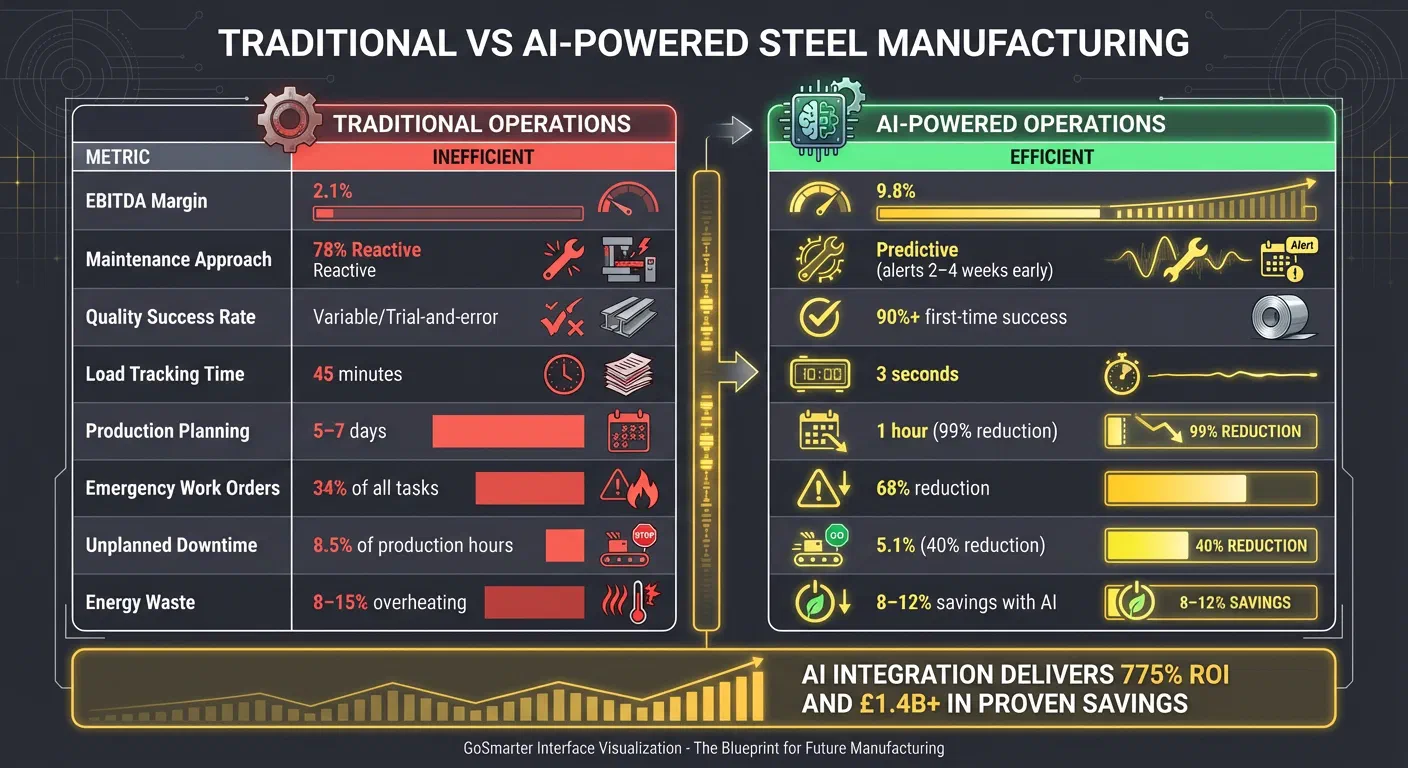
Unexpected equipment failures were a recurring nightmare at ArcelorMittal’s plants. Emergency repairs disrupted production, particularly with oxygen lances in basic oxygen furnaces, which were notorious for breaking unpredictably. When a lance failed, it often contaminated molten metal, leading to expensive clean-up efforts and production losses 12. The numbers painted a grim picture: emergency work orders made up 34% of all maintenance tasks, while unplanned downtime consumed 8.5% of production hours 13. The reliance on reactive maintenance not only drained resources but also shortened the lifespan of critical equipment, leaving engineers constantly firefighting instead of focusing on long-term solutions.
The Solution: IoT Sensors and Predictive Monitoring
To tackle these challenges, ArcelorMittal developed its Sentinel platform, a rugged Industrial Internet of Things (IoT) solution built to withstand the extreme conditions of steel production - high heat, intense vibrations, and corrosive environments 13. The system deployed thousands of wireless sensors to monitor key metrics like vibration, temperature, sound, and electrical currents across a wide range of equipment, including robots, motors, and blast furnaces.
With edge computing handling data locally, cloud bandwidth usage was slashed by 85% 13. Machine learning algorithms, trained on years of failure data, provided teams with an average of 15 days’ notice before critical breakdowns 11. At the Hamilton, Canada facility, computer vision added another layer of precision, tracking the usage of individual oxygen lances to predict the best replacement times and avoid sudden failures 12. The integration of AI allowed these predictions to automatically trigger work orders in the Computerised Maintenance Management System (CMMS), ensuring issues were addressed before they escalated 13.
The Results: Smoother Operations and Cost Savings
Unplanned downtime dropped 40%, falling from 8.5% to 5.1% of production hours 13. Emergency work orders fell by 68%, and maintenance costs per tonne decreased from £12.80 to £9.40 - a 27% reduction 13. The improvements didn’t stop there: robots saw a dramatic increase in Mean Time Between Failures (MTBF), jumping from 620 hours to 1,150 hours - an 85% boost 13. Bearings lasted 2.3 times longer, and early detection of 27 failures saved 31 hours of downtime 14. At Hamilton, the computer vision system eliminated downtime from lance breakages entirely, saving millions annually 12.
One Reliability Engineering Director summed it up perfectly:
“Sentinel transformed our maintenance approach, enabling us to detect issues weeks ahead and address them proactively” 13.
Today, Sentinel monitors over 200,000 assets across more than 50 plants, processing an astonishing 3.2 billion sensor data points every day 13.
Key Lessons from AI Load Balancing in Steel Plants
The examples shared earlier highlight how AI can reshape operations in steel manufacturing. These insights reveal the critical elements that separate efficient, AI-driven plants from those still bogged down by outdated processes like spreadsheets and last-minute fixes.
Integration Beats Full Replacement
Scrapping existing systems for a complete overhaul is often too costly and risky. A better strategy is to integrate AI into current workflows. Tata Steel’s experience shows how layering AI onto existing systems can minimise both risks and expenses 415. Starting with small-scale implementations to prove value before scaling up is a smarter way to avoid costly missteps. This phased approach also underscores the importance of thorough testing before rolling out major changes.
Test on a Digital Twin, Not on Live Kit
Making changes directly on live equipment is a risky move - one mistake could lead to disastrous consequences. Digital twins offer a safer alternative, allowing manufacturers to simulate and test adjustments in a virtual environment. For instance, Tata Steel used digital twins to evaluate 847 burden combinations for blast furnace optimisation in just two days - a process that would have taken months using physical trials 4. This resulted in a 90%+ first-time success rate for changes and a 4–6% reduction in coke usage 415.
In another example, a European steel producer used a digital twin to detect a cooling water temperature issue 38 days before it caused physical damage, preventing a £3.3 million emergency shutdown 16. Dr Petra Krahwinkler from Primetals Technologies sums it up perfectly:
“The advantage of AI is that it can do this analysis in real-time… rather than operators looking at vast amounts of monitoring data manually, these systems can guide them precisely to what they need to focus on” 17.
Real ROI: Downtime Slashed, Yields Boosted
The financial impact of AI-driven improvements is undeniable. By applying data strategically, steel plants see direct cost savings and efficiency gains. Beshay Steel, for example, cut downtime by 47% and saved £2.8 million annually, achieving payback in just 4.2 months. Meanwhile, JSW Steel reduced load tracking time from 45 minutes to just three seconds, freeing up two million man-hours annually 15.
A £790 million steel mill using AI for scheduling boosted production by 1%, adding over 1,000 tonnes of finished product each year, while cutting planning time from five days to just one hour 18. Other benefits include energy savings of 8–12% and defect rate reductions of 30–40% when first-time quality exceeds 90% 4. Given that unplanned downtime can cost over £39,000 per hour, even small improvements lead to substantial savings 15.
| Metric | Traditional Operations | AI-Powered Operations |
|---|---|---|
| Maintenance Approach | 78% Reactive 15 | Predictive (alerts 2–4 weeks early) 15 |
| Quality Success | Variable/Trial-and-error 4 | 90%+ first-time success rate 4 |
| Load Tracking | 45 minutes 15 | 3 seconds 15 |
| Planning Time | 5–7 days 18 | 1 hour (99% reduction) 18 |
Between 2015 and 2020, Tata Steel’s CEO T.V. Narendran spearheaded the development of their Industrial Revolution Optimisation Centre (iROC), covering over 15 plants with more than 250 digital twin models. This initiative delivered approximately £1.1 billion in savings and a 775% return on investment, while cutting unplanned downtime by 22% 415. These results highlight the importance of precise measurement and a gradual, well-planned adoption of AI to secure the future of steel manufacturing.
Start Small. The ROI Shows Up Fast.
AI-driven load balancing is changing the game for steel manufacturing - making production faster, more efficient, and environmentally friendly. Just look at the numbers: Tata Steel saved £1.4 billion, while Beshay Steel slashed downtime by 47% in less than five months. These aren’t just isolated wins; they’re proof that embracing AI can shift plants from merely surviving to thriving. The secret? Transitioning from reactive maintenance to proactive, data-driven efficiency.
The takeaway here is clear: you don’t need to go all-in from day one - just start. You can skip the headache of overhauling your entire ERP or committing to a multi-year transformation. Instead, begin small with a four-week audit to uncover your biggest inefficiencies, like energy drains or coordination hiccups. Focus on quick, impactful fixes in the first 90 days - whether that’s sealing air leaks or balancing furnace loads. AI can serve as an overlay, pulling real-time insights from your existing systems, rather than replacing tools that already do the job.
Platforms like GoSmarter make this process accessible. For instance, the MillCert Reader (£280/month billed annually) digitises messy PDF mill certificates, saving over 120 hours of manual work each year. Meanwhile, the Cutting Plans module (£760/month billed annually) reduces scrap rates by 50% and replans production in seconds. These tools turn mountains of disorganised data into decisions you can act on — in seconds, not days — without the hassle of a full system overhaul.
The steel plants of tomorrow are already taking action today, blending automation with measurable ROI and tying carbon reduction directly to operations excellence.
If you’re still stuck with spreadsheets and scrambling to fix problems at the last minute, you’re not just behind the curve - you’re losing money with every shift.
FAQs
What is AI load balancing in a steel plant?
How do you add AI without replacing existing Programmable Logic Controller (PLC) or ERP systems?
AI can slot into your current systems as an added layer, working with your existing systems rather than replacing them. This means you can tap into real-time analytics, such as predictive maintenance and process optimisation, without the need for a complete infrastructure overhaul.
Platforms like GoSmarter make this easy by connecting through APIs or data connectors. Your current set-up stays intact. GoSmarter connects via CSV or API and starts surfacing what’s breaking, what’s wasting energy, and what to fix first — on day one.
What data do you need to start AI scheduling and predictive maintenance?
For full predictive maintenance, you’d ideally have sensor data and maintenance records. But to start with GoSmarter, you just need your existing mill certificates in PDF format and a cutting list. Most customers are running their first optimised cut plan within a day of signing up.
Once you’re up and running, richer data — sensor readings, failure records, work orders — lets the AI go deeper. But you don’t need to wait for perfect data to get started. Start with what you have.
Further Reading
1: https://anylogic.com/blog/increase-throughput-of-a-steel-manufacturing-unit-using-production-optimization-software
2: https://www.anylogic.com/resources/articles/crane-scheduling-at-steel-manufacturing-plant-using-simulation-software-and-ai
3: https://www.anylogic.com/blog/crane-task-distribution-using-anylogic-and-ai
4: Digital Twins for Steel Plants: How Tata Steel Achieved $1.4 Billion in Savings
5: https://anylogic.com/resources/case-studies/steel-plant-simulation-helps-increase-unit-throughput
6: Case Study: U.S. Steel’s Innovative Use of Generative AI for Operational Excellence - AIX | AI Expert Network
7: How U. S. Steel Uses Generative AI for Manufacturing - Tomorrow’s World Today®
8: SFIA Member U.S. Steel to Build Gen AI Applications to Improve Productivity by 20% - BuildSteel.org
9: Designed to Learn: How Big River 2 Redefines Continuous Improvement - www.ussteel.com
10: Why Steel Plants Still Lose Millions Without Real-Time AI
11: How Steel Industry Leaders Are Using AI to Transform Maintenance Operations
12: https://i-5o.ai/Resources/ArcelorMittal-case-study
13: ArcelorMittal Sentinel Platform: Predictive Maintenance for Steel Plant Robots & Equipment
14: How ArcelorMittal prevented 31 hours of downtime by detecting 27 failures ahead of time | Samotics
15: Digitizing Steel Plants – End-to-End AI Transformation & ROI Guide
16: Digital Twin for Steel Plants: Virtual Factory with AI & IoT Integration
17: This is how AI is transforming the steel industry | Spectra by MHI
18: Large Steel Manufacturer Improves Production Efficiency with Advanced AI
About the Author

Editor· Co-founder & Head of Product
Steph Locke is Co-founder and Head of Product at GoSmarter AI — former Microsoft Data & AI MVP building practical tools to cut paperwork and automate compliance for metals manufacturers.